



Is 2026 the year the Initial Public Offering (IPO) market finally rebounds? Early indicators were promising, but the market has shown signs of unpredictability.
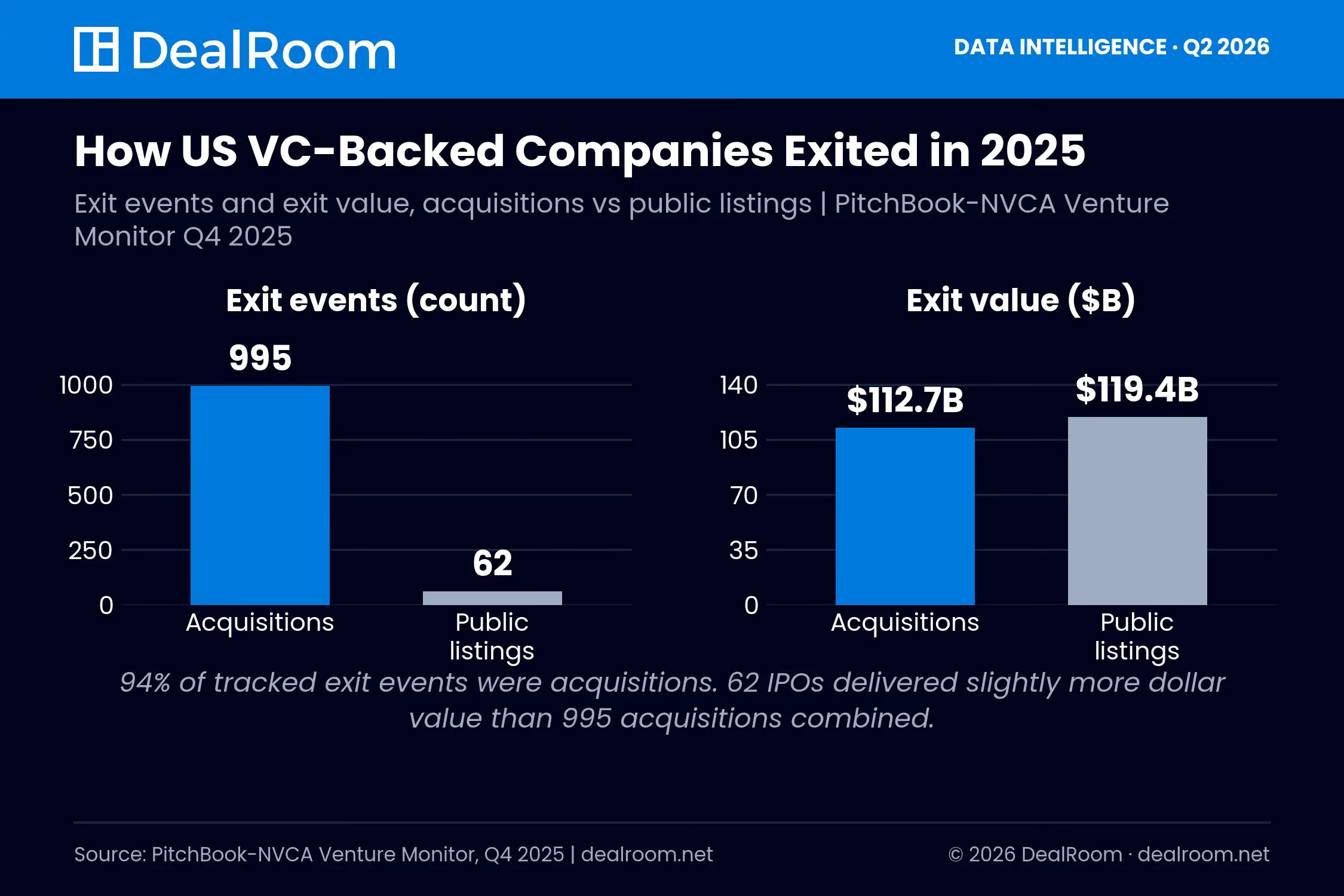
In the U.S., the IPO market continued its gradual recovery in 2025. Renaissance Capital counted 202 IPOs raising about $44 billion, helped by more sizable deals getting done.
Now the debate shifts to scale. Renaissance Capital expects 200 to 230 IPOs in 2026, raising $40 to $60 billion, with larger issuers doing more of the heavy lifting than in recent years.
That said, 2026 still looks selective. Pricing discipline matters, and post-IPO volatility is a real concern. Recent deals showed how fast the market can punish soft guidance or messy narratives.
Which IPOs should you look out for? Below, we’ve compiled a list of the biggest and most anticipated public offerings. While we started the year optimistic, there’s been some volatility—but we’re still hopeful to see some of these IPOs.
Pro-tips: We’ve got everything you need to know about investing in IPOs. If you want additional context about these offerings’ size, check out the 11 biggest IPOs of all time. (You can also check out our list of the top upcoming M&A deals of 2026 as well.)
In this article:
Upcoming IPOs in 2026
1. Databricks
Estimated Valuation: $134 billion
Expected IPO Date: 2026
Industry: Technology
Another year, another spot for Databricks on our upcoming IPO list. This company has been making waves for a while, but we would be surprised to leave the year without a public offering from them finally happening. There are a few promising indications that 2026 might be the year for Databricks to go public.
First, Databricks is growing more than 55% year over year (as of Q3 2025), with $1 billion out of a $4.8 billion revenue run rate coming from its AI products, per a December 2025 funding announcement. The company’s net retention rate is sustaining over 140%, according to the same announcement.
After raising $10 billion in January 2025, CEO Ali Ghodsi indicated that the company is ready but waiting for the right time to go public. In December 2025, Databricks raised a Series L round exceeding $4 billion, valuing the company at $134 billion.
According to Allied Venture Partners, 2026 is the target window for a Databricks IPO. And then there’s its recent acquisitions of Neon, Tecton, BladeBridge, and Mooncake Labs, burnishing its AI bona fides and data capabilities.
Look for Databricks to make a splash sometime in 2026. However, keep in mind that companies are more hesitant due to market volatility, so there’s a chance this deal could be pushed off another year or two.
2. Discord
Estimated Valuation: $15 billion
Expected IPO Date: March 2026
Industry: Technology
Discord filed confidential paperwork with the U.S. Securities and Exchange Commission (SEC) for an initial public offering that could happen as early as March 2026. Discord is working with Goldman Sachs and JPMorgan Chase as lead underwriters, but no official valuation or share price range has been released yet. The confidential process lets Discord prepare behind the scenes before financials and risk factors are made public.
Discord started in 2015 as a voice and text chat service for gamers and has expanded into a broad community platform with more than 200 million monthly active users. In its last funding round in 2021, the company raised about $500 million at a valuation near $15 billion, and some market commentary suggests a public valuation could climb higher (up to $25 billion) depending on demand.
A key theme as Discord heads toward an IPO is how it will balance its culture and user experience with Wall Street expectations. Bloomberg reports highlight that analysts and investors are watching whether the company can maintain its community-first ethos while improving monetization and profitability. Discord makes most of its revenue from paid Nitro subscriptions and other premium features, but its revenue per user remains modest compared to other consumer platforms.
Discord’s IPO plans also reflect broader trends in the tech market. After a slow period for new listings, several high-profile tech companies are preparing offerings in 2026. Discord’s move into public markets comes after rejecting a reported acquisition offer from Microsoft in 2021, a decision that now faces real financial testing.
3. Plaid
Estimated Valuation: $6.1 billion
Expected IPO Date: 2026
Industry: Fintech
Plaid is widely discussed as one of the fintech names that could go public in 2026. Its business connects bank accounts and financial apps. That plumbing layer makes it central to many consumer finance products, from payments to identity verification. Crunchbase lists Plaid as a “very likely” IPO candidate for 2026, based on recent financing, revenue growth, and scale.
The company’s market value has shifted over time. In 2021, Plaid’s last major funding round priced it at about $13.4 billion. By early 2025, a $575 million secondary share sale set a new valuation near $6.1 billion.
That drop reflects tighter markets and more cautious investor sentiment around fintechs. Despite the adjustment, the outcome gave liquidity to early stakeholders and helped align expectations for a future public offering.
Plaid’s leadership has been measured about timing. Company executives have said there’s no immediate IPO plan, and 2025 wasn’t on the timeline.
The CEO has emphasized strategic priorities over rushing to the public markets. The recent secondary sale may be the last private financing before a public debut, and market watchers see 2026 as a likely window for an IPO if conditions stay favorable.
For investors, that means watching how Plaid continues to grow revenue and broaden its product mix. The fintech’s services have seen strong adoption, with usage expanding across identity tools and payment-related products. That commercial traction will matter when pricing and demand are set for any flotation.
4. SpaceX
Estimated Valuation: $1.5 trillion
Expected IPO Date: Late 2026
Industry: Space and Defense Tech
SpaceX is widely expected to go public in 2026. Company insiders have told banks and investors that a full initial public offering is planned for the second half of the year. The move would mark a shift for Elon Musk, who has long resisted taking SpaceX public.
Reports suggest the IPO could be one of the largest ever. Early figures show SpaceX may seek to raise more than $25 billion to $30 billion, valuing the company well above $1 trillion on debut. Some market estimates even target roughly $1.5 trillion if demand supports pricing at the upper end.
An IPO at this scale would dramatically change the company’s public profile. SpaceX investors and employees would finally have a broad market to monetize shares. Market watchers also note that listing publicly will bring new scrutiny on finances, growth targets, and execution.
The backdrop for this offering includes rapid growth in SpaceX’s commercial operations. Starlink, the satellite internet network, has become a significant revenue stream. Launch services for governments and companies continue to expand. Still, future plans like space-based data centers and deeper AI integration are part of why SpaceX needs large-scale capital.
Investors see this IPO as a potential catalyst for the broader equity market, especially within the tech and space sectors. If SpaceX meets these targets in mid-to-late 2026, it could set a new record for public offerings and reshape how industrial-scale space companies access capital.
5. OpenAI
Estimated Valuation: $1 trillion
Expected IPO Date: 2026 or 2027
Industry: Tech
OpenAI is widely seen as one of the biggest potential IPOs of 2026. The company has begun early preparations for a public offering that could be filed as soon as the second half of 2026. Insiders say the move would open access to huge pools of capital as OpenAI pushes deeper into computing infrastructure and product expansion. An IPO is not officially set, but discussions with advisers and regulators are underway.
Valuation talk around OpenAI is massive. Some reports peg a potential market cap near $830 billion, with top-end forecasts close to $1 trillion if demand holds. That would put OpenAI’s debut among the largest IPOs ever. The scale reflects not just revenue, but the broader AI market frenzy and investor appetite for category-defining tech companies.
OpenAI’s leadership has been cautious in public remarks about going public. CEO Sam Altman has signaled mixed feelings about the shift to life as a publicly traded company.
Being public brings more scrutiny and governance demands that would change how the team operates. But the company’s capital needs are intense. Large investments in servers, AI training clusters, and global expansion make access to public market funding attractive.
The company has also moved pieces of its ownership structure into place that make a future IPO smoother. For example, OpenAI set aside a large stock grant pool for employees that aligns incentives ahead of any public float. These internal governance and equity moves are typical steps companies take before listing.
Investors and analysts will be watching closely in 2026. If OpenAI does move forward, the offering could reshape parts of the technology market and set new benchmarks for AI-focused public companies. At the same time, questions about profitability, competition, and rising costs remain part of the story as the potential IPO approaches.
6. Anthropic
Estimated Valuation: $300 billion
Expected IPO Date: Late 2026
Industry: Tech
Anthropic is one of the most talked-about AI companies that could go public in 2026. Financial Times and Reuters report the company has started early work toward an initial public offering, including discussions with major banks and retaining law firm Wilson Sonsini to help with planning. Those steps suggest Anthropic is serious about a future stock market debut, even if no formal filing or final timeline is set yet.
After a September 2025 funding round at about $183 billion, recent reports suggest a new fundraising could push the company’s valuation above $300 billion. That kind of private market backing could shape expectations for a public listing and influence pricing when Anthropic decides to float shares.
The company’s business has grown quickly since its founding in 2021 by former OpenAI leaders. Anthropic’s Claude models have found traction in enterprise settings, and management projects significant revenue growth in the coming year. Investors back the firm with heavy capital from tech partners like Google and Amazon, which gives Anthropic both financial muscle and industry credibility as it weighs going public.
Even with that momentum, the timing remains flexible. Analysts note that informal bank talks and preparatory legal work are early steps. Anthropic could pursue a late-2026 IPO if market conditions stay solid, but the company hasn’t locked in a date or underwriters yet. That reflects broader caution in tech markets, especially for high-growth AI companies balancing rapid investment with longer-term profitability goals.
7. Canva
Estimated Valuation: $42 billion
Expected IPO Date: Late 2026 or 2027
Industry: Technology/Software
Canva keeps showing up on IPO watch lists, even without an official filing. Crunchbase lists it as a “probable” candidate to go public this year, based on its size, revenue growth, and investor interest. The company hasn’t announced a date, but observers see a 2026 offering as realistic given its momentum and market position.
The business has scaled far beyond simple design software. Canva reports annualized revenue north of $3.3 billion and more than 240 million monthly users. It has also built out AI-driven tools and enterprise features that expand its market beyond casual creators and small businesses. Those numbers help explain why venture firms like Blackbird Ventures believe the company could be “ready” for a late-2026 IPO if it chooses to proceed.
Investors have already shown confidence through secondary sales that value Canva near $42 billion. That uptick in valuation, along with strong financial performance and a broad user base, give the company the underlying metrics that public markets and IPO investors typically look for. Comparisons to peers like Figma (which went public in 2025) show there’s a precedent for design platforms commanding robust valuations in the public market.
Canva’s leadership has been careful not to lock in a specific timeline. Co-founders have said a public listing is “probably imminent” within a couple of years, and market watchers still point to 2026 as the most likely window, even if a 2027 float can’t be ruled out. If it does list this year, it could be one of the more notable tech IPOs outside the typical AI and fintech names that are also lining up for public markets.
8. Crusoe Energy Systems
Estimated Valuation: $13 billion
Expected IPO Date: 2026
Industry: Tech
Crusoe Energy Systems is on the radar of IPO watchers for 2026, especially as investors look for big AI and infrastructure plays. Crunchbase’s list of likely public offerings includes Crusoe as a “probable” candidate given its growth and funding history. The company completed a large Series E round in late 2025, securing roughly $1.4 billion and pushing its valuation above $10 billion. That funding round came from major backers and highlighted Crusoe’s role in AI infrastructure.
Market signals also point to private market momentum. Crusoe arranged an employee share sale that valued the company near $13 billion, which suggests strong demand for ownership stakes ahead of any public listing. That rise in valuation in such a short span reflects confidence in Crusoe’s business and could help shape expectations if and when it enters the public markets.
Crusoe has been in talks with investment banks and advisors about an IPO, but nothing is locked in. Sources familiar with the discussions say the company is still evaluating its options and could pursue other strategic moves alongside or instead of a traditional listing. These conversations are part of early planning rather than a formal filing.
The company’s business centers on AI-optimized data centers and infrastructure, often described as an “AI factory” model that turns energy into computing capacity. Crusoe’s growth in infrastructure projects, including large deployments tied to major AI workloads, positions it in a niche that investors are watching as demand for AI capacity rises. That operational footprint and rapid scaling help explain why a public offering in 2026 is seen as a practical next step if market conditions remain favorable.
9. Revolut
Estimated Valuation: $75 billion
Expected IPO Date: 2026
Industry: Fintech
Revolut keeps showing up on IPO watch lists, but the path to a public offering is still evolving. Crunchbase ranks it among likely candidates based on its scale, investor base, and international footprint. Other IPO forecasts also put Revolut near the top of fintech names that could tap public markets as soon as this year.
The company’s valuation has climbed sharply in private markets. A large secondary share sale in 2024 pushed its implied valuation near $75 billion, driven by demand from institutional and strategic investors alike. That valuation signals belief in its long-term prospects and gives a strong reference point for a future public float.
Revolut has ambitious growth targets. Management has laid out plans to hit roughly $9 billion in revenue and about $3.5 billion in profit by 2026. Those targets, if reached, could position the company as one of the most substantial fintech businesses globally.
However, executives also acknowledge that an IPO date isn’t fixed. They’ve hinted that public listing might slip beyond 2026 if markets or execution dictate more time.
The fintech’s business has expanded far beyond its original digital banking model. It now offers trading, savings, crypto, and business accounts in multiple regions, which helps diversify revenue.
But that scale also brings pressure. Higher inflation and cost challenges in key markets could influence whether now is the right moment to list. Some analysts say a public offering during uncertain economic conditions would test investor appetite for high-growth, low-profit fintechs.
For investors and market watchers, Revolut remains one to watch. If it does IPO in 2026, the offering could be one of the biggest fintech debuts of the year. At the same time, execution on profit targets and clarity on timing will be key factors that determine how and when the company finally lists.
10. Monzo
Estimated Valuation: $8 billion (£6 billion)
Expected IPO Date: 2026
Industry: Fintech
Monzo has been on the IPO radar for years, and 2026 is the year most observers expect it to test public markets. Crunchbase’s forecast of likely 2026 offerings includes Monzo among fintechs ready to list. Similarly, Saxo’s top IPO picks for the year put the UK challenger bank in the mix with other disruptive financial platforms.
The company’s leadership has signaled that going public remains a priority. Monzo has grown its user base into the millions and moved toward profitability after several years of heavy investment.
Board members and executives see a listing as a way to solidify its position in both the UK and abroad, and to raise capital for future expansion. Early partnerships with investment banks, including Morgan Stanley, hint that groundwork is underway even if the timetable isn’t set in stone.
IPO timing has been a real internal debate. Reports from December 2025 describe executive departures tied to clashes over when to list, with former CEO TS Anil stepping aside amid disagreements with the board about whether to accelerate or delay the IPO. That leadership shakeup shows how serious the company is about finding the right moment to go public, even if it means reshaping management first.
For potential investors and market watchers, the key question isn’t just if Monzo will IPO, but when and at what valuation. The UK stock market has been receptive to tech and fintech names, but condition swings can change appetite quickly. Monzo’s performance, especially around profitability and growth outside the UK, will likely shape investor interest when the company finally files.
11. Kraken
Estimated Valuation: $20 billion
Expected IPO Date: Early 2026
Industry: Fintech/Cryptocurrency
Kraken, the long-running U.S. cryptocurrency exchange, is widely discussed as a likely public company in 2026. The firm has taken concrete steps toward that goal: it confidentially filed an IPO registration with the U.S. Securities and Exchange Commission in late 2025, positioning itself for a possible first-quarter 2026 listing if market conditions hold. That confidential filing starts the regulatory review process without revealing full financials right away.
Private market backing has grown substantially as part of the IPO buildup. In 2025, Kraken raised $500 million at about a $15 billion valuation, and later secured an additional $800 million in funding from major institutional investors like Citadel Securities, Jane Street, and others, lifting its valuation closer to $20 billion. That capital push signals strong investor confidence and gives Kraken more runway to expand its product set and infrastructure before going public.
Kraken’s business performance also strengthens its IPO case. Revenue has grown sharply, with reports showing revenue more than doubling year-over-year and adjusted earnings turning positive.
That’s notable in the crypto space, where many exchanges still struggle to achieve consistent profitability. Kraken’s expanding suite now includes trading across multiple asset types, tokenized stocks, and strategic acquisitions that broaden its market reach.
Market sentiment on crypto IPOs is turning upbeat after a difficult few years for listings. Analysts and investors see Kraken’s potential debut alongside other blockchain firms as a sign of maturation in the digital asset sector. A successful IPO could attract traditional finance capital into crypto and help push the industry further toward mainstream finance participation.
Overall, Kraken’s path to 2026 looks plausible if markets remain stable and regulatory clarity continues to improve. The company’s funding momentum, rising valuation, and solid financial growth give it a strong base as it prepares for one of the most anticipated crypto exchange offerings in recent years.
12. Consensys
Estimated Valuation: $7 billion
Expected IPO Date: Mid-2026
Industry: Tech/Cryptocurrency
Consensys, the blockchain software company best known as the parent of the MetaMask wallet, is moving toward a public listing that could happen in 2026. Multiple financial outlets and IPO watch lists include it among the major tech and crypto companies expected to tap the public markets next year. Part of the reason is its unique position in the Ethereum ecosystem and its suite of products that span wallet services, developer infrastructure, and layer-2 scaling tools.
Reports from late 2025 indicate that Consensys has selected JPMorgan Chase and Goldman Sachs to lead its IPO preparation. Those banks are among the most active underwriters in major U.S. listings, and their involvement signals Consensys wants to attract both institutional and retail investors. The company hasn’t confirmed a timeline or filed official registration documents publicly, but hiring lead underwriters is a key early step toward a mid-2026 debut.
Consensys’s business model gives it exposure to both developers and end users in the crypto world. MetaMask alone has tens of millions of monthly users and serves as a primary gateway into decentralized finance and Ethereum-based services.
Alongside MetaMask, products like Infura (node infrastructure) and the Linea layer-2 network build recurring revenue streams and enterprise ties. That mix helps position Consensys as more than just a wallet maker and could influence investor interest in an IPO.
The broader IPO environment for crypto firms is also a factor. After several digital-asset companies filed public offerings or special purpose listings in 2025, including Circle and Bullish, Consensys and other infrastructure names are stepping up. A successful Consensys IPO could be among the largest from a crypto-centric company since Coinbase’s debut in 2021, though market conditions, regulatory clarity, and execution will ultimately determine how and when it lists.
What is an IPO?
An initial public offering (IPO) is the process through which a private company offers its shares to the public for the first time. This transition allows the company to raise capital from public investors, often to fund expansion, research, debt repayment, or other corporate initiatives.
When a company decides to go public, it works with investment banks to determine its valuation, set the initial share price, and manage the underwriting process. Once the shares are listed on an exchange—such as the New York Stock Exchange (NYSE) or NASDAQ—they become available for trading by institutional and retail investors.
With 2026 shaping up to be a strong year for IPOs, investors are watching closely to see which companies will make their public debut and how they’ll perform in the market.
*Market Cap (intraday) as of January 20, 2026
**Stock performance reflects the percentage change in market capitalization since the IPO, based on opening valuation versus current valuation at the time of publication.
Biggest and Most Notable IPOs in 2025 (and Early 2026)

1. Aktis Oncology
Current Valuation: $985.843 million
IPO Date: January 9, 2026
Stock Performance: +4.27%
Aktis Oncology’s 2026 IPO took biotech markets by surprise and set an early tone for the year. The company priced its initial public offering on January 9, 2026, at $18 per share, above the initial target range, and sold 17.65 million shares. That brought in about $318 million in gross proceeds, with the offering attracting strong demand that led underwriters to increase the share count before launch.
The IPO marked one of the first major biotech offerings of 2026. Aktis began the process with plans to raise around $182 million, but investor interest pushed proceeds well above that figure and supported a near $1 billion market valuation on debut. Early trading reflected strong reception, with the stock jumping sharply above its IPO price in its first sessions.
Big pharma participation helped fuel confidence in the deal. Eli Lilly stepped in as a significant anchor investor, buying into the offering in a show of support for Aktis’ technology and pipeline. The backing of an established industry player gave depth to the IPO and signaled belief in Aktis’ long-term prospects.
Proceeds from the IPO will support clinical development and growth. A portion of the funds is earmarked for advancing Aktis’ programs through additional trials, including phase 1b work. The capital also helps extend the company’s runway as it moves beyond early-stage financing and into broader clinical execution.
In closing its upsized offering, Aktis confirmed that underwriters also exercised full options to sell extra shares, bringing total gross proceeds closer to $365 million before fees. That underscores the strong reception from institutional and public investors, even in a market where biotech IPOs had been scarce in the prior year.
2. Chime
Current Valuation: $9.615 billion
IPO Date: June 12, 2025
Stock Performance: −17.11%
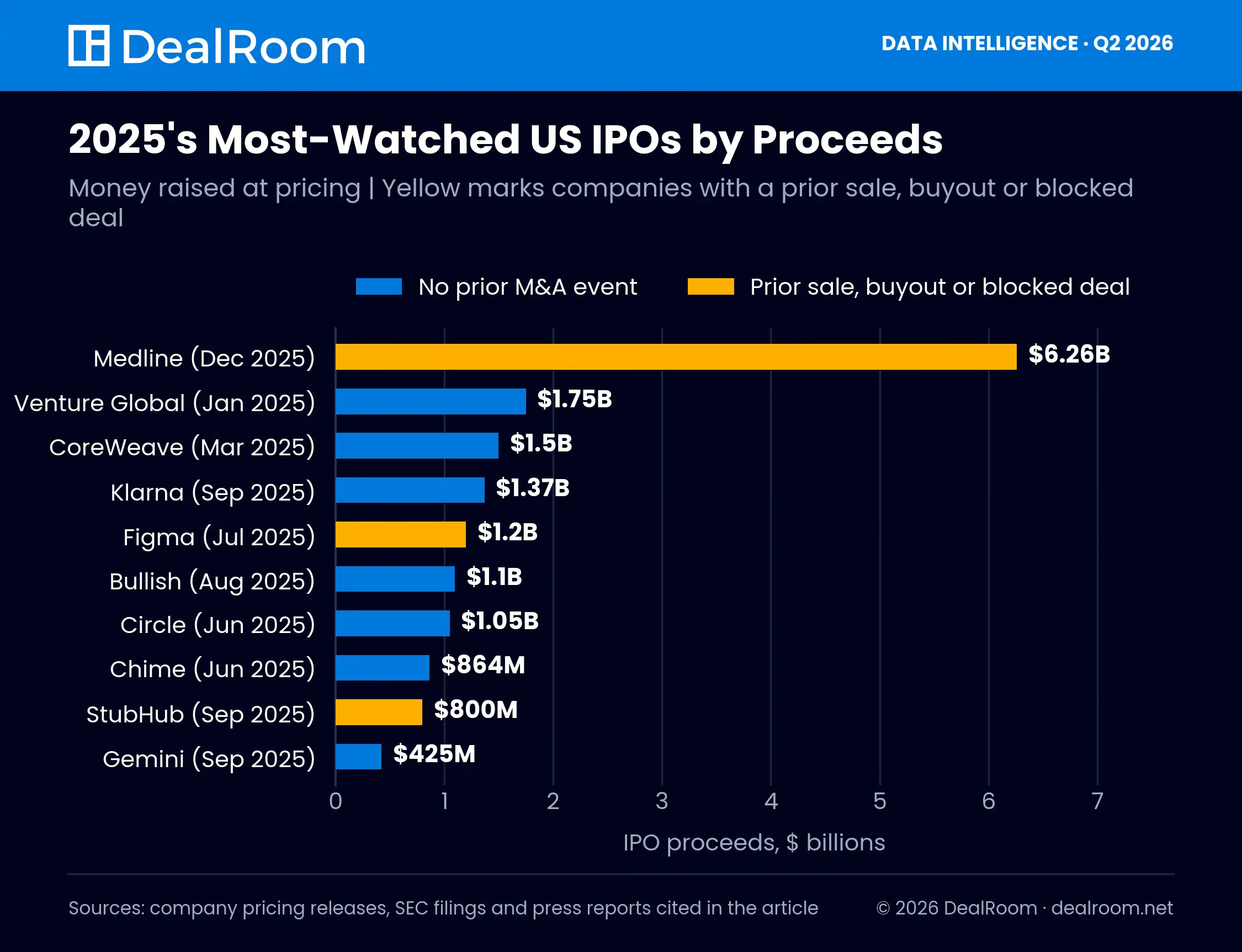
Chime’s IPO finally happened in June 2025 after years of anticipation. The company priced 32 million shares at $27 per share, above the expected range of $24 to $26 per share. That pricing raised about $864 million in gross proceeds and gave Chime a fully diluted market value of around $11.6 billion, which was down from its private-market peak near $25 billion. The stock began trading on the Nasdaq under the ticker CHYM on June 12, 2025.
At the start of trading, shares debuted around $43, well above the IPO price, peaking near $45 per share before settling lower. On the first day, the stock closed above the offer price, signaling strong early demand from public-market investors.
Chime’s business is built around mobile-first, low-cost banking products aimed at everyday consumers. It doesn’t operate as a bank itself. Instead, it offers fee-free checking, savings, early direct-deposit access, and other features through partnerships with chartered banks. That model helped it grow a large user base with millions of members by emphasizing simple, accessible accounts.
Some analysts view the IPO as a test of investor appetite for fintech outside the narrow set of payments or crypto listings that have already gone public. The strong debut suggests appetite may be returning for well-known digital financial brands, but the lower valuation compared with private rounds suggests caution remains around growth and profitability.
3. Klarna
Current Valuation: $10.284 billion
IPO Date: September 10, 2025
Stock Performance: −31.44%
Klarna, the Swedish fintech known for buy-now-pay-later (BNPL) services, went public on the New York Stock Exchange in September 2025. The company sold about 34.3 million shares at $40 a piece. That priced the deal at roughly $1.37 billion and gave the company a valuation around $15 billion at the time of the offering. The IPO priced above guidance, showing solid demand from institutional investors.
Trading started strong. Shares opened at $52, well above the IPO price. By the end of the first day, the stock closed just under $46 per share, about 15 percent higher than the $40 offer price, pushing Klarna’s market value to $17.4 billion. That performance marked one of the larger fintech debuts in the U.S. in 2025 and offered a boost of confidence to the broader IPO market.
Klarna’s path to IPO wasn’t smooth. It initially shelved plans earlier in 2025 due to market volatility and economic uncertainty. The company chose the U.S. market because it’s its largest and fastest-growing region, despite regulatory and competitive pressures. Klarna’s offerings now go beyond BNPL, including debit and credit products and embedded financial services with big partners.
After the listing, performance softened. When Klarna reported third-quarter 2025 results, provisions for credit losses spiked sharply year-over-year, and operating losses widened. That disclosure pushed the stock well below the IPO price, which has drawn scrutiny from investors and prompted a securities class-action lawsuit alleging that the IPO documents under-stated credit risk and loss reserve trends.
Klarna’s debut shows both the appetite for fintech public offerings and the challenges these business models face. Early aftermarket gains gave way to volatility as the company’s credit profile and growth story were tested in public markets.
4. CoreWeave
Current Valuation: $47.45 billion
IPO Date: March 28, 2025
Stock Performance: +149.74%
CoreWeave went public in late March 2025, pricing its initial public offering at $40 per share. The company sold 37.5 million shares and raised about $1.5 billion, significantly below earlier plans to sell more shares at a higher range of $47 to $55. That pricing gave CoreWeave a valuation near $23 billion on a fully diluted basis when trading began on the Nasdaq under the ticker CRWV.
The road to IPO was rocky. CoreWeave and its bankers trimmed the offering size and cut the price after gauging investor demand. Even so, it became one of the largest AI-related listings by proceeds raised in 2025.
Market reception was mixed at first. On day one, shares opened just below the IPO price at $39 and closed the day at its IPO price of $40, leaving the initial public debut relatively muted. Within a few days, the stock climbed above the offer price, at times trading in the low $50s on strong volume.
Before going public, CoreWeave posted rapid revenue growth, jumping from hundreds of millions to nearly $2 billion in 2024, though it still reported a net loss as it invested heavily in expansion. Major tech partners like Microsoft and OpenAI help anchor the business, with multi-billion-dollar agreements locking in future demand.
Since the IPO, the stock has moved sharply at times, reflecting both optimism about AI infrastructure growth and concerns around costs and capital intensity. As of early 2026, the share price sits well above the IPO level, though volatility remains a feature of trading as the company grows into its public role.
5. Figma
Current Valuation: $13.758 billion
IPO Date: July 31, 2025
Stock Performance: −28.71%
Figma priced its IPO at $33 per share and began trading on the New York Stock Exchange on July 31, 2025 under the ticker FIG. The company offered just under 37 million Class A shares. On its first trading day, Figma’s stock soared far above the offer price. It closed around $115.50, more than triple the IPO price, and lifted the company’s market value to about $50 billion. That first-day performance made the offering one of the most dramatic tech debuts of the year.
The surge on debut was driven by heavy demand and limited float, pushing the opening price well above expectations and creating significant early gains for those who received allocations at the IPO price. The strength of the debut also put the company’s valuation well above the $20 billion Adobe had offered in a buyout attempt a few years earlier before regulators blocked the deal.
In the days after the debut, profit-taking and post-IPO trading dynamics pushed the stock down from its early highs. A few days later, Figma’s market value was roughly $45 billion, about $11 billion below its peak but still far above the IPO price. Analysts framed the drop as typical early trading activity rather than a change in the company’s fundamentals.
Figma also faced pressure from its first quarterly earnings report as a public company. Shares slid on mixed results, including revenue growth that slightly missed expectations and earnings that disappointed relative to forecasts. That reaction highlighted the challenge of living up to a high valuation after such a spectacular market debut.
Figma’s IPO has broader significance for the tech market. It showed there is appetite for high growth, software-focused listings even after years of a quiet IPO market. At the same time, the volatility around the stock in the weeks after going public underscores the tension between investor enthusiasm at launch and the discipline of public market performance.
6. Gemini Space Station
Current Valuation: $1.228 billion
IPO Date: September 12, 2025
Stock Performance: −72.09%
Gemini Space Station, a cryptocurrency exchange founded by Cameron Winklevoss and Tyler Winklevoss, went public in September 2025, marking one of the most closely watched crypto IPOs since Coinbase. The company priced its offering at $28 per share, selling rougly 15.2 million shares and raising about $425 million.
Demand was strong going into the deal. The IPO was more than 20 times oversubscribed, signaling deep institutional interest despite ongoing skepticism around crypto markets. The company and its underwriters capped proceedings at about $425 million because of how quickly the book filled. The stock began trading on Nasdaq under the ticker GEMI.
The first day of trading was choppy. Shares opened at $37 and reached a high of around $46 before slipping to $32 by the close. Just a few days later, shares dropped below the $28 IPO price to $25. That pattern reflected a familiar dynamic for recent IPOs. Early enthusiasm met quick profit-taking, especially in a sector where sentiment can turn fast.
Analysts pointed to pressure on trading volumes and margins, along with continued uncertainty around U.S. crypto regulation. Some firms remained constructive on the stock, arguing that Gemini’s balance sheet and regulatory stance could matter more over a full cycle than short-term price moves.
Gemini’s IPO landed at an awkward moment for crypto. Oversubscription showed that capital is still there for well-known platforms. The uneven aftermarket performance showed how fragile confidence remains. For the broader IPO market, the deal worked less as a breakout moment and more as a reality check on how public investors are pricing crypto risk today.
7. StubHub
Current Valuation: $5.341 billion
IPO Date: September 17, 2025
Stock Performance: −37.91%
StubHub went public in mid-September 2025. The company priced the IPO at $23.50 per share and sold about 34 million shares, raising roughly $800 million in gross proceeds. The shares started trading on the NYSE under STUB.
The stock finished its first session below the IPO price, at $22.17 per share, even after an early pop. Coverage at the time framed StubHub as a well-known consumer brand entering a market that was open again, but still selective.
A few weeks later, Reuters reported the stock gained ground after several analysts started coverage with positive takes, which eased some post-IPO nerves. Barron’s highlighted a similar theme: the first impression was weak, but a number of firms still put out bullish ratings and price targets, arguing the selloff created an entry point.
StubHub’s first post-IPO report triggered a sharp drop after the company declined to give near-term guidance and said it would provide 2026 guidance later. That uncertainty became a bigger issue than the revenue line in the market reaction. By January 2026, investor-law-firm notices about a proposed class action were circulating, tied to post-IPO losses and disclosure claims.
8. Bullish
Current Valuation: $5.872 billion
IPO Date: August 13, 2025
Stock Performance: +8.74%
Bullish went public on August 13, 2025, pricing its initial offering at $37 per share, above the expected range of $32 to $33. The deal raised about $1.15 billion. Bullish arranged to receive a portion of its IPO proceeds in stablecoins (USD-backed digital assets). This was a first in U.S. IPO history, reflecting the exchange’s crypto-native focus and giving it extra balance-sheet flexibility as it scales.
Trading started strong. Shares debuted on the NYSE under the ticker BLSH and more than doubled on the first day, opening at $90 per share and closing at $68, well above the IPO price. The initial rise pushed Bullish’s implied valuation near $10.25 billion, drawing both excitement and skepticism from market watchers. Early performance was one of the best among 2025 IPOs, especially in the crypto and fintech space.
Backed by investors like Peter Thiel, its exchange offers trading in crypto alongside custody and settlement services. That positioned the company to be a beneficiary of renewed interest in regulated crypto platforms after years of volatility in the sector. Analysts cited Bullish’s deep liquidity and institutional-grade infrastructure as reasons for early investor demand.
Not everyone was bullish on BLSH, though. Some commentators pointed to high valuation and crypto’s broader macro challenges as reasons for caution. The stock’s post-IPO levels have fluctuated, with pullbacks from the initial surge reflecting profit-taking and broader market dynamics. Still, the debut opened the door for more crypto-focused companies to test public markets and suggested a thawing in investor sentiment toward digital-asset platforms.
9. Venture Global
Current Valuation: $20.76 billion
IPO Date: January 24, 2025
Stock Performance: −65.40%
Venture Global, a U.S. liquefied natural gas (LNG) exporter based in Arlington, Virginia, went public in January 2025. The company priced its initial public offering at $25 per share, within a revised range of $23 to $27 per share, and offered 70 million Class A shares. That pricing raised about $1.75 billion in gross proceeds, valuing the company at about $60.5 billion. The shares began trading on the New York Stock Exchange under the ticker VG on January 24, 2025.
Venture Global’s IPO was originally pitched at a much higher valuation and price range. The company had sought to offer 50 million shares at $40 to $46 per share, which would have fetched well over $2 billion, but strong investor pushback on earnings projections forced a significant revision.
The trading debut didn’t match expectations. Shares opened below the offer price at about $24.05 and closed the first day slightly under the $25 IPO price, marking a modest first-day decline. That start suggested investors were cautious about the company’s near-term earnings outlook and the broader LNG market backdrop, even as U.S. energy policy moved toward boosting exports.
After the IPO, the stock struggled. Venture Global shares spent much of the year trading below the offer price as legal challenges, operational delays, and revised growth expectations weighed on sentiment. By early 2026, the share price had slipped sharply from its debut levels, reflecting both broad energy sector pressures and specific execution concerns for the company.
Venture Global’s listing went into the record books as one of the largest energy IPOs of 2025 by proceeds, but the market reaction highlighted that heavyweight names in traditional energy still face scrutiny from public investors when future cash flows and contracts look uncertain.
10. Medline Industries
Current Valuation: $36.742 billion
IPO Date: December 17, 2025
Stock Performance: −0.70%
Medline Industries pulled off the largest IPO of 2025 in the U.S. The company priced 216,034,482 shares at $29 per share, in an upsized offering that raised about $6.26 billion in gross proceeds. Underwriters also received a 30-day option on an additional 32,405,172 shares. Medline began trading on the Nasdaq Global Select Market under the ticker MDLN on December 17, 2025.
The debut was strong. Shares opened about 20.7 percent above the offer price on their first day and closed sharply higher, ending roughly 40 percent above the IPO price in early trading. That initial performance pushed Medline’s valuation to roughly $46 billion on debut, a clear sign of investor appetite for a profitable, cash-generative industrial business after a year of uneven IPOs.
Medline is a major manufacturer and distributor of medical and surgical supplies, serving hospitals and care providers globally. Before the IPO, it was owned by a private equity consortium including Blackstone, Carlyle, and Hellman & Friedman, stemming from a $34 billion leveraged buyout in 2021. The company reported robust financials leading into the listing, with nearly $20.6 billion in revenue and close to $1 billion in net income for the nine months ended September 27, 2025.
The size and success of Medline’s IPO marked a key moment for the public markets. It capped a year where equity issuance regained momentum and signaled that large, private equity-backed industrial names could attract strong demand even outside tech or high growth sectors.

*Market Cap (intraday) as of January 20, 2026
**Stock performance reflects the percentage change in market capitalization since the IPO, based on opening valuation versus current valuation at the time of publication.
Biggest IPOs in 2024
1. Reddit
Current Valuation: $42.705 billion
IPO Date: March 21, 2024
Stock Performance: +567.27%
Reddit, the popular social media platform, made its public market debut on March 21, 2024, with an IPO priced at $34 per share, valuing the company at $6.4 billion. The shares, trading under the ticker symbol “RDDT” on the New York Stock Exchange, closed their first day at $50.44 per share, marking a 48 percent increase.
In the third quarter of 2024, Reddit reported its first quarterly profit since the IPO, with net income of $29.9 million, or 16 cents per share, and a 68 percent increase in revenue to $348.4 million. This financial milestone was accompanied by a surge in daily active users to 97.2 million, up from 66 million the previous year.
Despite these achievements, Reddit faced challenges in the fourth quarter of 2024. The company reported a 71 percent increase in revenue to $427.7 million and net income of $71 million. However, daily active users reached 101.7 million, falling short of the anticipated 103.24 million, leading to a 15 percent drop in stock price to $183.85 in extended trading.
Analysts remain optimistic about Reddit’s prospects. Deutsche Bank maintained a buy rating with a $235 price target, attributing the user growth slowdown to temporary factors such as changes in Google’s search algorithm. Morgan Stanley also recommended buying, highlighting Reddit’s strong advertising performance and potential growth from its AI tool, Reddit Answers.
As of February 19, 2025, Reddit’s stock trades at $187.13, reflecting a significant appreciation from its IPO price. The company’s focus on expanding its user base, enhancing advertising revenue, and integrating AI technologies positions it well for future growth in the competitive social media landscape.
2. Viking Holdings
Current Valuation: $30.321 billion
IPO Date: May 1, 2024
Stock Performance: +328.26%
Viking Holdings, the parent company of Viking Cruises, successfully launched its IPO on May 1, 2024. The IPO was 2024’s largest to date, raising approximately $1.77 billion.
Viking priced its shares at $24 each, listing on the NYSE under the ticker symbol “VIK.” The offering consisted of 73,647,916 ordinary shares, including 11 million from Viking itself and 62,647,916 from shareholders, primarily Canadian Pension Plan Investments (CPP) and TPG Capital.
Since its debut, Viking’s stock has performed well, trading as high as $32.63 per share and maintaining strong investor confidence. In the third quarter following the IPO, the company reported revenue of $1.68 billion and a net income of $374.8 million, or $0.86 per share. This represented a sharp turnaround from a prior loss of $1.24 billion, or $3.02 per share.
With a loyal customer base and a reputation for premium cruise experiences, Viking Holdings’ IPO and subsequent financial performance underscore its resilience and strategic positioning in the industry. As the company continues to expand its fleet and market presence, investors and analysts remain optimistic about its long-term growth prospects.
3. Amer Sports
Current Valuation: $20.22 billion
IPO Date: February 1, 2024
Stock Performance: +211.08%
Amer Sports Inc., a global conglomerate renowned for its portfolio of iconic sports and outdoor brands—including its flagship Arc’teryx, along with Salomon, Wilson, Peak Performance, Armada, and Atomic—went public on February 1, 2024 on the NYSE under the ticker symbol “AS.”. The company priced its initial offering at $13 per share, successfully raising approximately $1.37 billion.
The IPO proceeds were primarily allocated for debt repayment, strengthening the company’s financial position. Despite an initial muted response from investors, with the stock opening at $13.40 per share, Amer Sports demonstrated resilience in the subsequent months.
By the second quarter of 2024, the company reported a 16 percent increase in revenue, reaching $994 million, which surpassed forecasts. As of February 19, 2025, Amer Sports’ stock trades at $31.22 (its all-time high, first reached on January 6, 2025), reflecting strong investor confidence and a substantial 134 percent increase over its IPO price.
The company’s strategic focus on expanding its brand presence and enhancing direct-to-consumer channels has positioned it well for sustained growth in the competitive sports and outdoor industry.
4. Astera Labs
Current Valuation: $31.036 billion
IPO Date: March 20, 2024
Stock Performance: +335.90%
Astera Labs, a semiconductor company specializing in connectivity solutions for AI and cloud data centers, made a remarkable entrance into the public market 2024. The company sold 19.8 million shares of its common stock at its initial price of $36 per share, raising $712.8 million. It opened for trading at $52.56 per share on March 20, 2024.
After debuting on the NASDAQ under the ticker symbol “ALAB,” Astera Labs’ shares surged by 72 percent, closing at $62.03 on the first day of trading. This robust performance reflected strong investor confidence in the company’s role within the burgeoning AI sector.
Financially, Astera Labs has demonstrated impressive growth. In the third quarter of 2024, the company reported a 206 percent year-over-year increase in revenue, driven by high demand from clients such as Nvidia, Amazon, and Google.
5. Lineage, Inc.
Current Valuation: $8.818 billion
IPO Date: July 25, 2024
Stock Performance: −12.69%
Lineage, Inc., the world’s largest operator of temperature-controlled warehouses, made a significant entrance into the public market on July 25, 2024, with its IPO on the NASDAQ Global Select Market under the ticker symbol “LINE.” The company offered approximately 56.9 million shares at $78 per share, the upper end of the anticipated range, raising $4.44 billion. This achievement marked the largest IPO of 2024 to date, more than twice the size of Viking Holdings’ May 2024 IPO, and the largest public offering since Arm Holdings’ $4.8 billion listing in September 2023.
The IPO’s proceeds are earmarked for strategic financial maneuvers, such as repaying existing debts, funding employee-related expenses, and general corporate purposes. Despite the initial success, Lineage’s stock experienced a 25 percent decline from its IPO price within the first six months, reflecting challenges in the cold-storage sector as food companies and retailers reduced inventories.
Analysts have shown a positive outlook on Lineage’s market position and growth potential. J.P. Morgan initiated coverage with an overweight rating and a $93 price target, highlighting Lineage’s leadership in the temperature-controlled warehouse industry.
Similarly, Truist Securities emphasized the company’s competitive advantages, setting a $94 price target. The company’s strategic initiatives and robust infrastructure position it well for future growth and resilience in the evolving global supply chain landscape.
6. UL Solutions
Current Valuation: $14.654 billion
IPO Date: April 12, 2024
Stock Performance: +115.50%
UL Solutions, a prominent safety science company specializing in testing, inspection, and certification services, successfully launched its IPO on April 12, 2024. The company offered 33.8 million shares at $28 per share, the higher end of the targeted range, raising approximately $946.4 million. The shares debuted on the NYSE under the ticker symbol “ULS,” opening at $34 and closing with a 21 percent increase, valuing the company at $6.8 billion.
The net proceeds from the IPO, totaling $1.03 billion, were allocated to UL Solutions’ parent nonprofit organization, UL Standards & Engagement (ULSE). ULSE intends to use these funds to advance its charitable mission, including standards development, public advocacy activities, and supporting the safety science research of its affiliate, UL Research Institutes.
In 2023, UL Solutions reported annual revenue of $2.68 billion, reflecting growth from $2.52 billion in the previous year. The company’s services are increasingly in demand due to heightened regulatory requirements and international standards, and corporations invest more in safety certifications. UL Solutions’ successful IPO underscores its strong market position and the critical role it plays in global safety compliance in certification.
7. StandardAero
Current Valuation: $10.713 billion
IPO Date: October 2, 2024
Stock Performance: +3.21%
StandardAero, a prominent aircraft maintenance services provider, made a notable entrance into the public market on October 2, 2024, with its IPO on the NYSE under the ticker symbol “SARO.” The company offered 60 million shares at $24 each, higher than its initial price range of $20 to $23, and successfully raised $1.44 billion.
The IPO’s success reflects a strong investor confidence in StandardAero’s market position and growth prospects. The company’s shares opened at $31 on their debut, a 29% increase from the offering price, elevating its valuation to $10.38 billion. This robust performance underscores the resilience of the aerospace aftermarket sector, especially as global travel demand rebounds.
StandardAero reported $2.58 billion in revenue for the first half of 2024, marking a 12% year-over-year increase. The company achieved a net income of $8.6 million during this period, a significant turnaround from a $12.6 million loss in 2023.
The IPO proceeds are intended to support StandardAero’s strategic initiatives, including debt reduction and potential mergers and acquisitions to further expand its service offerings. With a century-long legacy and a strategic growth plan, the company is well-positioned to capitalize on the increasing demand for aerospace maintenance services in the global aviation landscape.
8. Loar
Current Valuation: $6.752 billion
IPO Date: April 25, 2024
Stock Performance: +117.81%
Loar Holdings Inc., a diversified manufacturer and supplier of niche aerospace and defense components, successfully launched its IPO on April 25, 2024. The company offered 11 million shares at $28 per share, exceeding the expected range of $24 to $26, raising approximately $308 million. Shares debuted on the NYSE under the ticker symbol “LOAR” and closed the first day at $48.80, a remarkable 74 percent increase over its IPO price.
In the second quarter of 2024, Loar reported earnings of 13 cents per share on sales of $97 million, marking a 31 percent year-over-year increase. This growth was partly attributed to Loar’s acquisition of Applied Avionics, a company specializing in interface solutions for avionics and other aerospace and defense electronics.
Analysts predict that Loar’s annual earnings will grow by 71 percent in 2025, reflecting strong market demand and the company’s strategic positioning within the aerospace sector. Despite a decline in its 50-day moving average in October 2024, Loar proved its resilience, with shares tripling from the IPO price within six months.
9. Rubrik
Current Valuation: $12.985 billion
IPO Date: April 25, 2024
Stock Performance: +125.43%
Rubrik, a prominent data security firm, successfully launched its IPO on April 25, 2024, making it the first cybersecurity vendor to go public in more than two years. The company offered 23.5 million shares at $32 each, surpassing the anticipated range of $28 to $31, and raising $752 million. The stock opened at $38.60 per share and ended its first day of trading at $37 per share, 16 percent higher than its initial share price.
Following its debut on the NYSE under the ticker symbol “RBRK,” Rubrik’s stock experienced fluctuations. In September 2024, as the IPO lock-up period neared its end, shares declined by more than 6 percent, influenced by the impending release of insider-held shares into the market. Despite this, the company’s financial performance remained robust, with second-quarter revenue reaching approximately $205 million, exceeding analysts’ expectations of $196.2 million.
Rubrik has had an impressive growth trajectory, with annual recurring revenue climbing 47 percent to $784 million as of January 31, 2024, up from $532.9 million the previous year. Total revenue for the same period increased by 5 percent to $627.9 million.
Rubrik’s successful IPO and subsequent financial performance underscore its pivotal role in the data security sector. The company’s strategic focus on zero-trust principles and growing customer base suggest a promising outlook.
10. Ingram Micro
Current Valuation: $4.913 billion
IPO Date: October 24, 2024
Stock Performance: −5.15%
Ingram Micro Inc., a leading global distributor of technology products and services, re-entered the public market on October 24, 2024, with a successful IPO on the NYSE under the ticker symbol “INGM.” The company and its majority owner, Platinum Equity, offered a combined 18.6 million shares at $22 each, within the anticipated range of $20 to $23, raising approximately $409.2 million. The IPO valued Ingram Micro at $5.18 billion, and the stock opened trading at $25.28, reflecting strong investor demand.
The company’s extensive portfolio includes products from major manufacturers such as Apple, HP, and Cisco. In 2023, Ingram Micro reported net revenue of $48 billion and a net income of $352.7 million.
The proceeds from the IPO are earmarked primarily for debt reduction with the aim of strengthening the company’s financial position. Despite the public offering, Platinum Equity retains a controlling 90 percent stake in Ingram Micro. Its return to the public markets underscores its robust market position and strategic vision in the rapidly evolving technology distribution sector.
*Market Cap (intraday) as of January 20, 2026
**Stock performance reflects the percentage change in market capitalization since the IPO, based on opening valuation versus current valuation at the time of publication.
Biggest IPOs in 2023
1. Arm
Current Valuation: $113.707 billion
IPO Date: September 14, 2023
Stock Performance: +108.64%
We hope you have the foresight to make some strategic investments in this semiconductor company. Arm came out of the gates with a price of $56.10 per share and has been on an upward trajectory since it’s available on the NASDAQ stock exchange. As of this writing, it stands at $157.81 per share, which is clear evidence of Arm’s success with cloud computing companies and data centers and a vote of confidence from investors for Arm’s long-term prospects.
2. Kenvue
Current Valuation: $33.701 billion
IPO Date: May 5, 2023,
Stock Performance: −30.08%
Despite an impressive debut in a relatively lackluster year for IPOs, Kenvue has since run into trouble. Notably, a securities class action lawsuit against the health manufacturer, known best for brands such as Band-Aid and Benadryl, accused the company of making fraudulent and misleading statements to its consumers. As a result, its shares have dropped from a debut price of $26.90 to $21.98 as of this writing.
3. Cava
Current Valuation: $8.009 billion
IPO Date: June 12, 2023
Stock Performance: +86.26%
Cava, a fast-casual Mediterranean restaurant chain with 379 locations and growing, has stoked an appetite. Its stock has risen more than 200 percent since its debut, soaring from an IPO price of $43.30 a share to $120.34 as of this writing. While it’s clear investors are banking on Cava’s continued long-term growth, those on the sidelines may want to take a wait-and-see approach. The chain’s price-to-earnings ratio is in the hundreds, which could mean the stock price is overly optimistic.
4. Birkenstock
Current Valuation: $6.832 billion
IPO Date: October 11, 2023
Stock Performance: +10.19%
While Birkenstock’s IPO may be relatively new, the company itself certainly isn’t. Founded over 300 years ago, the footwear company knows how to run its business. Opening at a healthy stock price of $41 a share, it now stands at $54.58 (as of this writing) – not a record-breaking feat, but still a sign of comfortable growth. Continued strong consumer demand shows this company is likely headed toward continued success.
5. Vinfast
Current Valuation: $7.814 billion
IPO Date: August 15, 2023
Stock Performance: −66.75%
Electric vehicle maker Vinfast has had its share of troubles since its IPO debut. These troubles began even before it went public when the company set ambitious delivery targets that it could not meet. Rising interest rates, sluggish US sales, and a pricey new plant that has met increasing delays have all contributed to what became one of 2023’s most disappointing IPOs. Vinfast’s opening stock price of $22 a share is now down to just $0.36 as of this writing.
6. Instacart
Current Valuation: $10.156 billion
IPO Date: September 19, 2023
Stock Performance: +3.63%
Buyers of Instacart stock were likely disappointed by the grocery delivery service’s initial performance, which saw its stock slip down from their debut of $42 a share. Whether this performance was indicative of Instacart itself or investors’ continued hesitance around tech companies is up for debate. What isn’t is that Instacart has rallied in recent months, overcoming its initial loss and then some, which is a possible sign of tech’s resurgence. Current stock prices now stand at $53.15 a share as of this writing.
7. Nextracker
Current Valuation: $14.614 billion
IPO Date: February 9, 2023
Stock Performance: +160.96%
The sun has been shining on Nextracker. Since its public debut, the solar company has consistently and significantly outperformed competitors and even the S&P itself. Strong demand and the company’s continued efforts at optimizing its supply chain and driving sales through strategic pricing have resulted in stock gains to match. Since its debut, its price per share has gone from $24 to $49.92 as of this writing.
8. Klaviyo
Current Valuation: $7.31 billion
IPO Date: September 20, 2023
Stock Performance: −23.05%
Count Klaviyo is another victim of the hostile environment tech IPOs faced throughout 2023. The marketing automation and email platform seemed well-positioned enough for a public offering with strong revenue and year-over-year growth, but it wasn’t enough to convince investors. However, continued earnings and a full embrace of AI have begun to turn the tide. From a debut stock price of $36.75, Klaviyo now stands at $46.93.
9. Savers Value Village
Current Valuation: $1.609 billion
IPO Date: June 19, 2023
Stock Performance: −23.38%
The lackluster performance of Savers Value Village, a retailer specializing in thrift stores, can largely be attributed to the dynamic environment in which it operates. Its stock went from $18 a share at opening to just $11.19 as of this writing. Always unpredictable, the retail market was especially volatile in the years coming out of the pandemic. But don’t write off the company yet. Its acquisition of 2 Peaches Group gave it a foothold in the Southeast, while a new CFO is expected to drive more growth opportunities.
10. Neumora Therapeutics
Current Valuation: $317.785 million
IPO Date: September 15, 2023
Stock Performance: −88.23%
Neumora Therapeutics, makers of various treatments for brain and neurodegenerative diseases, already exists in a harsh industry with razor-thin margins for revenue. So it hasn’t helped that its spending has far outpaced what the company manages to bring in. As a result, its annual rate of return stands at -90.37 percent. This has contributed to the drop in stock price from $16.50 per share to just $1.64 as of this writing.
*Market Cap (intraday) as of January 20, 2026
**Stock performance reflects the percentage change in market capitalization since the IPO, based on opening valuation versus current valuation at the time of publication.
Biggest IPOs in 2022
1. Mobileye
Current Valuation: $8.561 billion
IPO Date: October 26, 2022
Stock Performance: −59.81%
The Israeli-based (and Intel-owned) microchip manufacturer was one of the rare highlights of an otherwise depressing year for technology IPOs. And this optimism was well placed, with Mobileye stocks steadily rising since they went public and hitting a peak at the beginning of this year. Since then, however, the company has underperformed, sending them back to where they began. But the story is far from over here. The growth of the autonomous driving market and many large contracts, including with Volkswagen, may mean good times are ahead.
2. Corebridge Financial
Current Valuation: $14.839 billion
IPO Date: September 14, 2022
Stock Performance: +0.95%
Originally spun out of insurance giant AIG, Corebridge Financial has been on an upward trajectory ever since. One of the few businesses on this list to benefit from elevated interest rates, consumers have been flocking to its annuity products, leading to record profits. With AIG now fully divested from the company, Corebridge doesn’t seem to have trouble growing the business without AIG branding. Substantial investments and a solid market look will fuel continued growth for this company.
3. TPG Inc
Current Valuation: $24.089 billion
IPO Date: January 12, 2022
Stock Performance: +118.99%
TPG entered the public market at what turned out to be a historically volatile time for stocks. Still, the private equity firm did have a few things going for it, most notably a history of positive investment returns. This understanding has carried it through the past two years as TPG has the foresight to diversify its portfolio beyond its traditional focus on tech and healthcare and instead invest heavily in private credit, one of the fastest-growing finance segments. Its stock performance shows this success.
4. Bausch and Lomb
Current Valuation: $6.053 billion
IPO Date: May 5, 2022
Stock Performance: −13.53%
There’s more than meets the eye with this IPO. A spin-off of Bausch Health after the parent company had dealt with heavy losses and mounting debt, Bausch and Lomb started its IPO with Bausch still owning an 80 percent stake. Since then, it has pursued an aggressive M&A strategy, producing solid revenue. So why is its stock down? You can blame the parent company’s $20 billion in debt. But this could be good news for potential investors looking for a stock valued lower than it should be.
5. Credo Technology Group
Current Valuation: $27.676 billion
IPO Date: Jan 26, 2022
Stock Performance: +1,158.00%
Early investors in Credo Technology should be celebrating – and for good reason. While the high-speed connectivity manufacturer debuted at an inauspicious time for tech stocks as a whole and, as a result, did not see excellent performance initially, it has been on a steep rise ever since the start of 2023. Fueled by massive spending on AI and the need for high-speed solutions at data centers, Credo is well-positioned to continue to capitalize on this growth.
6. Excelerate Energy
Current Valuation: $3.794 billion
IPO Date: April 12, 2022
Stock Performance: +26.47%
Building the infrastructure needed to meet the demand for liquid natural gas is crucial for reducing the harmful emissions from dirtier energy sources like coal. Yet, this need has to translate into success for investors. Excelerate Energy experienced some challenges such as an oversupply of natural gas in the US and increased stress in shipping capacity as essential routes through the Red Sea and Panama Canal were constrained. All this has meant its stock price dropped for a time, but investors are now seeing gains.
7. CinCor Pharma
Current Valuation: Now Privately Held
IPO Date: Jan 6, 2022
Stock Performance: N/A
CinCor Pharma, a biopharmaceutical company focused on heart and kidney diseases, initially enjoyed a surge of interest after it went public. However, a year later, its shares dropped below their debut price after a failed clinical trial. Taking advantage of this price, AstraZeneca reached a deal to acquire the company, sending its share prices soaring again. The company, founded in 2018 and publicly listed in January 2022, completed its acquisition by AstraZeneca in early 2023.
8. ProFac Holding
Current Valuation: $846.477 million
IPO Date: May 12, 2022
Stock Performance: −70.81%
As one of the most vertically integrated pumping companies in the fracturing industry, ProFac was in a strong position at the outset of its IPO. At least, investors thought so, as evidenced by the company’s impressive stock price throughout 2022. However, by the following year, certain industry realities, such as soft demand, a fragmented market, and ProFrac’s elevated debt levels, began to catch up. Subsequently, stock prices have slipped below debut IPO levels, with more volatility likely on the horizon.
9. HilleVax
Current Valuation: Now Privately Held
IPO Date: April 28, 2022
Stock Performance: N/A
Spun out from Takeda to focus solely on developing its proprietary norovirus vaccine, HilleVax initially garnered around $135 million from its IPO. If investor confidence has proven shaky since then, it could be because vaccine stocks traditionally produce poor ROIs. That said, norovirus affects 20 million people in the US each year, providing a large potential market. Unfortunately, with few exceptions (such as the coronavirus), few clinical trials succeed. XOMA Royalty acquired the company in September 2025, and HilleVax became a wholly owned subsidiary of XOMA Royalty.
10. Amylyx Pharma
Current Valuation: $1.818 billion
IPO Date: Jan 6, 2022
Stock Performance: +21.20%
As is often typical for healthcare-focused companies, Amylyx offers investors a nuanced and potentially lucrative picture. However, their ALS treatment, Relyvrio, was pulled from the U.S. market in 2024 after patients failed to benefit from the treatment in studies. Amylyx also faces stiff competition from more prominent players in the market. Investors have remained skeptical over the long-term prospects of this stock, hence its drop, but as the company has other drugs in its research and development pipeline, this could be a case of riches going to the ones who know how to wait.
Frequently Asked Questions
Why do companies go public?
Companies go public to raise capital, increase liquidity, and expand their market presence. By offering shares to the public through an Initial Public Offering (IPO), companies can fund growth initiatives, reduce debt, and gain broader access to capital markets. Going public also enhances brand visibility and provides existing investors with an opportunity to cash out or realize the value of their investment.
How can I invest in an IPO?
To invest in an IPO, you typically need to have a brokerage account. Some brokerages offer access to IPO shares, but they may require you to meet certain eligibility criteria. Alternatively, you can buy shares once they start trading on the stock exchange.
How do I evaluate an IPO?
To evaluate an IPO, consider company fundamentals such as revenue growth, profitability, and competitive advantage. Compare the IPO price to the company’s earnings and industry peers. Assess the overall market environment and investor sentiment, and understand how the company plans to use the funds raised.
What are the risks of investing in IPOs?
Investing in IPOs can be risky because newly public companies often lack a proven track record in the stock market. Prices can be volatile, and there’s no guarantee of success. It’s important to research the company’s financials, business model, and market potential before investing.
How do market conditions affect IPOs?
Market conditions play a significant role in the success of IPOs. A bullish market with high investor confidence tends to result in more successful IPOs, while a bearish market can lead to delays or lower valuations. Factors like interest rates, economic growth, and geopolitical events also influence IPO activity.
Key Takeaways
2026 looks like a real reopening for IPOs, but not a straight line up. Renaissance Capital expects a step up in activity this year, with about 200 to 230 IPOs and $40 to $60 billion raised, driven by bigger issuers coming back to market. That matters because the last couple of years had plenty of good stories that still struggled once trading started.
The real tell will be how the market treats the next wave of large, headline deals. AI, fintech, and digital assets have the biggest backlog, but public investors have been quick to punish weak guidance, unclear unit economics, or credit risk. Recent IPOs showed that a strong first day does not guarantee a stable first year. That creates a higher bar for 2026 candidates on pricing and disclosure.
For deal teams, this environment rewards preparation. Companies that treat an IPO like a process, not a date, tend to move faster when the window opens. The DealRoom M&A Platform helps teams streamline and manage due diligence, track readiness work, and stay aligned across legal, finance, and advisers when timelines shift.
DealRoom provides a single source of truth and efficient collaboration tools for investors, companies, and financial teams preparing for a merger or acquisition. Request a demo today to learn how DealRoom can transform your due diligence processes.


.webp)
.webp)
.webp)


.webp)
.webp)
.webp)

.png)