



M&A entered 2026 with real momentum again. 2025 brought the megadeal back, and confidence improved as financing conditions stabilized.
Buyers also got more comfortable underwriting growth in a market shaped by AI. More predictable policy signals helped too. That mix set the tone for 2026 as a year where boards act faster and run tighter processes.
Analysts expect deal volume to skew toward fewer deals with bigger price tags. Strategic buyers want scale in categories that are hard to build organically, while sponsors want quality assets where public market pricing still leaves room for upside. Buyers are prioritizing targets that unlock clear product expansion or control of critical infrastructure like data centers and security.
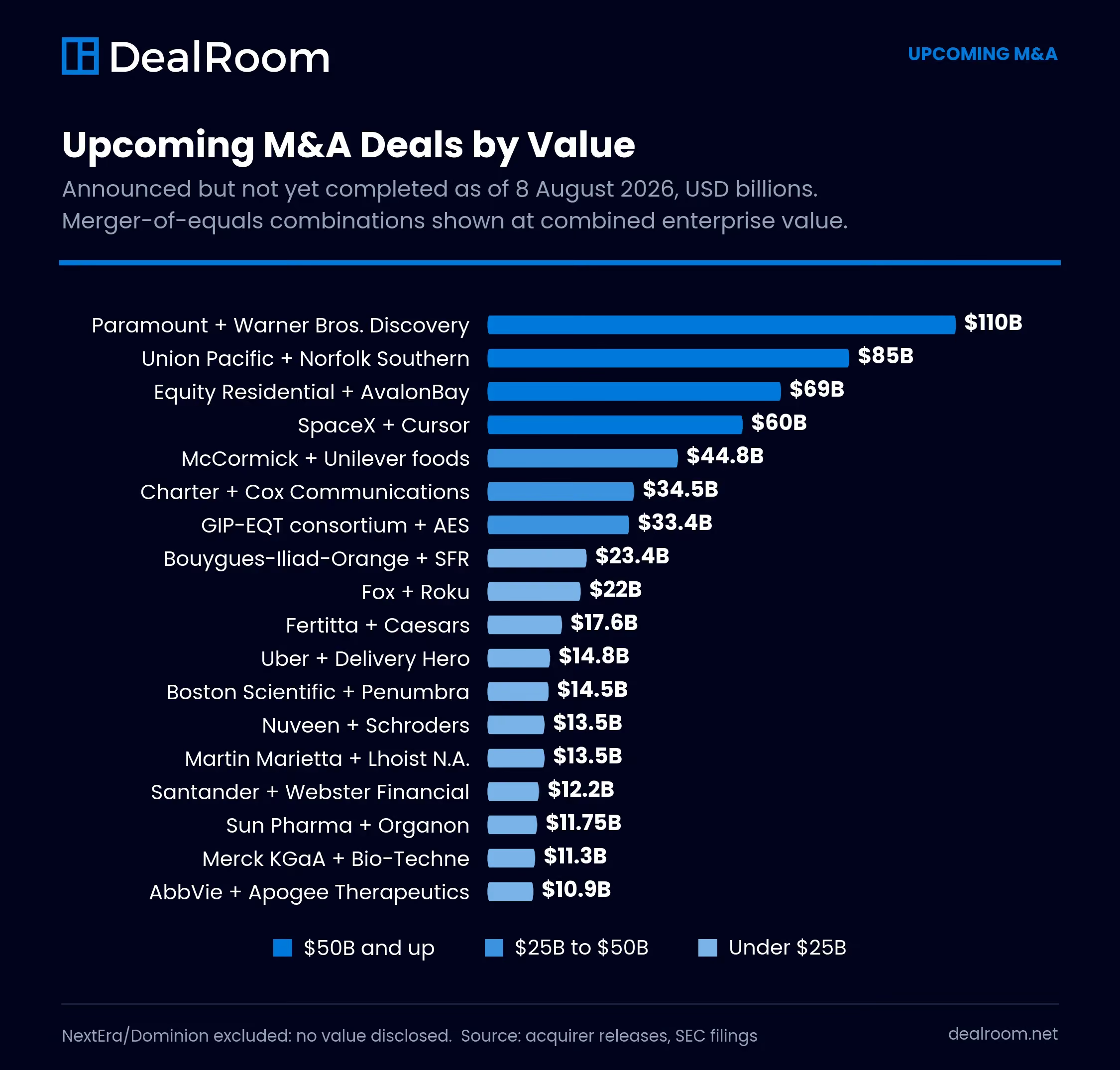
This blog will explore the most significant and upcoming M&A deals of 2026 and major mergers or acquisitions that made waves in 2024 and 2025.
Upcoming Mergers and Acquisitions in 2026-2027
- Eli Lilly’s Acquisition of Ventyx Biosciences
- Boston Scientific’s Acquisition of Penumbra
- Hg Capital’s Acquisition of OneStream
- Netflix’s Acquisition of Warner Bros. Discovery
- Charter Communications’ Merger with Cox Communications
- SoftBank’s Acquisition of DigitalBridge
- Sanofi’s Acquisition of Dynavax Technologies
- GSK’s Acquisition of RAPT Therapeutics
- Allegiant’s Acquisition of Sun Country Airlines
- EGH Acquisition Corp.’s Acquisition Merger with Hecate Energy
- PIF, Silver Lake, and Affinity Partners’ Acquisition of Electronic Arts
- SoftBank’s Acquisition of ABB Robotics
- Union Pacific’s Merger with Norfolk Southern
- AstraZeneca’s Acquisition of Modella AI
- Google’s Acquisition of Wiz
1. Eli Lilly’s Acquisition of Ventyx Biosciences

- Projected Date: H1 2026
- Value: $1.2 billion
- Industry: Pharmaceuticals
Eli Lilly agreed to acquire Ventyx Biosciences in a $1.2 billion all-cash deal as part of a broader push to expand beyond blockbuster metabolic drugs. The deal reflects Lilly’s growing focus on inflammation and immune-driven diseases.
Ventyx develops oral therapies targeting chronic inflammatory conditions, including Crohn’s disease, ulcerative colitis, cardiometabolic disorders, and neurodegenerative diseases. Its pipeline centers on NLRP3 inflammasome inhibitors, a drug class that blocks inflammatory signaling and shows potential across multiple disease areas.
Strategically, the acquisition strengthens Lilly’s immunology and cardiometabolic portfolios while addressing a pipeline gap. Analysts view the transaction as a relatively small but high-potential bet on emerging inflammation targets that could complement Lilly’s existing franchises.
The Ventyx deal fits a familiar pattern in biotech consolidation. Large pharmaceutical companies continue to pursue bolt-on acquisitions to diversify pipelines and secure differentiated science before clinical proof becomes fully priced in. In 2026, this type of targeted acquisition is likely to remain a key driver of deal activity in the biopharma sector.
2. Boston Scientific’s Acquisition of Penumbra

- Projected Date: H2 2026
- Value: $14.5 billion
- Industry: Medical Devices and Cardiovascular Technology
Boston Scientific agreed to acquire Penumbra in a cash-and-stock transaction valued at about $14.5 billion. The deal is expected to close in 2026, subject to shareholder approval and regulatory conditions. Penumbra shareholders will receive $374 per share, with roughly 73% paid in cash and the remaining 27% in Boston Scientific stock.
The deal gives Boston Scientific access to fast-growing segments where it previously had limited presence and relatively little product overlap with Penumbra’s portfolio. The transaction aligns with Boston Scientific’s push to scale in high-growth cardiovascular and neurovascular categories.
Penumbra’s devices strengthen Boston Scientific’s relationships with vascular surgeons and broaden its technology base in mechanical thrombectomy and neurovascular procedures. Analysts expect the combination to accelerate Penumbra's market expansion and global distribution while reinforcing Boston Scientific’s long-term growth profile.
3. Hg Capital’s Acquisition of OneStream

- Projected Date: H1 2026
- Value: $6.4 billion
- Industry: Enterprise Software, Fintech
Hg agreed to acquire OneStream in an all-cash deal valued at about $6.4 billion. The transaction will take the company private less than two years after its IPO. The deal is expected to close in the first half of 2026, subject to regulatory approval and shareholder consent.
The acquisition reflects a classic private equity play in the enterprise software space. OneStream provides corporate performance management software used by finance teams for planning, consolidation, and reporting.
Hg specializes in buying software companies with recurring revenue and strong customer retention. OneStream fits that profile closely. The offer represents a premium to OneStream’s recent trading price, signaling confidence in long-term growth despite short-term public market volatility. For Hg, the acquisition strengthens its financial software portfolio and deepens its position in mission-critical enterprise platforms.
4. Netflix’s Acquisition of Warner Bros. Discovery

- Projected Date: TBD (pending regulatory approval)
- Value: $83 billion
- Industry: Media and Entertainment
Netflix proposed an acquisition of Warner Bros. Discovery in a deal valued at nearly $83 billion. The bid combines cash and stock depending on the latest offer structure and negotiations. Paramount also explored a competing bid for Warner Bros. Discovery, which pushed Netflix to submit an amended all-cash offer to secure board support and block a rival takeover attempt.
The transaction remains under regulatory review and faces significant uncertainty from investors and policymakers. Market reaction has been mixed, with Netflix shares falling after the announcement amid investor questions about the strategic and financial logic of the deal.
Netflix dominates streaming but lacks traditional media infrastructure. Warner Bros. Discovery has scale and content but faces pressure from debt and declining linear TV. The proposed merger aims to address both problems in a single move.
Critics point to integration risk and a price that assumes ambitious synergies and long-term growth. If completed, this deal would rank among the largest media deals in history and accelerate consolidation across streaming and entertainment.
5. Charter Communications’ Merger with Cox Communications

- Projected Date: TBD (pending regulatory approval)
- Value: $34.5 billion
- Industry: Telecommunications
Charter Communications and Cox Communications agreed to combine in a deal valued at about $34.5 billion. The transaction would create the largest cable and broadband provider in the United States by subscribers. The merger remains subject to regulatory review and approval, with both companies defending the deal before the FCC and antitrust authorities.
This transaction represents a defensive merger rather than a growth-driven acquisition. Cable operators increasingly use consolidation to protect margins and maintain relevance amid intensifying competition. Analysts view the Charter-Cox deal as part of a broader wave of telecom consolidation driven by declining linear TV revenue and rising capital requirements for network upgrades.
Critics argue the merger could reduce competition and raise broadband prices in key regional markets. Charter and Cox counter that the combined company would accelerate network investment and expand consumer choice through bundled broadband and mobile services. The outcome of the review process will shape not only the future of the two companies but also the direction of U.S. cable industry consolidation in 2026.
6. SoftBank’s Acquisition of DigitalBridge

- Projected Date: H1 2026
- Value: $4 billion
- Industry: Technology, Data Centers
SoftBank agreed to acquire DigitalBridge for about $4 billion. The transaction is expected to close in the first half of 2026, subject to regulatory approvals and customary conditions. The deal positions SoftBank to expand its role in the data center ecosystem as demand for AI compute and connectivity continues to accelerate.
By acquiring DigitalBridge, SoftBank gains direct access to physical infrastructure that underpins AI workloads and cloud services. The move aligns with SoftBank’s broader effort to shift from venture-style investments toward more stable, asset-backed platforms that support long-term AI growth.
7. Sanofi’s Acquisition of Dynavax Technologies

- Projected Date: Q1 2026
- Value: $2.2 billion
- Industry: Biopharma, Vaccines
Sanofi agreed to acquire Dynavax Technologies in an all-cash deal valued at about $2.2 billion. The transaction is expected to close in early 2026, subject to regulatory approvals and customary conditions. Sanofi will pay $15.50 per share, representing a significant premium over Dynavax’s recent trading price.
The acquisition strengthens Sanofi’s position in adult immunization. Dynavax brings a marketed hepatitis B vaccine and a shingles vaccine candidate into Sanofi’s portfolio. Analysts described the acquisition as a logical strategic fit given Sanofi’s existing vaccine capabilities and need to expand its adult vaccine offering. Sanofi has increasingly turned to M&A after setbacks in drug development and regulatory outcomes.
8. GSK’s Acquisition of RAPT Therapeutics

- Projected Date: Q1 2026
- Value: $1.9 billion
- Industry: Biopharma, Immunology
GSK agreed to acquire RAPT Therapeutics in an all-cash transaction that values the company at about $2.2 billion, with an upfront investment of roughly $1.9 billion net of cash. The deal is structured as a tender offer followed by a second-step merger, rather than a merger of equals. The transaction is expected to close in the first quarter of 2026, subject to customary conditions and regulatory approvals.
The acquisition centers on Ozureprubart, a long-acting anti-IgE antibody in phase IIb development for the prevention of food allergy. GSK sees the asset as a potential best-in-class therapy with less frequent dosing than current treatments, addressing a large unmet need in allergy care.
The deal strengthens GSK’s respiratory, immunology, and inflammation pipeline and expands its footprint in food allergy, a market with growing prevalence and limited treatment options.
9. Allegiant’s Acquisition of Sun Country Airlines

- Projected Date: H2 2026
- Value: $1.5 billion
- Industry: Airlines
Allegiant agreed to acquire Sun Country Airlines in a cash-and-stock transaction valued at about $1.5 billion, including debt. The deal is expected to close in the second half of 2026, subject to regulatory approvals and shareholder consent. The combined airline will be headquartered in Las Vegas and operate under the Allegiant brand.
Allegiant and Sun Country operate largely complementary route networks with limited overlap, reducing antitrust risk and strengthening the combined footprint across small, mid-sized, and larger cities. The merged airline is expected to serve roughly 175 cities with more than 650 routes and a fleet of about 195 aircraft.
Allegiant anticipates about $140 million in annual synergies by the third year after closing. The transaction structure also reflects a balanced ownership model, with Allegiant shareholders holding about two-thirds of the combined company and Sun Country shareholders owning roughly one-third.
This deal reflects a defensive consolidation trend in U.S. aviation. Low-cost carriers face rising costs, competition from larger airlines, and shifting demand patterns tied to leisure travel. By combining operations, Allegiant and Sun Country aim to create an adaptable and resilient airline model in a volatile market.
10. EGH Acquisition Corp.’s Acquisition Merger with Hecate Energy

- Projected Date: Mid-2026
- Value: $1.2 billion
- Industry: Energy Infrastructure and Renewables
EGH Acquisition Corp. agreed to merge with Hecate Energy in a $1.2 billion SPAC transaction that will take the company public. The combined entity is expected to list on Nasdaq under the ticker HCTE.
Hecate is a U.S.-based energy infrastructure developer focused on utility-scale projects across solar, battery storage, wind, and thermal generation. The company operates across dozens of states and has developed a large pipeline of energy projects, having sold more than 12 gigawatts of assets and pursuing additional projects in advanced negotiations.
The merger pairs Hecate’s development portfolio with EGH’s SPAC capital, creating a publicly traded platform positioned to scale project development and attract institutional investors. The merger is expected to close by mid-2026, subject to shareholder and regulatory approval.
This deal reflects growing demand for power infrastructure driven by data centers and AI workloads. Rising electricity consumption has increased investor interest in companies that control renewable and hybrid generation capacity. Going public through a SPAC gives Hecate faster access to capital markets compared with a traditional IPO, while EGH secures a target aligned with its focus on energy transition and infrastructure assets.
11. PIF, Silver Lake, and Affinity Partners’ Acquisition of Electronic Arts

- Projected Date: Mid-2026
- Value: $55 billion
- Industry: Interactive Entertainment, Video Games
A consortium led by Saudi Arabia’s Public Investment Fund, Silver Lake, and Affinity Partners agreed to acquire Electronic Arts in a $55 billion leveraged buyout that will take the company private. The all-cash offer values EA at $210 per share, representing a roughly 25 percent premium to its unaffected share price. If completed, the transaction will be the largest leveraged buyout in history and the second-largest gaming acquisition ever, next to the often-discussed Microsoft-Activision Blizzard deal.
The deal is expected to close in the first quarter of EA’s fiscal 2027 (mid-2026), subject to shareholder approval and regulatory review, including scrutiny tied to foreign investment. Financing combines equity from the investor consortium with significant debt backing, underscoring the scale and leverage typical of mega-buyout transactions. Once completed, EA will be delisted from public markets after more than three decades as a publicly traded company.
12. SoftBank’s Acquisition of ABB Robotics

- Projected Date: Mid-to-Late 2026
- Value: $5.4 billion
- Industry: Robotics, Industrial Automation
SoftBank agreed to acquire ABB’s robotics business in a deal valued at about $5.4 billion, marking a major push into industrial automation and AI-driven hardware. The transaction involves carving out ABB’s robotics unit into a new entity that SoftBank will acquire outright, with closing targeted for mid-to-late 2026 subject to regulatory approvals in major markets including the EU, China, and the United States.
The acquisition reflects SoftBank’s strategy to combine artificial intelligence with physical systems. ABB Robotics is one of the world’s leading industrial robotics businesses and a member of the global “Big 4” robotics manufacturers, with roughly $2.3 billion in annual revenue and about 7,000 employees.
By bringing ABB’s robotics capabilities into its portfolio, SoftBank gains direct exposure to manufacturing automation, logistics, and industrial applications that underpin the next wave of AI-driven productivity.
13. Union Pacific’s Merger with Norfolk Southern

- Projected Date: Likely 2027 (pending regulatory approval)
- Value: $85 billion
- Industry: Freight Rail and Logistics
Union Pacific agreed to merge with Norfolk Southern in a stock-and-cash transaction valued at about $85 billion. The deal would create the first coast-to-coast freight railroad in the United States by combining Union Pacific’s western network with Norfolk Southern’s eastern operations. The companies announced the merger in 2025 and submitted their formal application to regulators in late 2025, with an initial closing target pushed into 2027 due to the complexity of the review process.
The combined railroad would span more than 50,000 route miles across 43 states and connect roughly 100 ports, positioning the company to compete more effectively with trucking and Canadian rail operators. Union Pacific argues that a single transcontinental network would reduce interchange delays, speed freight movement, and improve supply-chain efficiency. The companies anticipate more than $3 billion in annual synergies driven by cost savings and incremental revenue from shifting freight from road to rail.
In January 2026, the U.S. Surface Transportation Board rejected the merger application as incomplete, citing insufficient information on market share and competitive impact. The decision does not block the deal outright but signals a prolonged and uncertain review process under strict merger rules that require rail consolidations to enhance competition and deliver clear public benefits. Analysts now expect significant delays, with final approval potentially slipping well beyond the original timeline.
14. AstraZeneca’s Acquisition of Modella AI

- Projected Date: 2026
- Value: Financial terms undisclosed
- Industry: Biopharma
AstraZeneca agreed to acquire Modella AI in a strategic move to accelerate oncology research and development through artificial intelligence. The deal was announced in January 2026, although the financial terms were not disclosed. Modella AI will be integrated into AstraZeneca’s oncology organization, expanding an existing partnership between the two companies.
The acquisition reflects AstraZeneca’s effort to bring advanced AI capabilities in-house. Modella AI develops multimodal foundation models and agentic AI systems that combine pathology images, molecular data, and clinical outcomes to generate insights across cancer research workflows. AstraZeneca plans to use the platform to speed clinical development, improve biomarker discovery, and enhance decision-making across its oncology pipeline.
This acquisition aligns with a broader industry trend in which drugmakers seek to compress development timelines and improve trial design in response to rising R&D complexity and costs.
15. Google’s Acquisition of Wiz

- Projected Dae: 2026
- Value: $32 billion
- Industry: Cybersecurity, Cloud Security
Google agreed to acquire Wiz in an all-cash transaction valued at about $32 billion, marking Alphabet’s largest acquisition to date. The deal was announced in March 2025 and is expected to close in 2026, subject to regulatory approvals and customary conditions. Wiz will join Google Cloud once the transaction is completed.
The acquisition reflects Google’s push to strengthen its cloud security capabilities amid intensifying competition with Microsoft Azure and Amazon Web Services. By acquiring Wiz, Google gains a fast-growing security platform with broad adoption across major cloud providers, positioning itself as a stronger player in enterprise cybersecurity and multicloud infrastructure. Analysts view the acquisition as a strategic response to growing demand for integrated security solutions as AI workloads and cloud complexity increase.
The U.S. Department of Justice has cleared the transaction, but approvals in other jurisdictions are still required before closing. The deal also includes an unusually large breakup fee of more than $3.2 billion, underscoring both the strategic importance of the acquisition and the regulatory risk surrounding large technology mergers.
List of the Biggest Recent M&A Deals in 2025
- CPP Investments & GIP Acquisition of Allete
- T-Mobile's Acquisition of US Cellular
- Capital One Financial Corporation's Acquisition of Discover Financial Services
- Synopsys' Acquisition of ANSYS
- Hewlett Packard Enterprise's Acquisition of Juniper Networks
- Capgemini’s Acquisition of WNS
- Dick’s Sporting Goods’ Acquisition of Foot Locker
- Lowe’s Acquisition of Foundation Building Materials (FBM)
1. CPP Investments & GIP Acquisition of Allete

- Deal Value: $6.2 billion
- Date Closed: December 15, 2025
- Industry: Energy
CPP Investments and Global Infrastructure Partners completed their acquisition of Allete in a $6.2 billion all-cash transaction, taking the U.S.-based utility company private. The deal marks one of the most notable infrastructure-focused take-private transactions in the North American energy sector in 2025.
Allete operates a diversified portfolio that includes regulated electric utilities, renewable generation, and transmission infrastructure. By taking the company private, CPP Investments and GIP gain stable cash flows and a platform to expand investments in clean energy and grid modernization.
As a private company, Allete can pursue large-scale capital investments without public market pressure, accelerating development across renewable generation and transmission projects. The transaction also positions the investors to scale Allete’s renewable portfolio while maintaining its regulated utility base.
2. T-Mobile Acquisition of US Cellular

- Deal Value: $4.4 billion
- Date Closed: August 1, 2025
- Industry: Telecommunications
T-Mobile completed its acquisition of a significant portion of U.S. Cellular’s wireless operations in a transaction valued at about $4.4 billion. The deal included spectrum licenses, customers, and retail assets, strengthening T-Mobile’s position in rural and mid-market regions across the United States. The transaction represents one of the most meaningful spectrum-driven acquisitions in the U.S. telecom sector in 2025.
The acquisition expanded T-Mobile’s network footprint and spectrum depth, particularly in underserved and geographically dispersed areas. By integrating U.S. Cellular’s assets, T-Mobile increased coverage and capacity across multiple states, improving service quality while accelerating deployment of next-generation wireless infrastructure. The deal also enabled U.S. Cellular to refocus its strategy on tower infrastructure and remaining business segments.
3. Capital One Financial Corporation's Acquisition of Discover Financial Services

- Deal Value: $35 billion
- Date Closed: May 19, 2025
- Industry: Financial Services
Capital One completed its acquisition of Discover Financial Services in an all-stock transaction valued at about $35 billion, creating one of the largest credit card issuers and consumer banking platforms in the United States. The deal reshaped the competitive landscape in U.S. payments and retail banking by combining Capital One’s scale in credit cards and deposits with Discover’s payments network and loyal customer base.
The combined company benefits from a larger customer base, enhanced data capabilities, and a more diversified revenue mix across lending and payments. The acquisition also enables revenue synergies through cross-selling opportunities and broader product offerings across cards, deposits, and digital banking services.
4. Synopsys' Acquisition of ANSYS

- Deal Value: $35 billion
- Date Closed: July 17, 2025
- Industry: Engineering Software
With the closing of its $35 billion acquisition of ANSYS, Synopsys executed the largest deal ever seen in engineering and simulation software. The deal brings together two leaders in chip design automation and multiphysics simulation, creating a combined platform that spans silicon, systems, and software engineering.
The combined platform enables tighter integration between design and simulation, allowing customers to shorten development cycles and improve performance optimization across industries such as semiconductors, automotive, aerospace, and industrial manufacturing. The acquisition also diversifies Synopsys’ revenue base and increases exposure to high-growth engineering software markets.
5. Hewlett Packard Enterprise's Acquisition of Juniper Networks

- Deal Value: $14 billion
- Date Closed: July 2, 2025
- Industry: Technology
Hewlett Packard Enterprise completed its acquisition of Juniper Networks in a transaction valued at about $14 billion, marking one of the largest networking deals of the decade. The deal significantly expanded HPE’s networking portfolio and strengthened its position in enterprise networking, cloud infrastructure, and AI-driven network management.
The acquisition combined HPE’s data center, edge, and cloud infrastructure capabilities with Juniper’s networking hardware and software, including routing, switching, and AI-powered networking platforms. The combined company is positioned to compete more directly with major networking vendors by offering an integrated portfolio that spans compute, storage, and networking.
6. Capgemini’s Acquisition of WNS

- Deal Value: $3.3 billion
- Date Closed: October 17, 2025
- Industry: Technology, Business Process Services
Capgemini completed its acquisition of WNS in an all-cash transaction valued at about $3.3 billion, strengthening its position in digital business process services and AI-driven operations. Under the terms of the deal, Capgemini acquired WNS for $76.50 per share, taking the company private and integrating it into Capgemini’s global services portfolio.
The combined company aims to build a global platform for agentic AI-powered intelligent operations, blending consulting, technology, and business services to help enterprises redesign core processes. The deal strengthens Capgemini’s footprint in the U.S. market and accelerates its shift toward AI-driven service models.
The acquisition is expected to deliver immediate financial upside while strengthening long-term earnings potential. It also expands Capgemini’s market scope by integrating technology transformation with operational outsourcing capabilities.
7. Dick’s Sporting Goods’ Acquisition of Foot Locker

- Deal Value: $2.4 billion
- Date Closed: September 8, 2025
- Industry: Retail, Sporting Goods
Dick’s Sporting Goods completed its acquisition of Foot Locker in a $2.4 billion transaction, marking one of the most significant retail deals of 2025. The acquisition expands Dick’s presence in the global athletic footwear market.
Dick’s now operates more than 3,200 stores, in addition to e-commerce and digital businesses. Its presence now spans 20 countries, giving the company a stronger international footprint and deeper access to sneaker-focused consumers.
The deal strengthens Dick’s position in a highly competitive retail environment shaped by shifting consumer behavior and direct-to-consumer strategies from major brands. The transaction also enables Dick’s to operate Foot Locker as a standalone business unit while maintaining its portfolio of established retail brands.
8. Lowe’s Acquisition of Foundation Building Materials (FBM)

- Deal Value: $8.8 billion
- Date Closed: October 9, 2025
- Industry: Retail, Building Materials
Lowe’s completed its acquisition of Foundation Building Materials (FBM) in a transaction valued at about $8.8 billion, marking one of the largest building-materials distribution deals in recent years. The acquisition strengthens Lowe’s position in the professional construction market and expands its footprint across North America, where FBM operates more than 370 locations serving roughly 40,000 professional customers.
FBM distributes interior building products such as drywall, metal framing, insulation, ceiling systems, and commercial doors, giving Lowe’s deeper access to contractor-focused supply chains. By integrating FBM into its operations, Lowe’s expands its product portfolio and enhances its ability to serve builders and commercial clients alongside its traditional retail customer base.
The transaction also reflects competitive pressure in the home improvement sector, where major retailers are investing heavily in distribution and contractor services to offset slower demand in the DIY segment.
List of the Biggest Recent M&A Deals in 2024
- ConocoPhillips Acquisition of Marathon Oil
- Swisscom Acquisition of Vodafone Italia
- Permira Acquisition of Squarespace
- Home Depot's Purchase of SRS Distribution
- Diamondback Energy's Merger with Endeavor Energy Partners
- Johnson & Johnson's Acquisition of Shockwave Medical
- Roark Capital's Acquisition of Subway
- Honeywell's acquisition of Carrier Global
1. ConocoPhillips Acquisition of Marathon Oil

- Deal Value: $22.5 billion
- Date Closed: November 22, 2024
- Industry: Energy
ConocoPhillips completed its acquisition of Marathon Oil in a $22.5 billion all-stock transaction, marking one of the largest energy M&A deals of 2024. The deal significantly expanded ConocoPhillips’ footprint in the Permian Basin and strengthened its position across key U.S. shale regions.
By combining operations, ConocoPhillips gained a larger inventory of low-cost drilling opportunities and improved geographic concentration in the Permian, Eagle Ford, and Bakken resource basins. ConocoPhillips expects meaningful cost efficiencies from overlapping acreage, infrastructure integration, and optimized development planning.
The combined asset base allows the company to allocate capital more effectively and accelerate production growth while maintaining a disciplined spending profile. The transaction underscores how energy majors are using M&A to secure long-term resource depth and strengthen competitive positioning in a structurally evolving oil market.
2. Swisscom Acquisition of Vodafone Italia

- Deal Value: $8.6 billion
- Date Closed: December 31, 2024
- Industry: Telecommunications
Swisscom completed its acquisition of Vodafone Italia in a transaction valued at about $8.6 billion, marking one of the most significant telecom deals in Europe in 2024. The acquisition led to the merger of Vodafone Italia with Fastweb, Swisscom’s Italian subsidiary, creating a new combined entity operating under the Fastweb + Vodafone brand. The deal reshaped Italy’s broadband and mobile market by forming one of the country’s largest integrated telecom operators.
The transaction significantly expanded Swisscom’s presence in Italy. By combining Fastweb’s fixed-line infrastructure with Vodafone Italia’s mobile network and customer base, Swisscom gained scale across broadband and wireless services. The integrated platform strengthens Swisscom’s competitive position against Italy’s incumbent and alternative operators while improving its ability to offer bundled connectivity services.
Swisscom expects cost efficiencies from network integration, shared infrastructure, and streamlined operations. The combined business also benefits from a broader service portfolio and enhanced cross-selling opportunities, which position it to compete more effectively in a highly competitive telecom market.
3. Permira Acquisition of Squarespace

- Deal Value: $7.2 billion
- Date Closed: October 17, 2024
- Industry: Tech
Permira completed its acquisition of Squarespace in an all-cash transaction valued at about $7.2 billion, taking the website-building platform private after more than a decade as a public company. The deal ranks among the most notable and largest private equity take-privates in the tech sector in 2024 and reflects continued PE interest in established digital platforms with predictable revenue and strong brand recognition.
Squarespace’s subscription-driven business model and loyal customer base made it an attractive target for Permira, which specializes in scaling consumer and enterprise software companies. By taking Squarespace private, Permira gains greater flexibility to pursue long-term product development, platform expansion, and operational optimization without the constraints of quarterly earnings expectations.
4. Home Depot's Purchase of SRS Distribution

- Deal Value: $18.3 billion
- Date Closed: March 28, 2024
- Industry: Retail
Home Depot's acquisition of SRS Distribution, a leading roofing materials and building product distributor, is a calculated tactic to expand its footprint in the construction supply industry. The acquisition, which resulted in a $18.3 billion deal, is expected to enhance Home Depot's supply chain and product offerings.
The deal allows Home Depot to tap into SRS's strong contractor and builder relationships, further solidifying its position as a dominant home improvement and construction market player.
5. Diamondback Energy's Merger with Endeavor Energy Partners

- Deal Value: $26 billion
- Date Closed: July 18, 2024
- Industry: Energy
Diamondback Energy completed a merger with Endeavor Energy Partners, valued at $26 billion. This is one of 2024's largest megadeals, as it consolidates the company’s position in the U.S. energy sector.
The transaction expands Diamondback's assets in the Permian Basin and is expected to enhance operational efficiencies and increase production capacity, making Diamondback a leading player in the energy market.
6. Johnson & Johnson's Acquisition of Shockwave Medical

- Deal Value: $17 billion
- Date Closed: May 31, 2024
- Industry: Healthcare
A considerable expansion of the healthcare industry was seen when Johnson & Johnson acquired Shockwave Medical, valued at $17 billion. Shockwave Medical, known for its innovative intravascular lithotripsy (IVL) technology for treating complex cardiovascular conditions, complements Johnson & Johnson's existing medical device offerings.
The deal is expected to drive significant growth for Johnson & Johnson by leveraging Shockwave’s cutting-edge technology. It also shows how vital players like Johnson & Johnson seek to enhance their product portfolios and maintain a competitive edge in a rapidly evolving market.
7. Roark Capital's Acquisition of Subway

- Deal Value: $9.6 billion
- Date Closed: August 24, 2024
- Industry: Food & Beverage
Roark Capital’s $9.6 billion acquisition of Subway is a strategic move. Roark Capital has capitalized on this M&A opportunity to strengthen its portfolio amid volatile stock markets and fluctuating interest rates.
With a focus on revitalizing Subway’s global presence and improving operational efficiencies, Roark is set to drive growth in the brand despite ongoing macroeconomic challenges. This acquisition shows the continued trend of private equity firms successfully leveraging M&A to expand their influence in critical industries.
8. Honeywell's acquisition of Carrier Global

- Deal Value: $18.6 billion
- Date Closed: September 10, 2024
- Industry: Industrial & Manufacturing
Honeywell's $18.6 billion acquisition of Carrier Global represents a significant consolidation in the industrial and manufacturing sector. This merger enhances Honeywell’s position in the heating, ventilation, and air conditioning (HVAC) market, where Carrier is already a key player.
The acquisition highlights Honeywell's commitment to strengthening its core business and improving operational efficiency and profitability. The strategy also indicates the broader trend of large-scale mergers and acquisitions reshaping the industrial landscape in response to technological advancement and evolving market demands.
Frequently Asked Questions
What are mergers and acquisitions (M&A)?
Mergers and acquisitions (M&A) involve the transfer or combination of company ownership. A merger unites two businesses into one entity, while an acquisition occurs when one company buys another to grow its market reach, strengthen capabilities, or gain assets.
What are the biggest upcoming M&A deals in 2026?
Several high-profile transactions are expected to close in 2026, subject to regulatory approval and shareholder consent:
- Eli Lilly acquiring Ventyx Biosciences – $1.2 billion (pharmaceuticals)
- Boston Scientific acquiring Penumbra – $14.5 billion (medical devices)
- Hg Capital acquiring OneStream – $6.4 billion (enterprise software)
- Google acquiring Wiz – $32 billion (cloud security)
- Netflix proposed acquisition of Warner Bros. Discovery – $80+ billion (media)
- Charter Communications merger with Cox Communications – $34.5 billion (telecommunications)
- Union Pacific merger with Norfolk Southern – $85 billion (rail and logistics)
- SoftBank acquiring DigitalBridge – $4 billion (data centers and infrastructure)
These deals reflect a shift toward scale, AI infrastructure, and sector consolidation.
Which major M&A deals closed in 2025 and early 2026?
Several large transactions were completed across technology, energy, financial services, and retail:
- Capital One acquiring Discover Financial Services – $35 billion
- Synopsys acquiring ANSYS – $35 billion
- Hewlett Packard Enterprise acquiring Juniper Networks – $14 billion
- Lowe’s acquiring Foundation Building Materials – $8.8 billion
- Dick’s Sporting Goods acquiring Foot Locker – $2.4 billion
- Capgemini acquiring WNS – $3.3 billion
- CPP Investments and GIP acquiring Allete – $6.2 billion
- T-Mobile acquiring U.S. Cellular wireless assets – $4.4 billion
These transactions confirm that large-scale dealmaking has returned across multiple sectors.
Why is M&A activity increasing again in 2026?
M&A activity is rising due to a combination of stabilizing macroeconomic conditions and strategic pressure on companies to adapt. Key drivers include:
- Greater clarity on interest rates and financing conditions
- Accelerating adoption of AI and digital infrastructure
- Valuation gaps between public markets and private capital
- Portfolio reshaping by corporates and private equity
Companies are using M&A to secure growth, scale, and technological advantage rather than incremental expansion.
Which industries are seeing the most M&A activity in 2026?
The most active sectors include:
- Technology and AI infrastructure
- Energy and power generation
- Healthcare and biopharma
- Financial services and payments
- Telecommunications and media
Deal activity increasingly concentrates in sectors where scale, data, and infrastructure determine competitive advantage.
How do mergers and acquisitions benefit companies?
M&A transactions help companies expand, reduce costs, and grow value. They enable firms to:
- Increase market share
- Enter new regions
- Improve efficiency
- Gain access to new technologies
- Strengthen long-term competitiveness
What challenges do companies face during M&A deals?
The main hurdles include regulatory reviews, cultural clashes, valuation gaps, and post-merger integration. Swisscom’s planned acquisition of Vodafone Italia, for example, faces extended scrutiny from European regulators.
What role does technology play in modern M&A transactions?
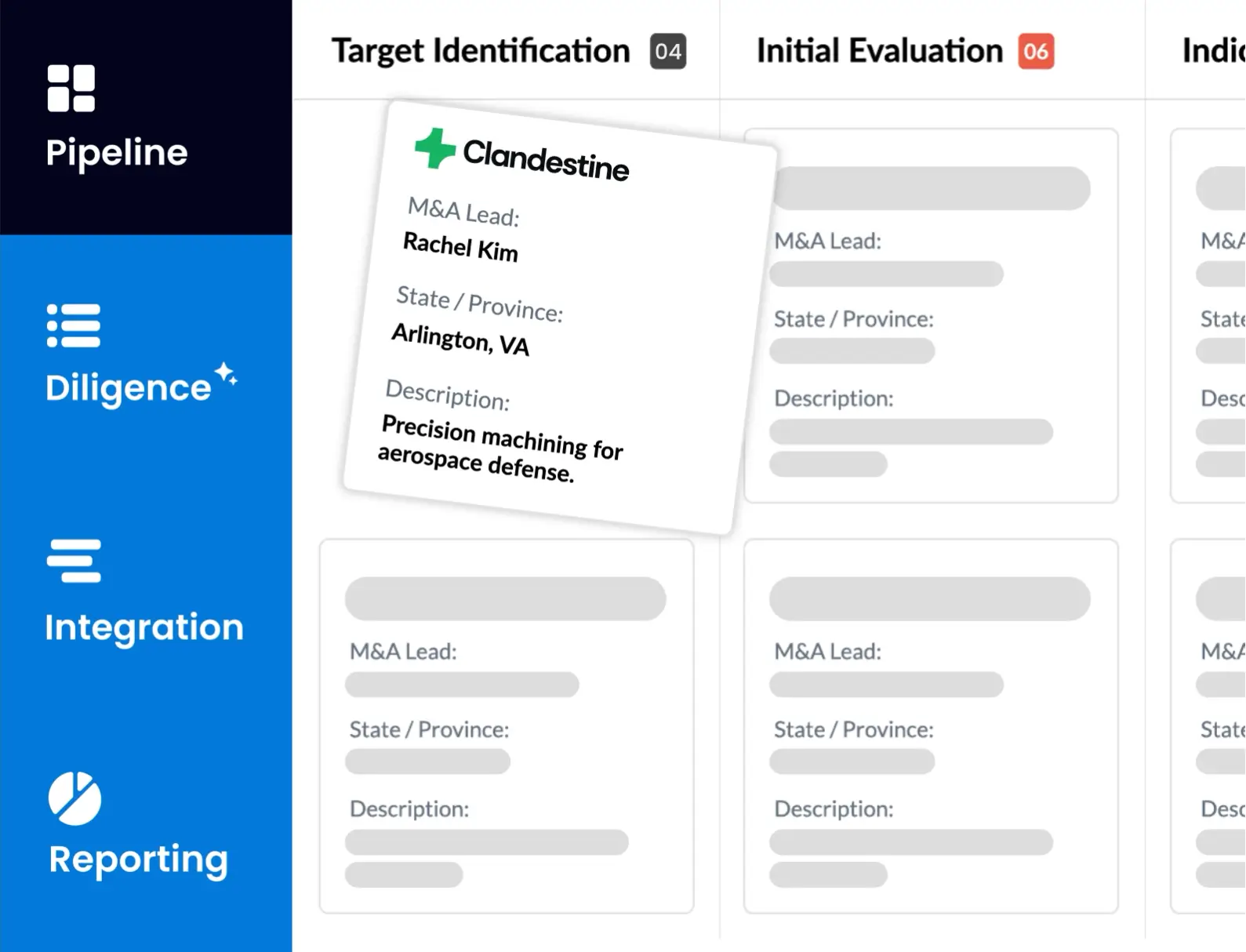
Technology influences every stage of the M&A lifecycle. Companies use digital platforms to manage deal pipelines, accelerate due diligence, and coordinate integration. Tools like the DealRoom M&A Platform centralize data, collaboration, and workflows, reducing friction and improving execution speed in complex transactions.
How do investment firms contribute to M&A deals?
Investment banks and private equity firms play a central role in structuring, financing, and executing transactions. Private equity continues to drive take-private deals, while sovereign wealth funds and infrastructure investors increasingly participate in mega-deals across technology and energy.
What is the overall outlook for M&A in 2026 and beyond?
The outlook for M&A remains strong. Dealmakers expect continued growth in transaction size and strategic complexity, especially in AI, infrastructure, healthcare, and financial services. Rather than broad-based expansion, the next wave of M&A will be defined by targeted consolidation, platform-building acquisitions, and competition for critical assets.
Key Takeaways
- M&A momentum returned in 2025 and is accelerating into 2026, with fewer but larger deals driven by AI, infrastructure, and strategic scale rather than incremental growth.
- Despite ongoing headwinds from regulation, rates, and geopolitics, buyers and investors are moving faster and targeting high-quality assets where consolidation, technology advantage, and valuation gaps create outsized opportunities.
In 2025, dealmaking activity picked up across sectors and across regions. Europe also remained active, with deals like Swisscom’s acquisition of Vodafone Italia showing that consolidation is still on the table, even under heavy regulatory scrutiny.
However, the headwinds haven’t gone away. Rates, regulations, and geopolitics still impact the M&A environment, but buyers and sellers are adjusting. They’re pricing risk earlier and running tighter processes. That’s why the 2026 M&A pipeline looks robust.
We can also see how Investment banking firms play a critical role in navigating these complex transactions, ensuring companies can overcome regulatory hurdles and achieve their strategic goals.
As M&A processes continue to evolve, it’s more important than ever for companies to stay ahead of the curve. The DealRoom M&A Platform supports mergers and acquisitions by streamlining the entire M&A lifecycle—from managing the pipeline to conducting due diligence and overseeing post-merger integration. With DealRoom, companies can reduce inefficiencies, optimize processes, and ensure successful outcomes in their M&A operations.


.avif)
.avif)
.avif)


.avif)
.avif)
.avif)

.avif)