.jpeg)









79% of corporate leaders and 87% of private equity leaders expected deal volume to rise, per Deloitte’s 2025 M&A Trends Survey of 1,500 US executives. Teams planning for that volume are choosing their deal platform now rather than mid-deal. Midaxo is a credible option, but it’s far from the only one. And while M&A platforms can look similar on paper, the differences become much clearer when you compare how they handle the day-to-day work of running deals.
I’ve spent over a decade in M&A, first advising deals at my own boutique practice and then building DealRoom in 2012, so Midaxo is a competitor I know well and respect. We have won deals against them and lost deals to them. Below is a candid assessment of what Midaxo does, where its users push back and seven alternatives, with an honest read on when each beats Midaxo and when Midaxo is the better call.
Disclosure: DealRoom is my company, and it leads this list as the best Midaxo alternative for most deal teams. I’ll back that assessment with concrete comparisons. Where Midaxo or another rival fits better, I’ll say so.
The short version (2026):
- Best Midaxo alternative overall: DealRoom, because it adds a real built-in data room to the pipeline-diligence-integration stack.
- Best for enterprise integration programs: Devensoft.
- Best premium VDRs to pair with a pipeline tool: Datasite or Intralinks.
- Best deal-sourcing CRM: Intapp DealCloud.
- Best for heavily customized enterprise deployments: EKNOW.
- Best budget end-to-end option: MergerWare.
What is Midaxo and how is it used in M&A?
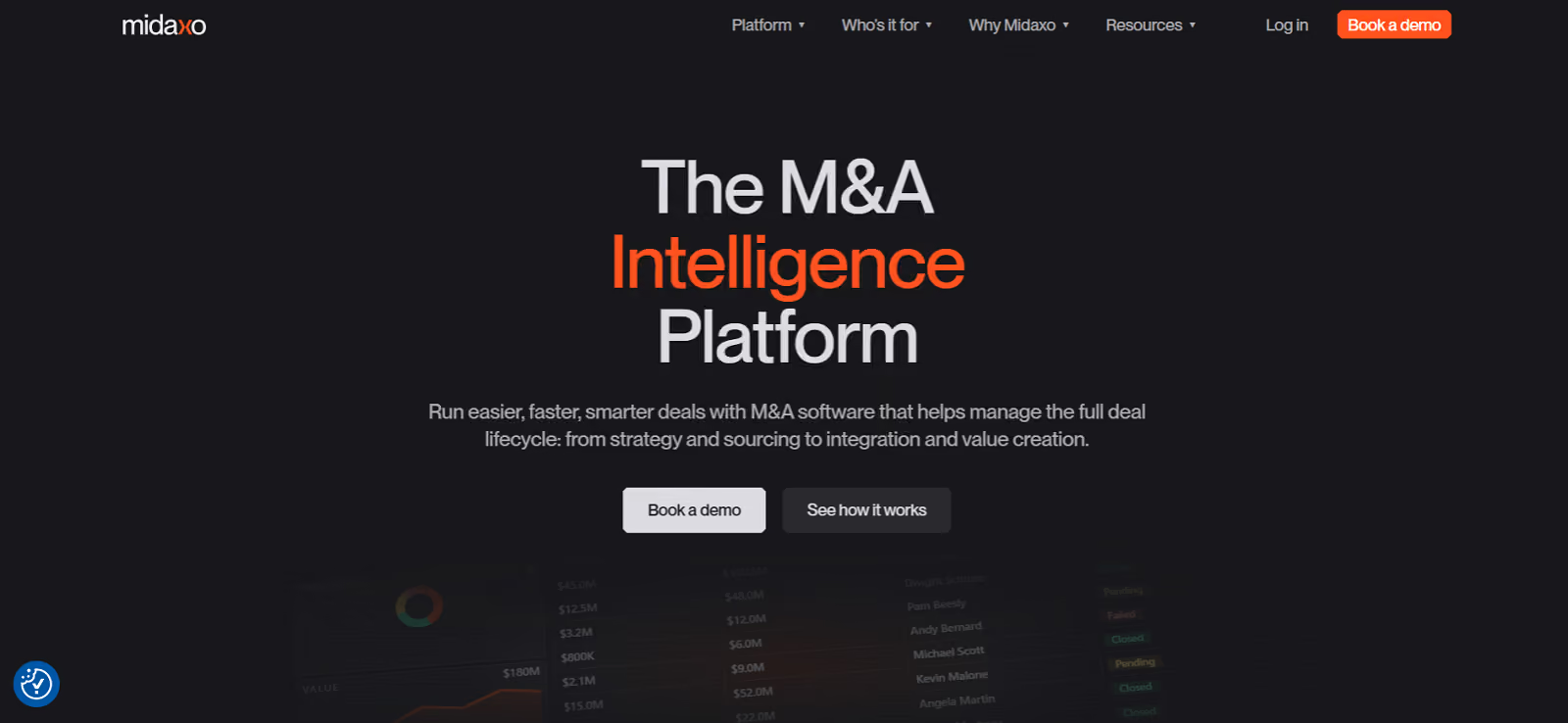
Midaxo is an M&A platform, self-described as the “M&A Intelligence Platform,” that combines pipeline CRM, due diligence workflow and integration management. Founded in 2011 with its first platform launched from Helsinki, it reports more than 500 M&A teams, 5,000+ deals supported and over $1 trillion in transaction value with customers including HPE and Mercedes-Benz.
Key features:
- Four modules covering M&A strategy, pipeline CRM, due diligence, and integration and value realization.
- Midaxo AI includes a dealmaking assistant, document summaries, one-click field updates, and cross-project risk flags.
- Outlook, SharePoint, and 50+ integrations, plus BI-connected reporting.
- ISO 27001:2022 certification, SOC 2 compliance and a 99.5% uptime SLA.
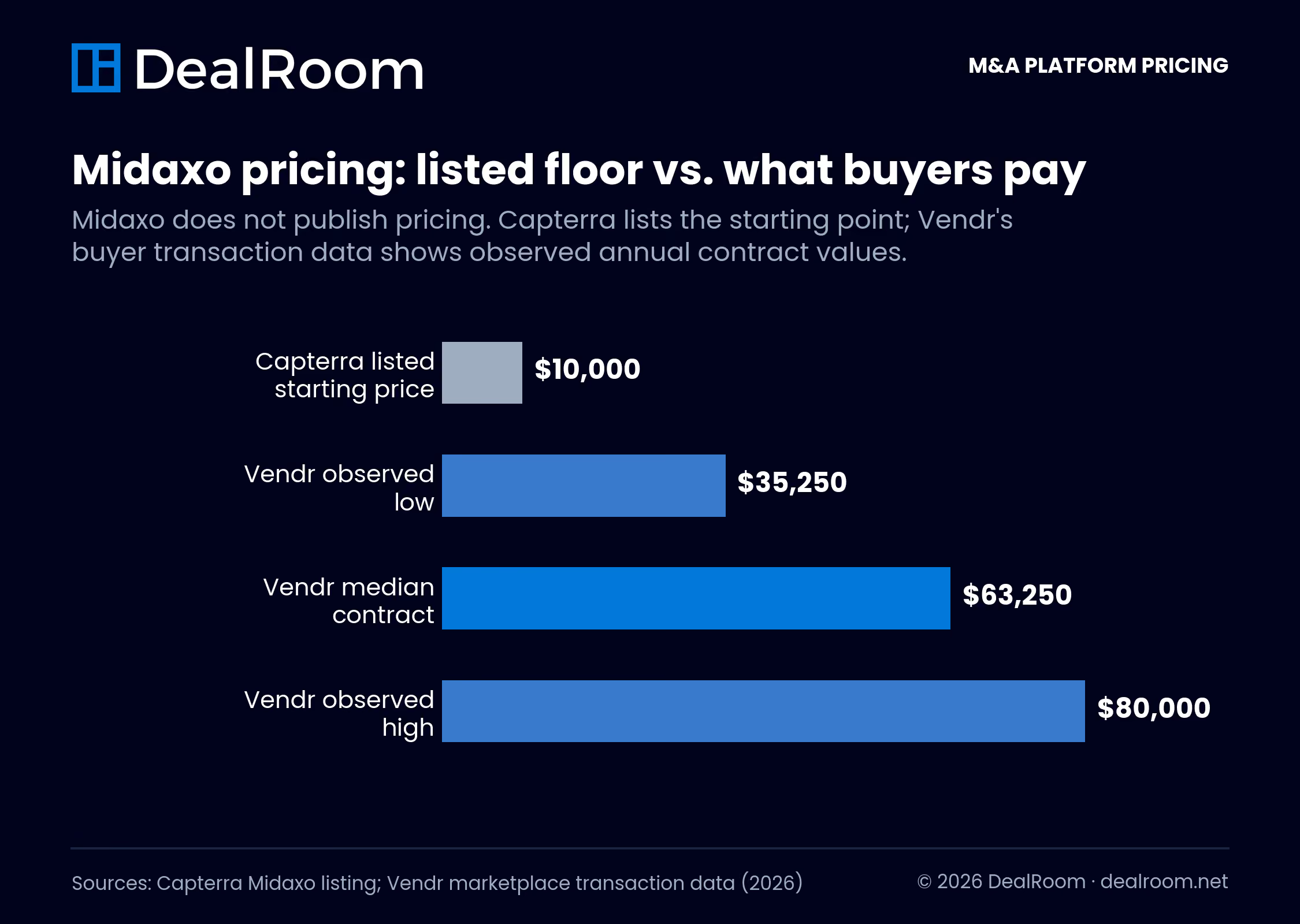
Pricing: quote-based. Capterra lists a starting point of $10,000 per year, while Vendr’s transaction data shows a median contract of $63,250 per year with an observed range of $35,250 to $80,000.
Pros:
- 4.6 rating on G2 across 39 reviews.
- Reviewers praise the intuitive pipeline tracking from sourcing through integration.
- Responsive customer support.
- Power BI and Outlook integrations.
Cons:
- Limited workflow and custom-field customization, according to G2 reviewers.
- File uploads can be cumbersome.
- Analytics can become sluggish with large datasets.
- Capterra reviewers report a steep learning curve, in part due to the number of form fields.
- No integrated data room. Midaxo manages diligence tasks and documents, but teams running competitive processes typically still need a separate VDR.
How we evaluated
We compared each alternative across six dimensions: lifecycle coverage (pipeline, diligence, data room and integration), diligence depth, AI capabilities, reporting, pricing transparency and verified user feedback.
Our evaluation draws on vendor documentation, public pricing pages, G2 and Capterra reviews accessed in August 2026 (last reviewed in September 2026), and our own head-to-head experience competing with Midaxo.
Comparison table
1. DealRoom
Type: M&A lifecycle platform
Pricing: by deal volume, unlimited users
Best for: pipeline, diligence, data room and integration in one system
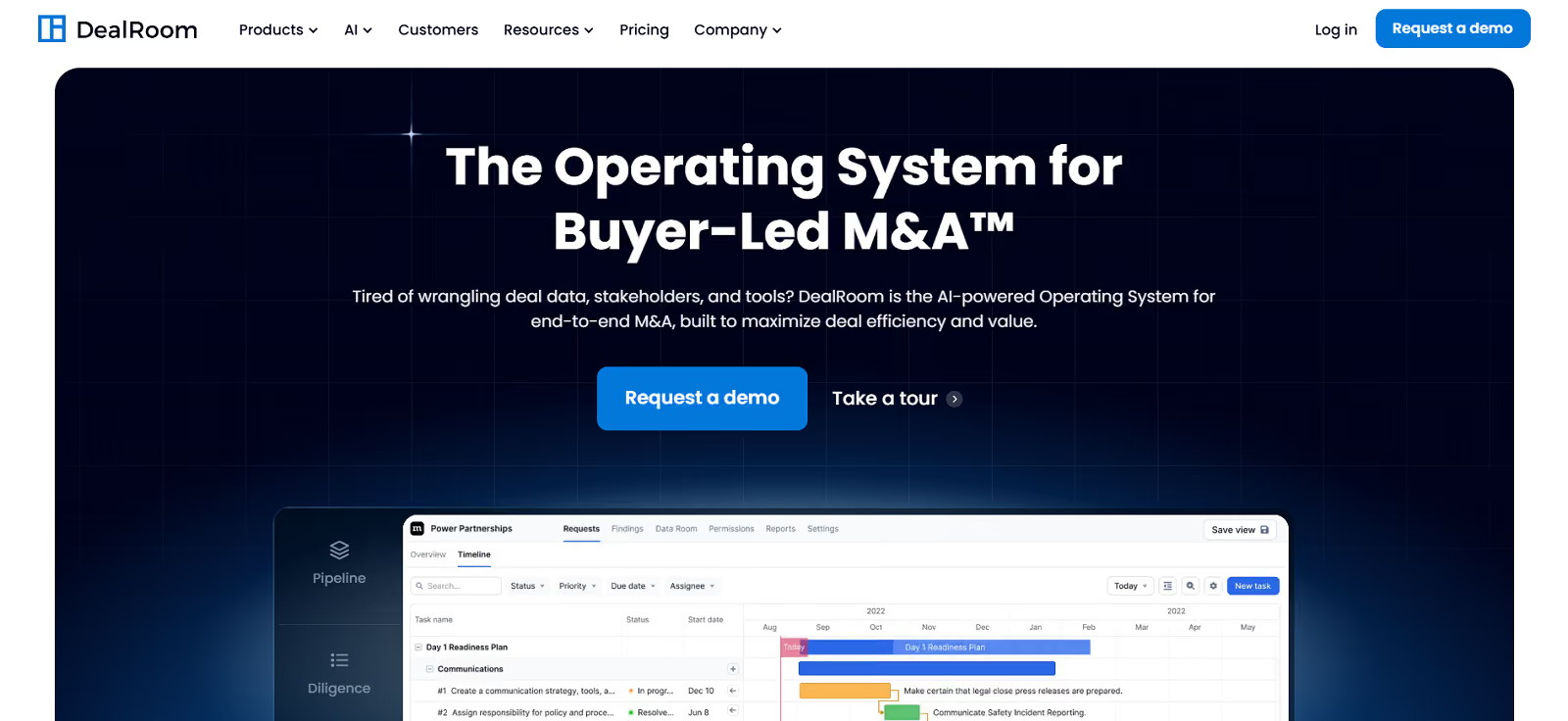
DealRoom and Midaxo compete for the same buyer: a deal team that wants the lifecycle in one platform. The structural difference is the data room. DealRoom’s diligence module sits on a built-in virtual data room with granular permissions, document viewer and buyer engagement analytics, so requests, files and Q&A are one object instead of a task list pointing at a separate VDR subscription. Midaxo’s own architecture leaves that VDR line item on your budget.
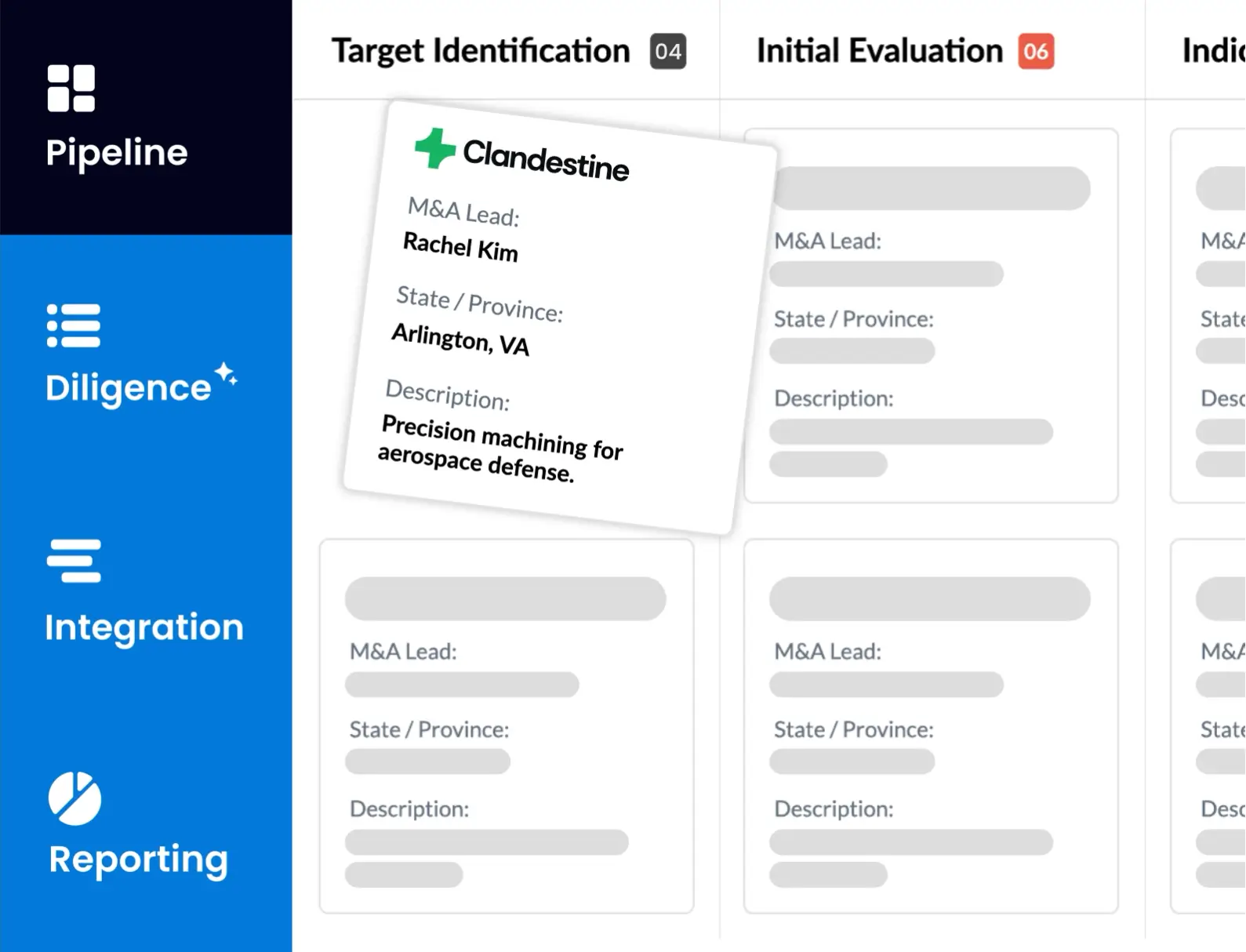
I built DealRoom around the diligence grind I lived as an advisor. That focus shows in the product’s center of gravity. Diligence requests link to their documents and owners, comment threads replace email and after close, the findings flow into integration workplans with a Synergy Tracker for capture reporting. On the sourcing side, pipeline management ships with PitchBook-powered enrichment, configurable views and automated reporting. UAP, for example, saved more than 10 hours per week after using DealRoom to streamline its reporting and data processes.
Key features:
- Built-in data room tied to diligence requests, with SOC 2 Type II and ISO 27001 posture.
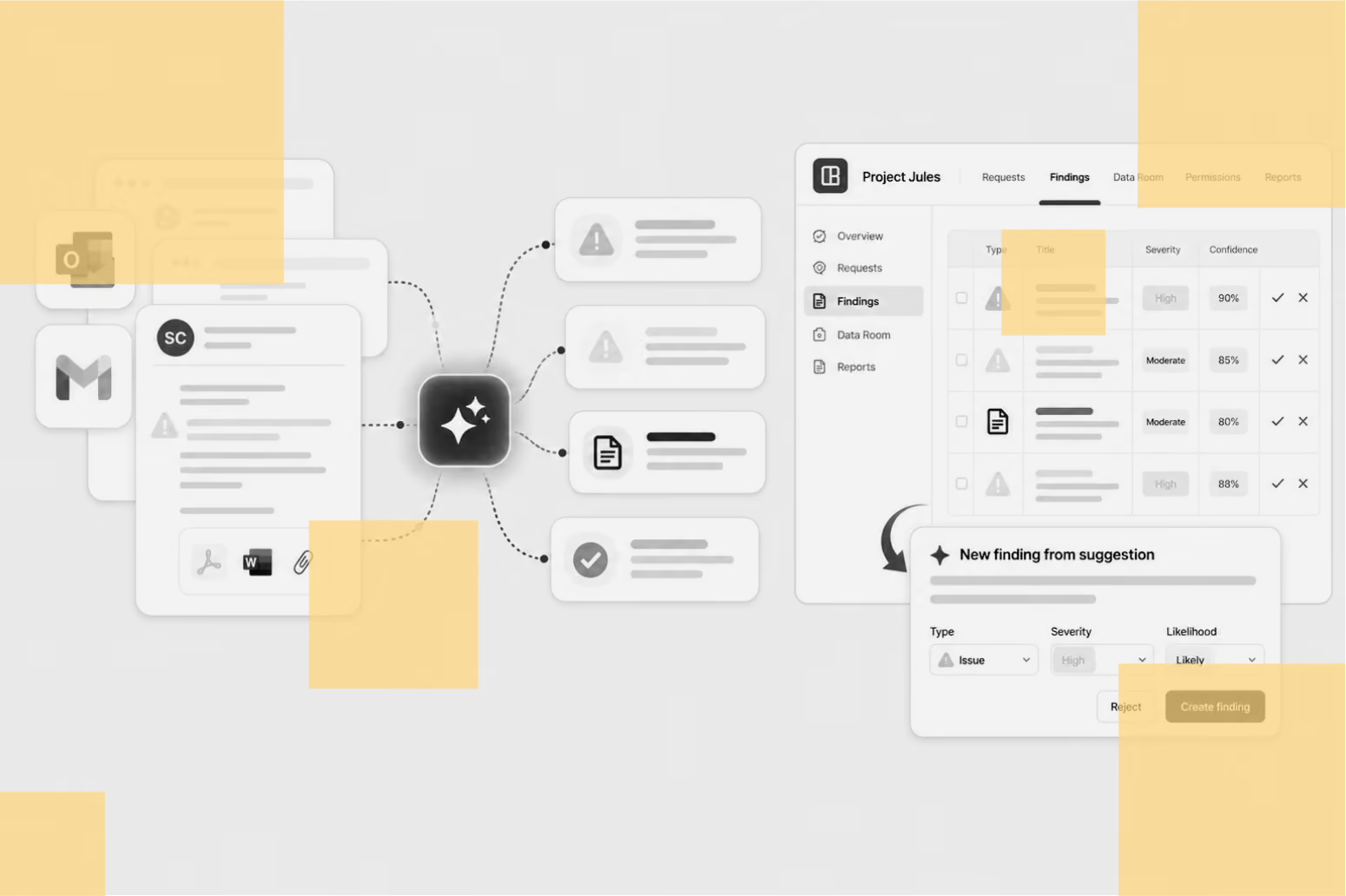
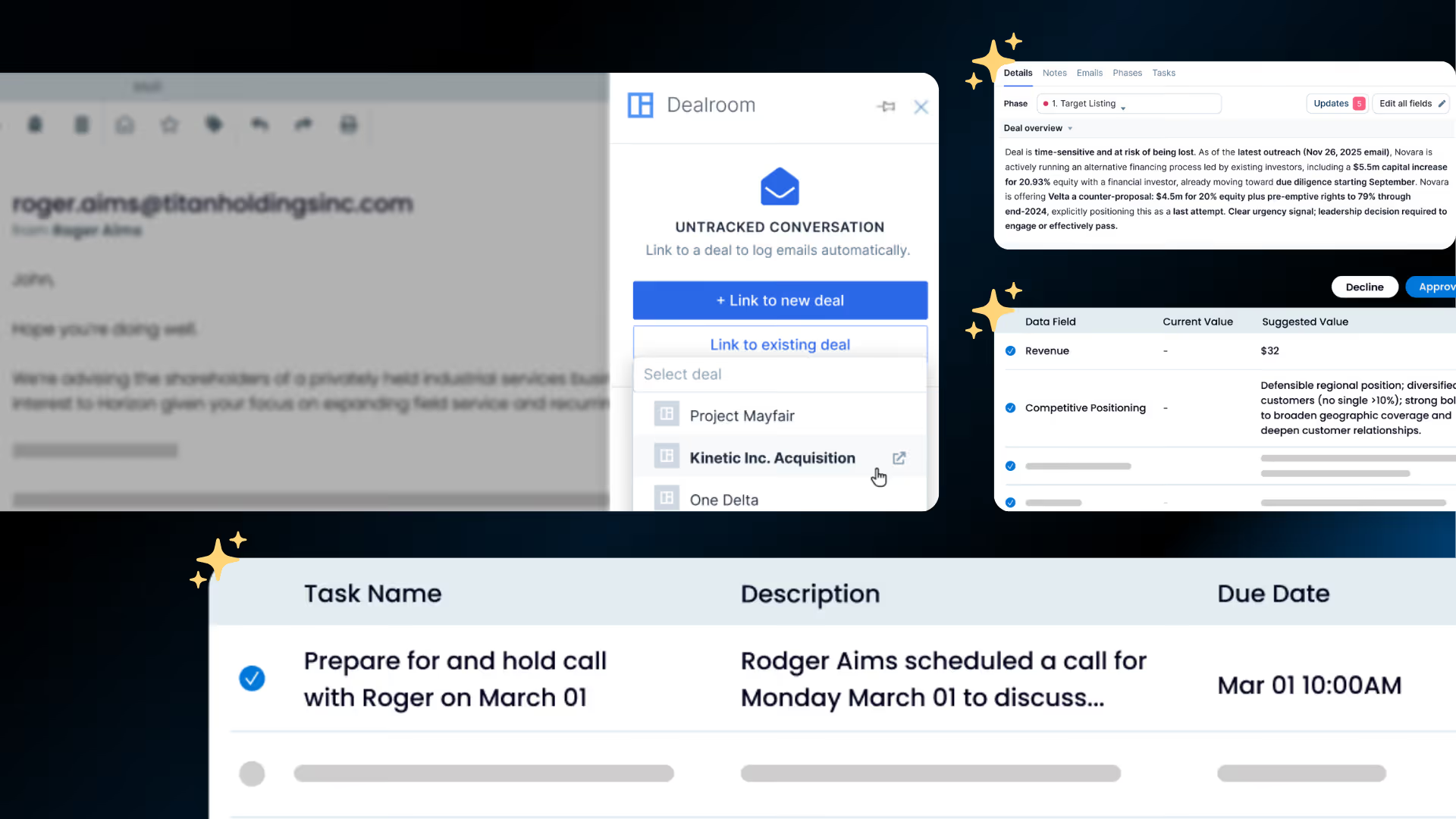
- DealRoom AI for pipeline updates from email, contract risk flagging and structured data from unstructured uploads.
- MCP connectivity to Claude, ChatGPT, Microsoft Copilot and Gemini.
- Integration planning that starts during diligence, with dependencies and auto-adjusting timelines.
- Outlook, Gmail, PitchBook and Apollo integrations, plus Slack and Teams.
- Priced by deal volume with unlimited users and no per-document fees.
Pros:
- The data room is included, so teams don’t need to pay for a separate VDR.
- Unlimited users make it well suited to large diligence teams with many internal and external participants.
- Strong user ratings, with 4.6 on Capterra across 247 reviews and 4.4 on G2 across nearly 70 reviews.
Cons:
- Onboarding can take time for teams that are new to a structured M&A process.
- Notification defaults can generate more alerts than some users prefer.
- Midaxo’s strategy-focused approach may be a better fit for teams that organize their M&A program around portfolio strategy rather than individual deals.
Choose DealRoom over Midaxo if you want the data room, diligence and integration natively together and pricing that does not meter your users.
Choose Midaxo instead if your process is CRM-centric target screening and you’re content pairing it with a separate VDR.
2. Devensoft
Type: M&A lifecycle platform
Pricing: quote-based
Best for: enterprise integration programs
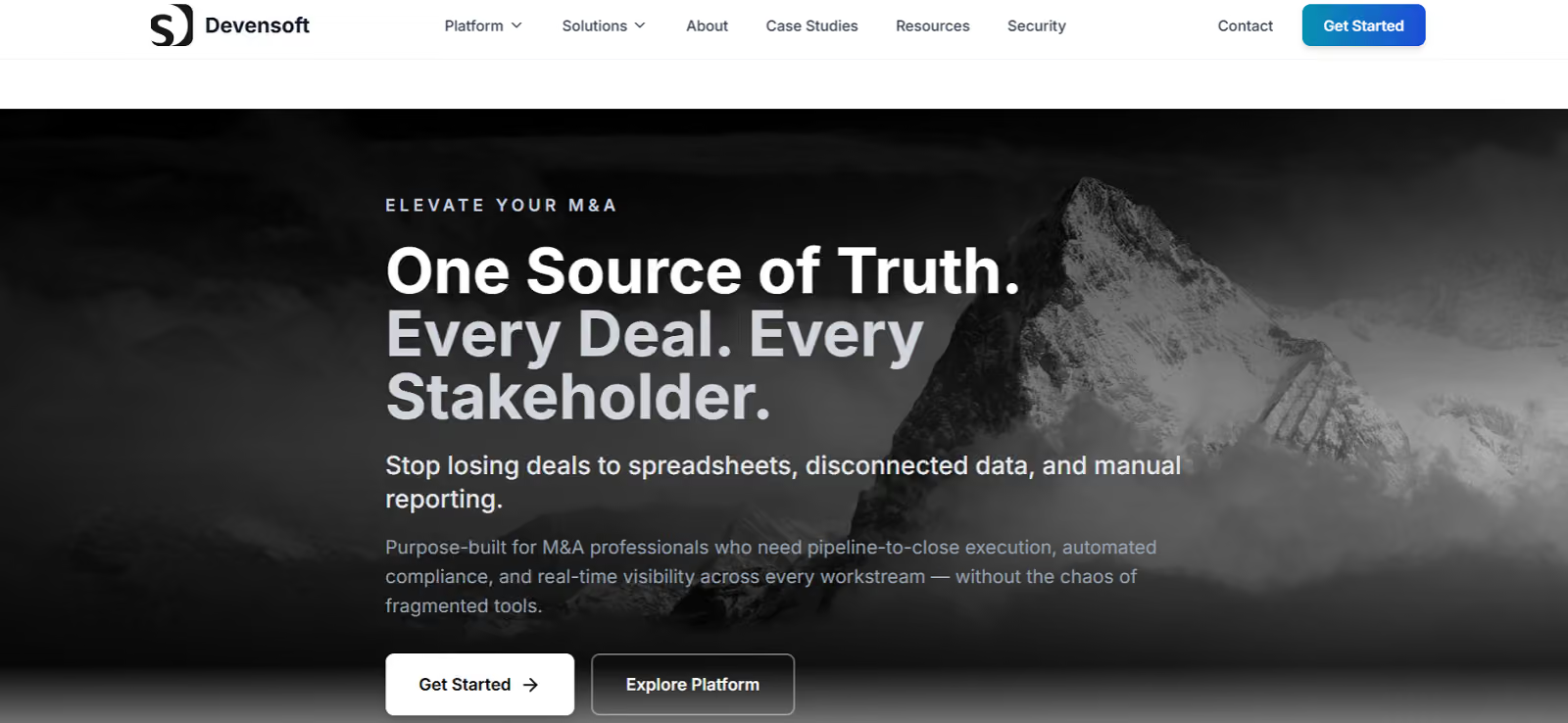
Devensoft covers the full M&A lifecycle with six integrated modules, from pipeline management through post-close. Its strongest focus is integration, with playbooks, synergy dashboards and risk registers designed for serial acquirers with formal integration management offices.
Key features:
- Six modules covering the M&A lifecycle from strategy through integration.
- Due diligence workflows for requests, tasks, findings and approvals.
- Integration playbooks, risk registers and synergy tracking.
- Deal- and portfolio-level dashboards and reporting.
Pros:
- 4.6 rating on G2 (across 12 reviews).
- Hands-on customer success and support are recurring strengths in user reviews.
- Strong integration capabilities for serial acquirers and formal integration management offices.
Cons:
- The G2 rating is based on just 12 reviews, making the user-feedback sample relatively small.
- Reporting flexibility can be limited for teams with more complex or highly customized requirements.
- Documents stored in external data rooms may require manual transfers, adding another step to the diligence workflow.
Choose Devensoft over Midaxo if repeat integration programs are the core of your M&A motion and you want a vendor that customizes around them.
Choose Midaxo instead if pipeline CRM depth matters more than integration depth.
3. Datasite
Type: VDR-centered deal suite
Pricing: quote-based
Best for: sell-side and diligence-heavy processes

Datasite is a premium VDR suite built around Diligence, Acquire and Outreach and used for more than 16,000 transactions annually. Datasite solves a different problem than Midaxo. Its strength is diligence execution rather than end-to-end M&A lifecycle management. It does not offer a pipeline CRM comparable to Midaxo’s or a dedicated post-close integration module.
Key features:
- Secure VDRs for due diligence, acquisitions and deal preparation.
- AI-powered semantic search and multi-document review.
- Automated redaction covering 120+ PII types and built-in translation.
- Advanced permissions, activity tracking and deal analytics.
- Enterprise security and compliance, including ISO 27001 and ISO/IEC 42001.
Pros:
- 4.4 rating on G2 across 420 reviews.
- Strong security and compliance capabilities for sensitive deal documents.
- 24/7 multilingual customer support.
- Deep VDR functionality for complex, high-stakes diligence processes.
Cons:
- Cost is a recurring complaint in G2 reviews.
- Bulk uploads can be slow, particularly with large document sets.
- Permissions can be complex to configure and manage.
- Unlike Midaxo, Datasite is not designed for end-to-end M&A lifecycle management, with no comparable pipeline CRM or post-close integration module.
Choose Datasite over Midaxo if your deals are diligence-heavy sell-side processes where the counterparties expect a premier VDR.
Choose Midaxo instead if you need pipeline-through-integration coverage rather than a per-deal room.
If you want pipeline, diligence, a data room and integration in one platform, that’s the case I make in our best M&A software comparison.
4. Intralinks (SS&C)
Type: enterprise VDR
Pricing: quote-based
Best for: bank-run, large-cap deals
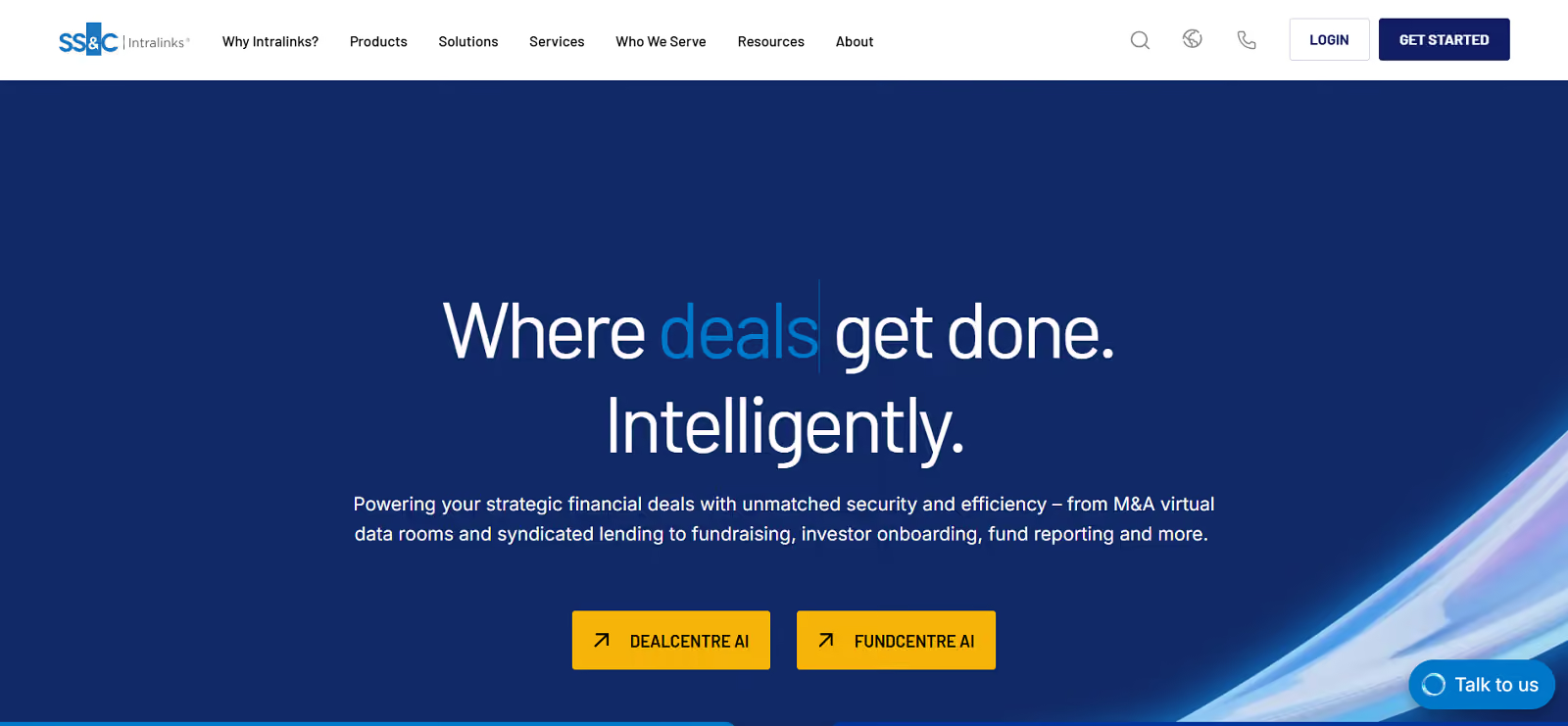
SS&C Intralinks is the veteran enterprise VDR, with granular access controls, watermarking with remote revocation, AI-assisted redaction and audit trails, plus DealCentre AI as its M&A workflow layer. Like Datasite, it’s a diligence execution tool rather than a Midaxo-style lifecycle platform.
Key features:
- Secure virtual data rooms for due diligence and deal execution.
- Granular document permissions and access controls.
- AI-assisted document organization, search and review.
- Reporting and analytics for tracking user and document activity.
- Enterprise-grade security and compliance controls.
Pros:
- Long track record supporting complex, high-value M&A transactions.
- Strong document security and granular access controls.
Cons:
- 3.8 rating on G2 across 31 reviews.
- Pricing can be expensive, with some G2 reviewers describing it as prohibitive.
- Some reviewers find the interface dated and less intuitive than newer VDR platforms.
Choose Intralinks over Midaxo if your bank or fund already standardizes on SS&C rails.
Choose Midaxo instead if anyone on the team will have to enjoy using the software.
5. Intapp DealCloud
Type: deal and relationship CRM
Pricing: quote-based
Best for: origination-first PE and IB teams
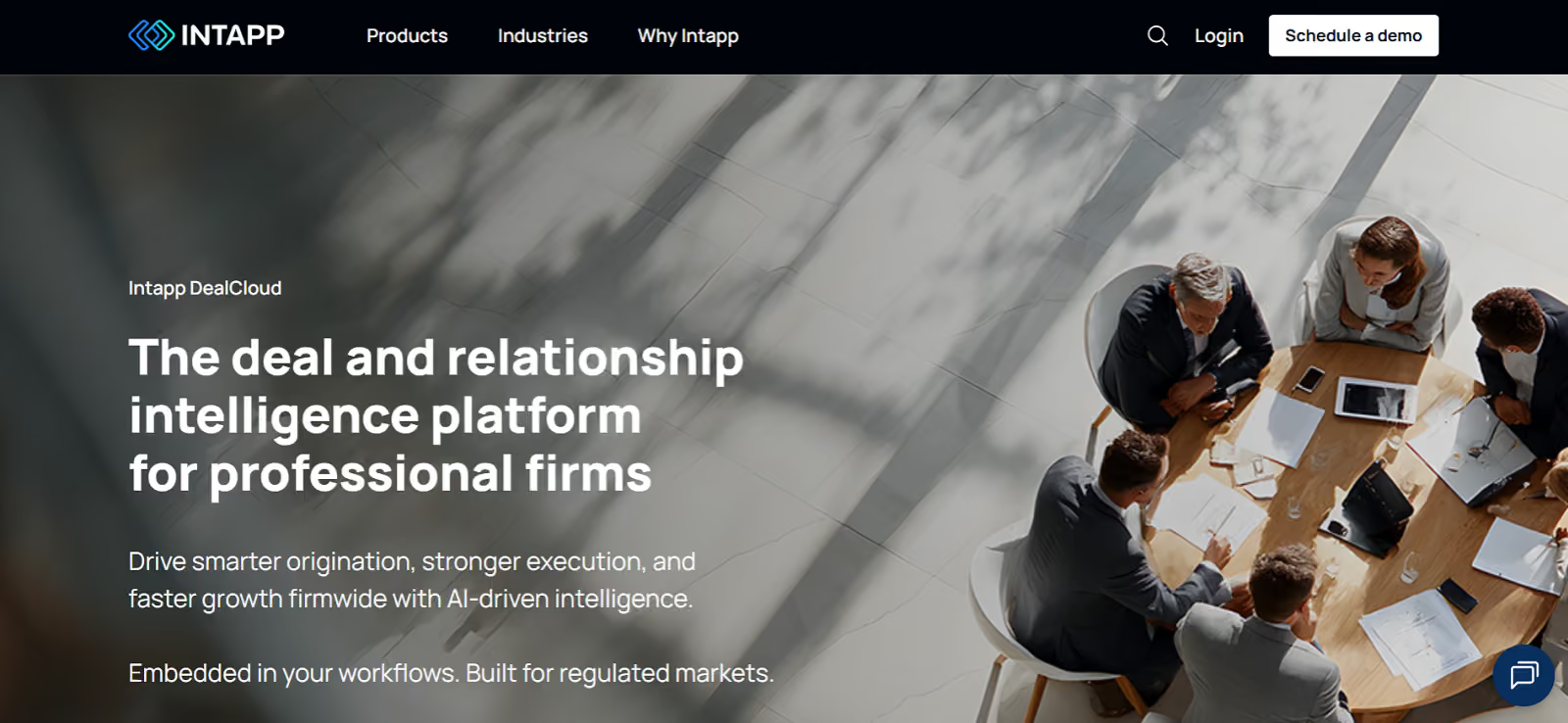
DealCloud, part of Intapp, is a deal and relationship intelligence platform built for financial services, focusing on deal origination, pipeline management and relationship tracking. Compared with Midaxo, DealCloud is CRM-first rather than execution-first. It is stronger at relationship intelligence, including tracking who knows whom and managing coverage across firms and opportunities, but it does not offer comparable due diligence workflows or post-close integration management.
Key features:
- Deal sourcing, pipeline management and relationship intelligence.
- Configurable workflows, dashboards and reporting.
- Relationship mapping to track connections across firms, contacts and opportunities.
- Deep integrations with Microsoft 365, Outlook and Excel.
Pros:
- Highly customizable for complex deal and relationship workflows.
- 4.2 rating on G2 across 41 reviews.
- Strong relationship intelligence and pipeline management capabilities.
Cons:
- Reviewers report a steep learning curve and complex initial setup.
- Premium pricing can put it out of reach for smaller teams.
- The mobile experience receives weaker feedback from some users.
- No native diligence workflow or post-close integration management comparable to Midaxo.
Choose DealCloud over Midaxo if deal origination and relationship intelligence are your priorities, and you use other tools for diligence and execution.
Choose Midaxo instead if you need diligence and integration in the same system as the pipeline.
For a broader look at CRM and pipeline options for M&A teams, see our guide to corporate development software.
6. EKNOW
Type: modular M&A toolset
Pricing: flat annual fee, quote-based
Best for: heavily customized enterprise deployments
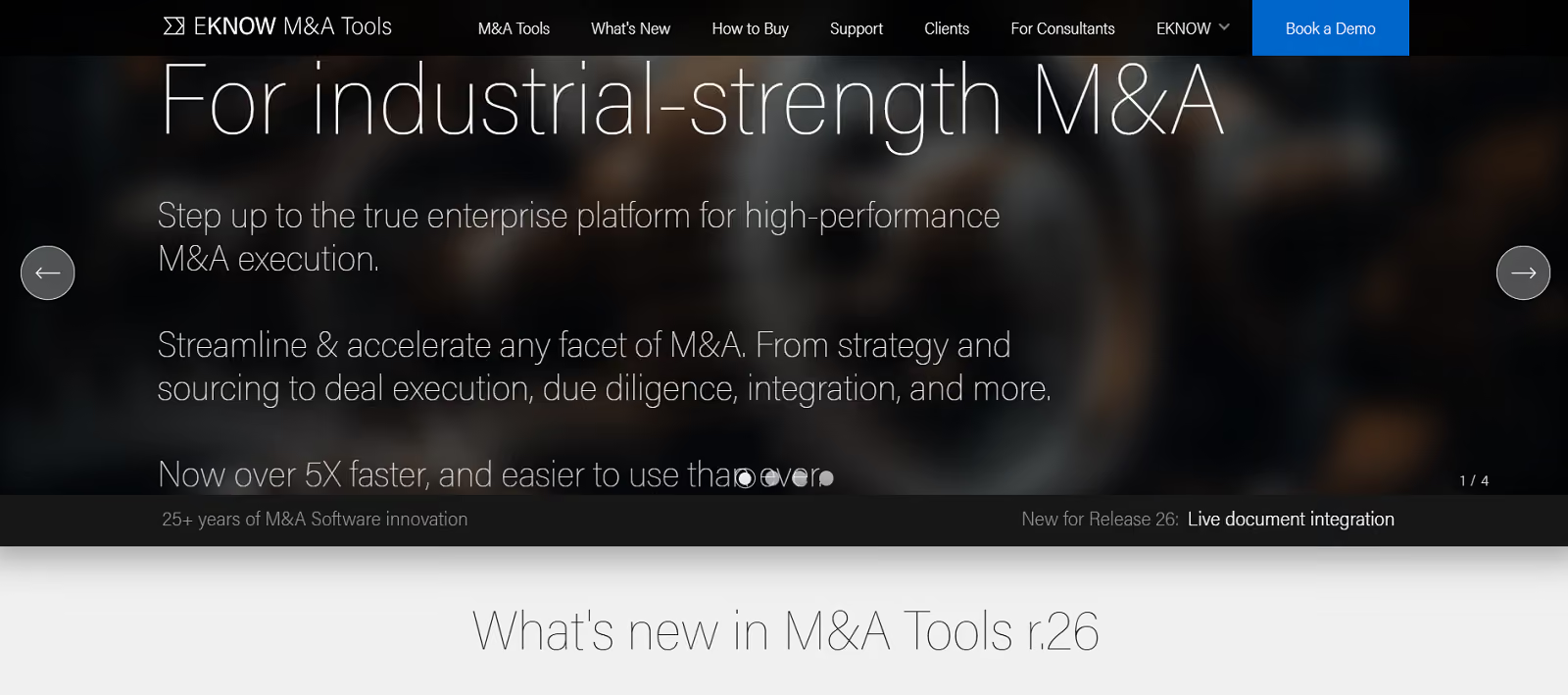
EKNOW has built M&A tools since 1998 for large and mid-cap acquirers with complex, distributed organizations. It is closer to a configurable toolkit than an opinionated platform, sold in four bundles at a single flat annual fee with no per-user, setup or storage charges.
Key features:
- Configurable M&A workflows spanning pipeline, due diligence and integration.
- Centralized deal data, tasks, documents and collaboration.
- Custom dashboards, reports and process templates.
- Integration and synergy tracking for post-close execution.
Pros:
- Deep configuration options for teams with established M&A processes.
- Flat-fee pricing can make costs more predictable as usage grows.
Cons:
- No meaningful G2 or Capterra review base to independently validate vendor claims or provide broad user feedback.
- A high-touch sales and procurement process makes it harder to evaluate pricing and fit without engaging the vendor directly.
Choose EKNOW over Midaxo if you need extensive configuration for a complex organizational structure and predictable flat-fee pricing across a large, distributed M&A program.
Choose Midaxo instead if you prioritize a more modern interface, a stronger base of verified user reviews and faster deployment.
7. MergerWare
Type: M&A execution platform
Pricing: quote-based
Best for: budget end-to-end deal execution
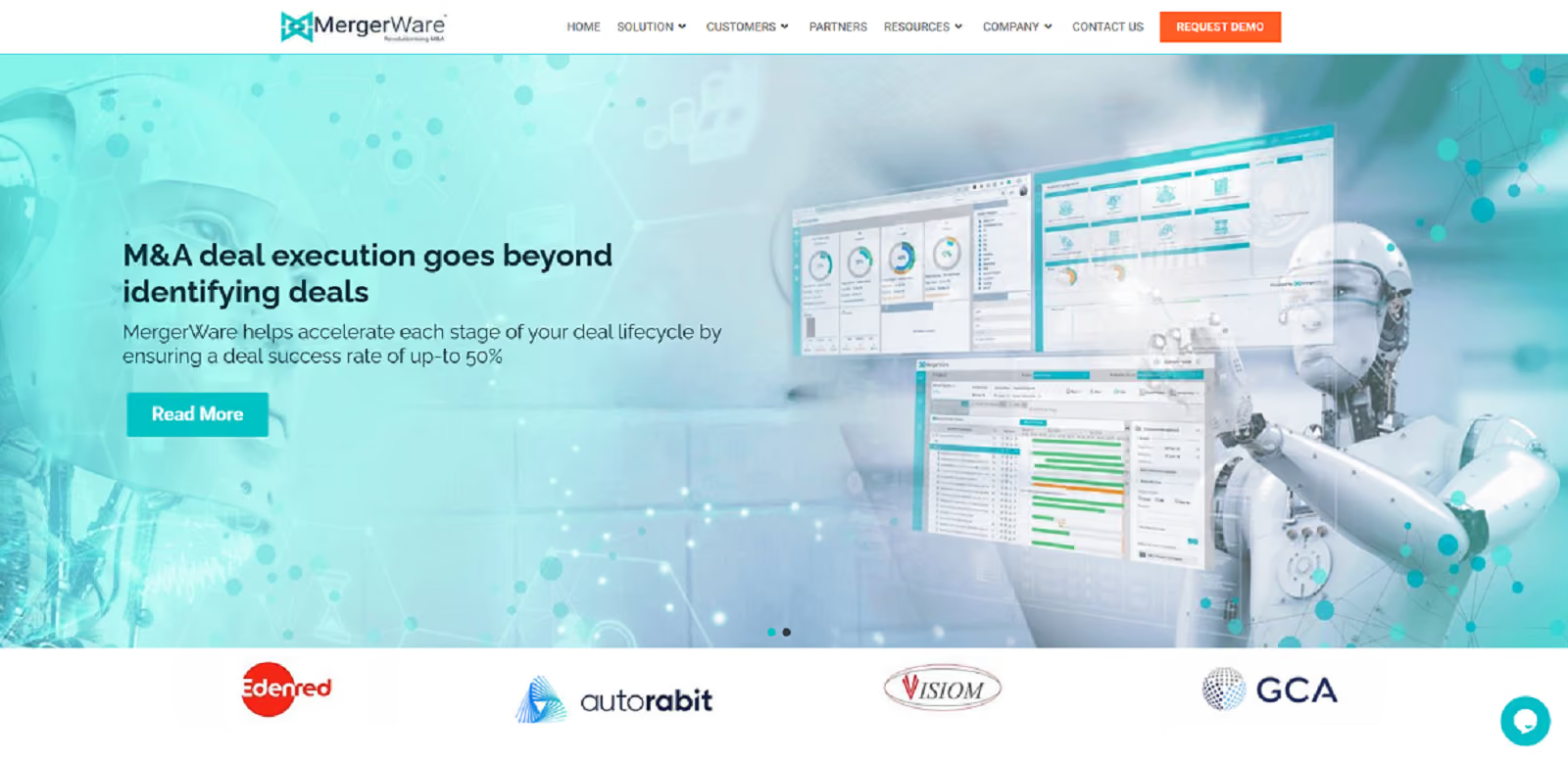
MergerWare covers deal flow, due diligence and post-merger integration within a structured, stage-based M&A methodology. The platform is hosted on AWS and Azure and is designed to manage deals from pipeline through post-close execution. MergerWare claims its platform can improve deal success by up to 50%, but that’s a vendor-reported figure worth testing against your own requirements during a demo.
Key features:
- M&A workflows covering deal flow, due diligence and post-merger integration.
- Structured, stage-based methodology for managing deals.
- Centralized task, document and collaboration management.
- Post-merger integration planning and progress tracking.
Pros:
- Simple end-to-end structure that guides teams through a defined M&A process.
- Relatively quick setup compared with more heavily customized enterprise platforms.
Cons:
- No meaningful current G2 (4.8 rating across 5 reviews) or Capterra review base for independently validating the user experience.
- Limited automation compared with more advanced M&A platforms.
- Pre-deal capabilities are relatively thin for teams that need deeper sourcing, pipeline or relationship management.
Choose MergerWare over Midaxo if budget is a primary consideration and you are comfortable with a smaller base of independent user reviews.
Choose Midaxo instead if you value review-backed reliability and more developed AI capabilities enough to justify the higher cost.
Frequently asked questions
What is the best Midaxo alternative?
For most deal teams, DealRoom is the strongest Midaxo alternative because it covers the same core lifecycle, from pipeline through diligence and integration, while adding a built-in data room that eliminates the need for a separate VDR.
I founded DealRoom, so factor that into your evaluation and compare the platforms directly. Both can look strong in a demo. A useful tiebreaker is to ask each vendor to recreate the diligence tracker from one of your recent deals and show how their platform would handle it.
How much does Midaxo cost?
Midaxo does not publish pricing. Capterra lists a starting point of $10,000 per year, while Vendr’s buyer transaction data puts the median contract at $63,250 per year, ranging from roughly $35,000 to $80,000. Teams should also budget for a separate VDR if their deals require one.
Does Midaxo include a virtual data room?
Midaxo manages diligence tasks, documents and approvals, but competitive processes typically still run alongside a dedicated VDR, which is a separate budget line. Platforms like DealRoom include the data room natively, which is the biggest structural difference between the two.
Is Midaxo good for post-merger integration?
Midaxo’s integration module handles playbooks, workstreams and value tracking, with AI-generated progress briefs and risk alerts. G2 reviewers rate the platform 4.6 across 39 reviews, while noting reporting customization often needs support help. For teams that need deeper post-merger integration capabilities, Devensoft and DealRoom are worth comparing. DealRoom’s integration module, for example, carries findings from diligence directly into post-close workplans.
Who competes with Midaxo?
The direct lifecycle competitors are DealRoom and Devensoft, with EKNOW and MergerWare as smaller end-to-end options. Adjacent competitors solve one slice of the lifecycle: Datasite and Intralinks on diligence execution, Intapp DealCloud on origination CRM. The right shortlist depends on whether you need a platform that supports the full M&A pipeline and deal lifecycle or a best-of-breed tool for a specific stage.









.png)

.avif)

.avif)
.avif)
.avif)
.avif)