.jpeg)









After advising on mergers and acquisitions for over 10 years, many in distressed or turnaround situations following the 2008 recession, I noticed something happening over and over again: the deal model appears pristine, the strategic rationale checks out, then finance spends the next 18 months trying to figure out how to make two entirely different general ledgers communicate with each other. The research confirms my experience. Just 14% of companies report being successful on strategic, operational and financial objectives simultaneously, PwC’s 2023 M&A Integration Survey found. M&A integration is where most of the value is realized or silently lost, and it’s the area that rarely receives proper planning attention from finance.
This playbook will decode what finance M&A integration actually entails. We’ll discuss which workstreams have the greatest impact on the final outcome and how to prioritize them so that synergies end up in the ledger, not the press release.
What Is Finance M&A Integration?
Finance M&A integration involves integrating two companies' financial operations, systems, reporting, and controls once a deal has closed. This includes the general ledger and chart of accounts, treasury and cash management, financial planning and analysis (FP&A), tax structure, audit and compliance, and financial systems.
We’re trying to create one cohesive, reliable financial view we can operate the business from, realize the cost and revenue synergies the transaction was predicated on, and do that without dismantling the controls that keep our auditors and regulators happy. Across the board, the common theme we heard from dealmakers when we released our State of M&A report was this: integration discipline (not deal sourcing) is what distinguishes the acquirers that build value from the ones that falter.
Finance integration is downstream of financial due diligence and upstream of synergy realization. It ends up being the pressure point because of that middle position. The diligence teams hand off. Operators want Day 1 to just work. And the finance team inherits all of the assumptions that were never stress-tested.
Why Finance Integration Decides Deal Value
Integration costs don’t come cheap. McKinsey research determined integration costs typically fall between 70% and 160% of run-rate synergies, with an average of 120%. In other words, it costs you more in year one to capture the savings than what the savings are actually worth. The benefits come later, and only if the finance function can actually track and report that it delivered.
Speed is of the essence, more so than most acquirers think. McKinsey’s research reveals that companies which achieve their synergy targets in the first two years after deal close are 2.6x more likely to have a successful deal (as measured by delivering 40% greater total returns to shareholders) than companies that take four years or more to achieve their targets. Much of the timeline is dependent on the IT blueprint, which in many industries accounts for more than 50% of deal synergies. Approximately 35% of deal value, according to McKinsey, doesn’t occur until year two or beyond, when the IT blueprint is finally put into place, often behind a system finance must rely on but has no control over.
There’s also a market-facing incentive to do this correctly. BCG looked at 175 large deals ($1 billion-plus in deal value) done from 2019-2023 and found that companies who disclosed their realized synergy level within a year of deal announcement created approximately 6% more relative shareholder value over the following two years compared to those who didn’t. Notably, that difference increased to roughly 8% for $5-10 billion deals and 9% for larger-than-$10 billion deals. If you can’t measure it, you can’t report it. And measuring realized synergies is a finance function responsibility.
The Core Finance Integration Workstreams
Finance M&A integration is six workstreams, not one project. They run on different clocks, and trying to treat them as one milestone is why acquirers get behind schedule. Here’s how long each typically takes based on our experience across deals.
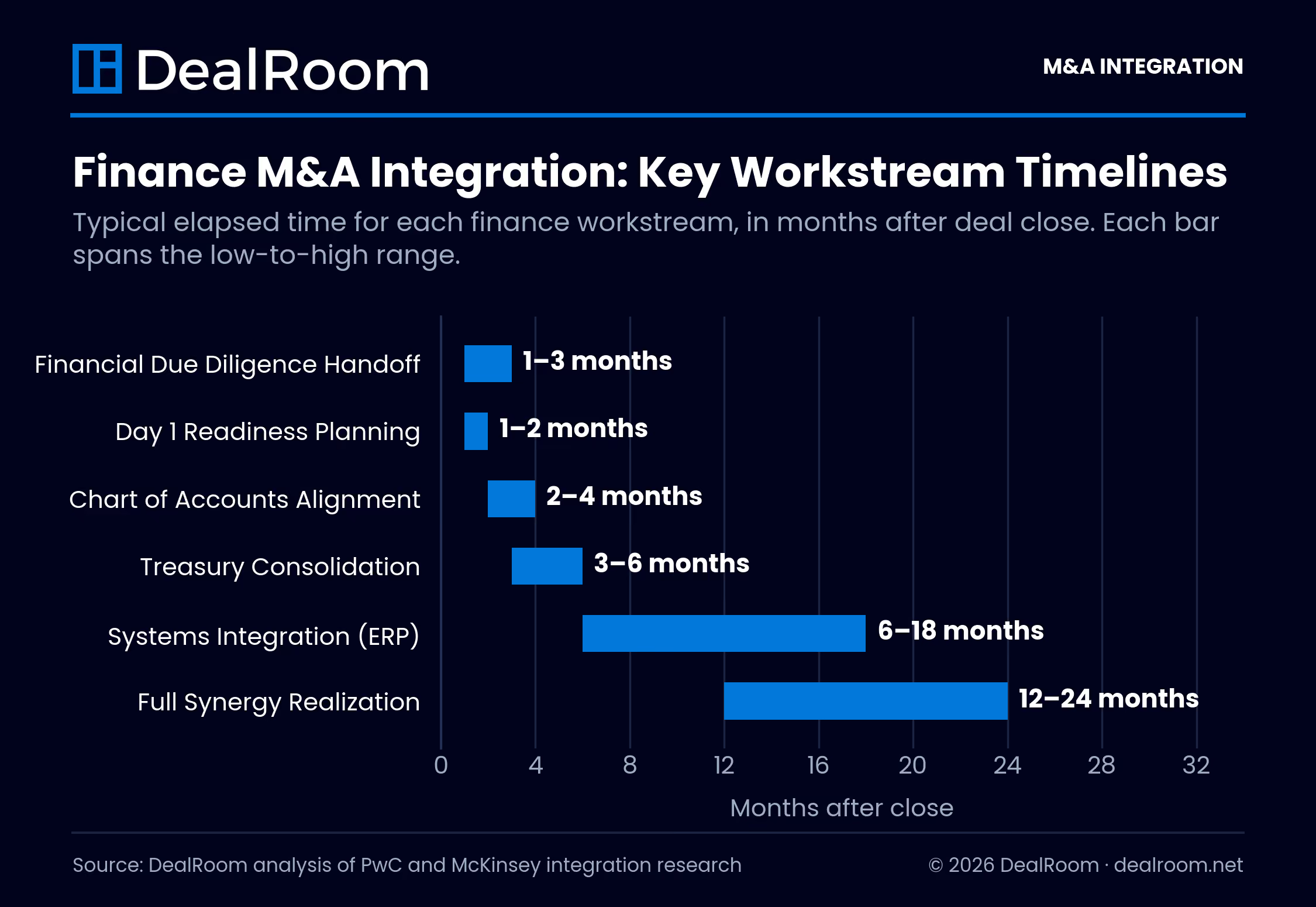
Finance M&A Integration: Key Workstream Timelines
Financial due diligence handoff (1-3 months). The work of the diligence team's reports, quality-of-earnings adjustments, working capital targets and risk factors all need to cleanly transfer to the integration team. A thin handoff causes integrators to recreate analysis and lose weeks.
Day 1 readiness planning (1-2 months). Payroll still needs to run, invoices still need to get paid and the combined entity needs to bank, report and transact starting Day 1 of closing. Day 1 finance readiness may be narrow, but it is non-negotiable and usually begins pre-signing.
Chart of accounts alignment (2-4 months). Two businesses rarely, if ever, keep their books in the same fashion. Mapping someone else’s chart of accounts to a normalized chart is the tedious work that enables every report downstream. Cut corners here, and every consolidated report thereafter will be doomed.
Treasury consolidation (3-6 months). Bank accounts, credit lines, cash pooling, foreign exchange exposure and debt covenants all need to be rationalized. Treasury integration unlocks trapped cash and is often one of the first, quantifiable synergies the finance team can realize.
Systems integration or ERP (6-18 months). The long pole. ERP and financial systems migration/consolidation is the workstream most susceptible to slippage. McKinsey says its delay is precisely why one-third of deal value remains stranded after year one. Finance owns requirements, even when IT owns migration.
Full synergy realization (12-24 months). One to two years, not one quarter, is the typical timeframe for cost and revenue synergies to mature. The finance function is the scorekeeper that connects every synergy back to a real P&L line.
To help you tackle these, our finance M&A integration checklist organizes the ledger consolidation, systems alignment, tax, treasury and shared-services tasks into an actionable playbook.
Governance: The Part Most Teams Skip
Now, here’s the uncomfortable truth. In a report by PwC, of those companies executing integrations only 53% had established synergy targets and a mere 43% had a tracking process. Less than a quarter of companies had more than three of five key value creation plan components. Acquirers are running after synergies, but they don’t have a scoreboard. Scoreboards belong to finance.
Three components define good finance integration governance. First, a synergy tracker that links every target to an owner, starting baseline and monthly actual. Actuals make claimed savings auditable, rather than aspirational. Second, a value-capture rhythm in which finance reports synergy progress against normal financial reporting rhythms, not on a separate deck that nobody reads. Third, well-defined decision rights so when a system’s delay jeopardizes a target, the escalation path already exists.
Companies that are pulling ahead are paying for it. Research from PwC revealed that 59% of organizations spent 6% or more of deal value on integration in 2022, up from 38% previously. Of the 14% of respondents deemed “Successful M&A Organizations” (those that achieved significant success on strategic, operational, and financial metrics), 78% spent at the 6%+ level, compared with just 56% of the other respondents. Skimping on resources to finance integration to protect your deal model is a false economy.
A Practical Sequencing Approach
The most common mistake I see is operating these workstreams like a to-do list rather than a dependency map. Chart of accounts alignment gates clean consolidated reporting. Clean consolidated reporting gates credible synergy tracking. Credible synergy tracking gates the investor disclosure that BCG associates with higher shareholder returns. Each workstream is dependent on the previous.
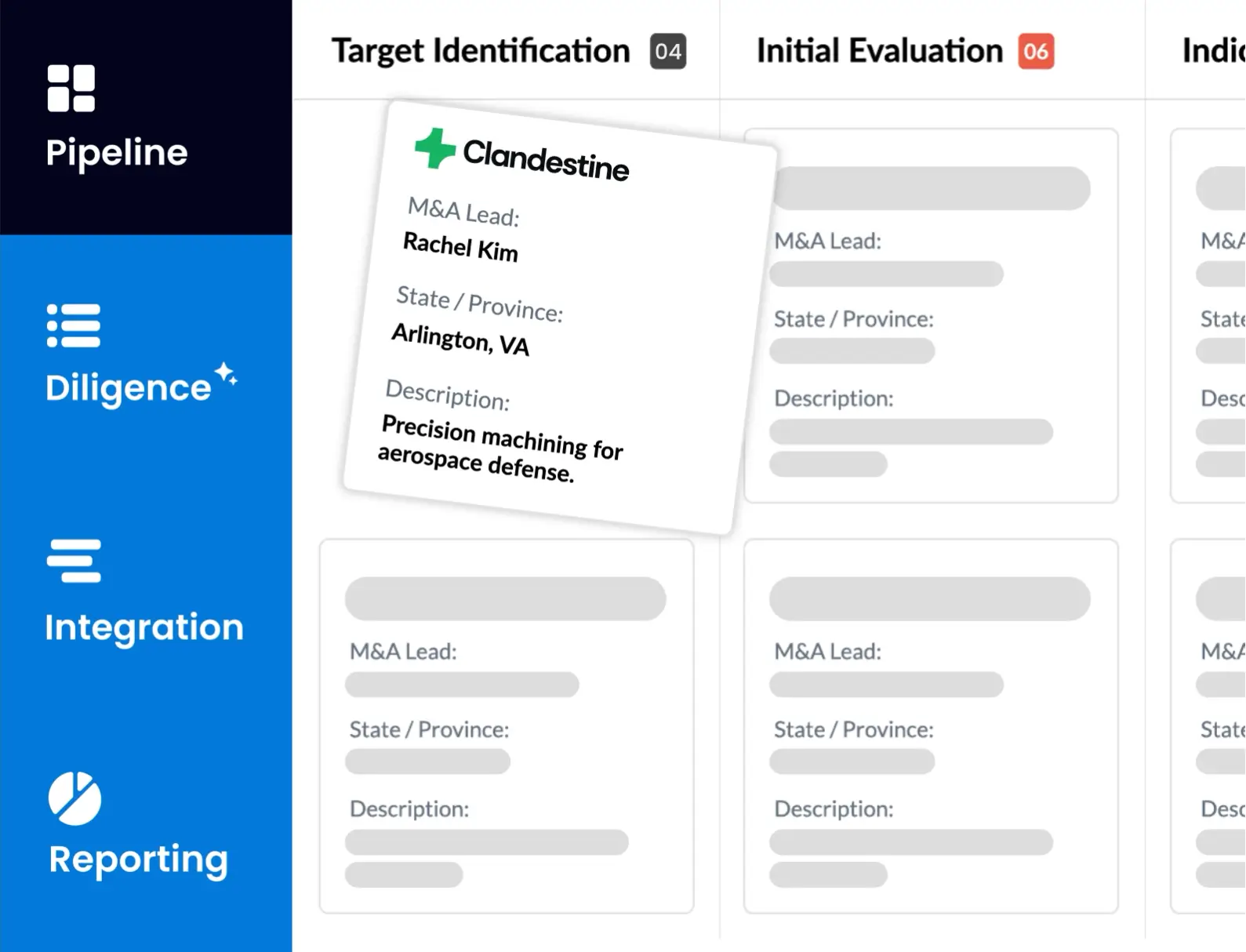
Begin finance workstreams during diligence, don’t wait until after close. According to PwC, the highest- performing acquirers today start operating-model planning before due diligence has even been completed (60% do so vs. 25% in 2019). If your finance team is waiting until deal closure to start planning, you’re already behind. Our comprehensive guide to the post-merger integration process explains how the finance workstreams fit into the overall integration plan. Purpose-built post-merger integration software keeps the master tracker, tasks and audit trail in one place instead of creating a sprawl of spreadsheets.
Frequently Asked Questions
What is finance M&A integration?
Finance M&A integration is the process of integrating two companies’ financial functions, systems, reporting and controls after the deal closes. It includes the general ledger, chart of accounts, treasury, tax, financial planning and analysis, audit and underlying financial systems. The goal of finance integration is to create one set of reliable financial information about the newly combined company and to realize the synergies identified in the deal.
How long does finance integration take after a merger?
Timing varies by workstream. Day 1 finance readiness activities take weeks. Chart of accounts alignment takes two to four months. Consolidating treasury takes three to six months and ERP/systems integration can take six to 18 months. Total synergy capture tends to take 12 to 24 months. That’s why McKinsey found reaching synergy targets within two years is associated with 2.6x greater likelihood of deal success.
Do you always integrate finance systems right away?
No. Sometimes it makes sense to execute a transitional service agreement that maintains the target on its current systems while a well-planned migration is developed, rather than disrupting the business with a rushed cutover. Forcing a quick ERP migration is the leading cause of stranded deal value, so sometimes the correct course of action is to delay full integration.
Who owns finance integration in a deal?
Finance integration is usually owned by the CFO's organization with a dedicated finance integration lead working with the integration management office. Finance owns the synergy tracker and consolidated reporting, even when IT owns the physical systems migration. This is why PwC recommends defined synergy targets and a tracking process that many acquirers are still missing.
What are the biggest finance integration risks?
The most frequent points of breakdown include a weak handoff from diligence to integration, an unmapped chart of accounts that taints every downstream report, ERP migration delays that leave synergies high and dry after year one, and no synergy tracking process, which according to PwC, only 43% of acquirers have.









.png)

.avif)

.avif)
.avif)
.avif)
.avif)