.jpeg)









Ask a private equity GP a simple question and count the systems she needs to dig through to answer.
- "We're two weeks from signing the platform deal. Make sure fund-level concentration is in Friday's LP letter."
- "What are the common regulatory findings across our portfolio's diligence? Categorized, before the legal offsite."
Neither is a hard question to ask. Both are nearly impossible to answer quickly, because they cross three stacks that were never built to talk: the fund books (GL, capital accounts, waterfall, SPVs), the LP side (performance, statements, the AGM deck), and the deal record (pipeline, diligence, integration, plus corp dev inside the portfolio).
Everyone works around it the same way. Pull the data out of whatever system owns it, drop it in a spreadsheet, reconcile, rebuild the chart, do it again next quarter.
The spreadsheet is the least of it. One question touches the controller, the IR lead, the deal partner, an operating partner, a portfolio CFO, and whoever is doing contract review. Different systems, each with their own definition of "cost." Each holds a piece, and an analyst who owns none of it has to make them agree. These are small teams already covering four funds and a live deal, so mistakes or miscommunication between the people involved are nearly unavoidable.
Why the protocol exists
Chasing several teams down to agree on one number is exactly the work you'd hand to AI, and firms tried. The LLMs kept getting better, but they were blind to everything outside the chat window, and the analyst was forced to assemble things. Integrations were an obvious fix, but each one was bespoke and broke whenever either side moved.
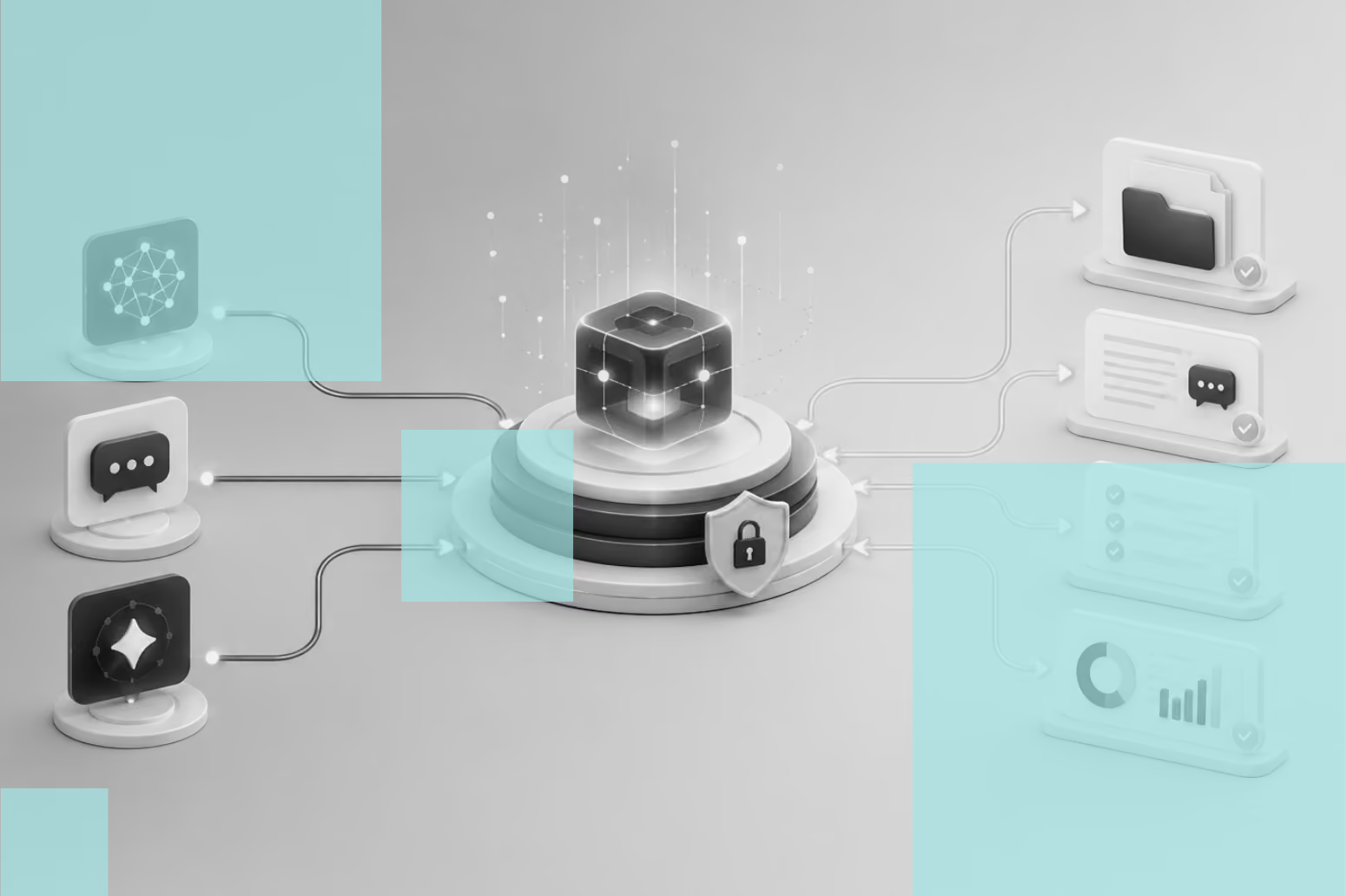
Anthropic open-sourced the Model Context Protocol (MCP) in late 2024 to make it a standard, and the major AI clients now speak it. Think of it like a universal power adapter. Before, every AI tool needed its own custom wire to every system you own: one for the general ledger, another for the LP portal, another for the deal tracker. With MCP, each system exposes a single standard connection, and any AI tool that speaks the standard can plug in. Through that connection, the tool can ask the system for data or, where permitted, take an action in it. Nobody has to write or maintain a one-off integration for each pairing.
Two things follow that matter to a firm.
Nobody has to standardize on one AI tool. The deal team can work in one, finance in another, and the external legal consultant doing contract review brings whatever they use. All of them reach the same data. For a firm running a dozen portfolio companies and a rotating cast of outside advisors, that's the difference between a rollout and just turning it on.
Access follows the person, not the tool. The first wave of AI stalled in PE because getting data into the tools meant exposing it to people who shouldn't see it. Now an associate's AI agent sees what the associate sees, and nothing more. That doesn't settle every compliance question, but it removes the biggest reason the answer used to be no.
Closing the books
Carta, which runs fund accounting and cap table infrastructure for much of private capital, shipped plugins for Claude so controllers and fund CFOs can work against live fund data in the tools where the analysis already happens.
Take cash actuals. One firm, a $1.5B mid-market buyout shop running four funds and roughly a hundred SPVs, pulls actuals from the general ledger and runs them against the annual budget in a single pass. That reconciliation used to take a week. It's now a day.
The week was never mostly arithmetic. It went to exporting actuals from the ledger, exporting the budget from somewhere else, matching entity names and account codes across roughly a hundred SPVs, and chasing whoever owned each mismatch. Those steps repeat every cycle. When the AI tool can read the ledger and the budget directly, under the controller's own permissions, most of that matching and chasing goes away, and the controller spends the time on the variances that need judgment.
"All the information we need is up-to-date and accessible so Claude can automatically perform a wider range of work. One prompt pulls every data point. I can say definitively it's going to save us multiple days next year." — COO, Carta customer
Days saved are the small part. Reconciliation that takes a week gets done quarterly, because that's all anyone can afford. As the cost drops from a week to a day, firms can run it more often and make time for more insightful questions.
The same connection covers portfolio scanning: compliance deadlines coming up, ownership changes, entity-level items that need attention before a board meeting. Nobody ever built a report for that, because it could never be justified. The data is reachable now, so the question just gets asked.
Answering the LP
LP reporting is custom by nature. Every LP wants a different cut, so the deck gets rebuilt each time.
A useful LP conversation needs fund performance (IRR, MoM, capital accounts) sitting next to the active pipeline, and those live in different systems owned by different people. With both reachable, an IR lead builds the analysis for one specific conversation instead of commissioning it. AGM and board materials come off current data instead of a reconstruction of last quarter's spreadsheet.
Bespoke LP analysis used to be rationed. Analyst time was the constraint, so somebody decided which requests were worth it. That triage doesn't need to happen anymore.
Pricing the deal
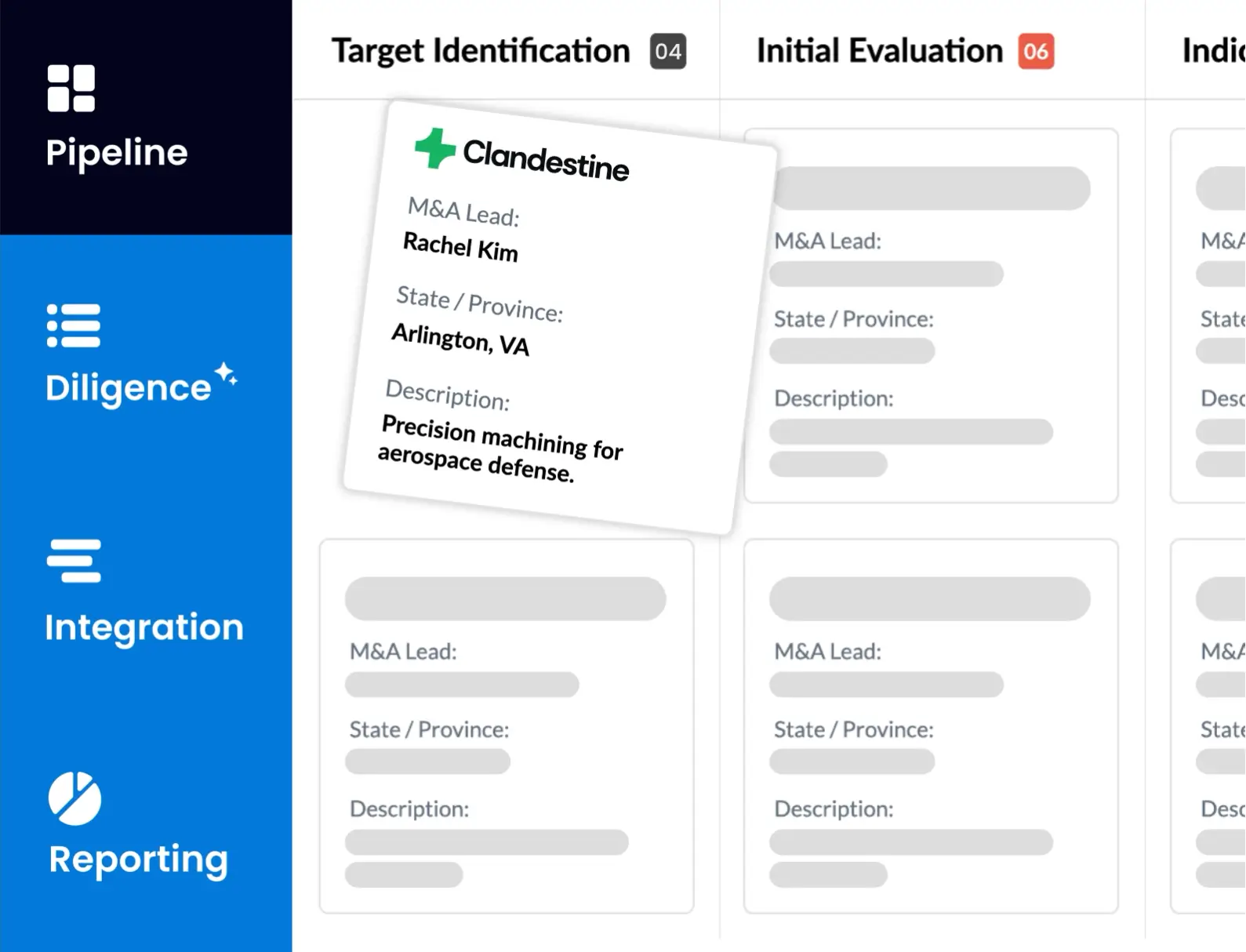
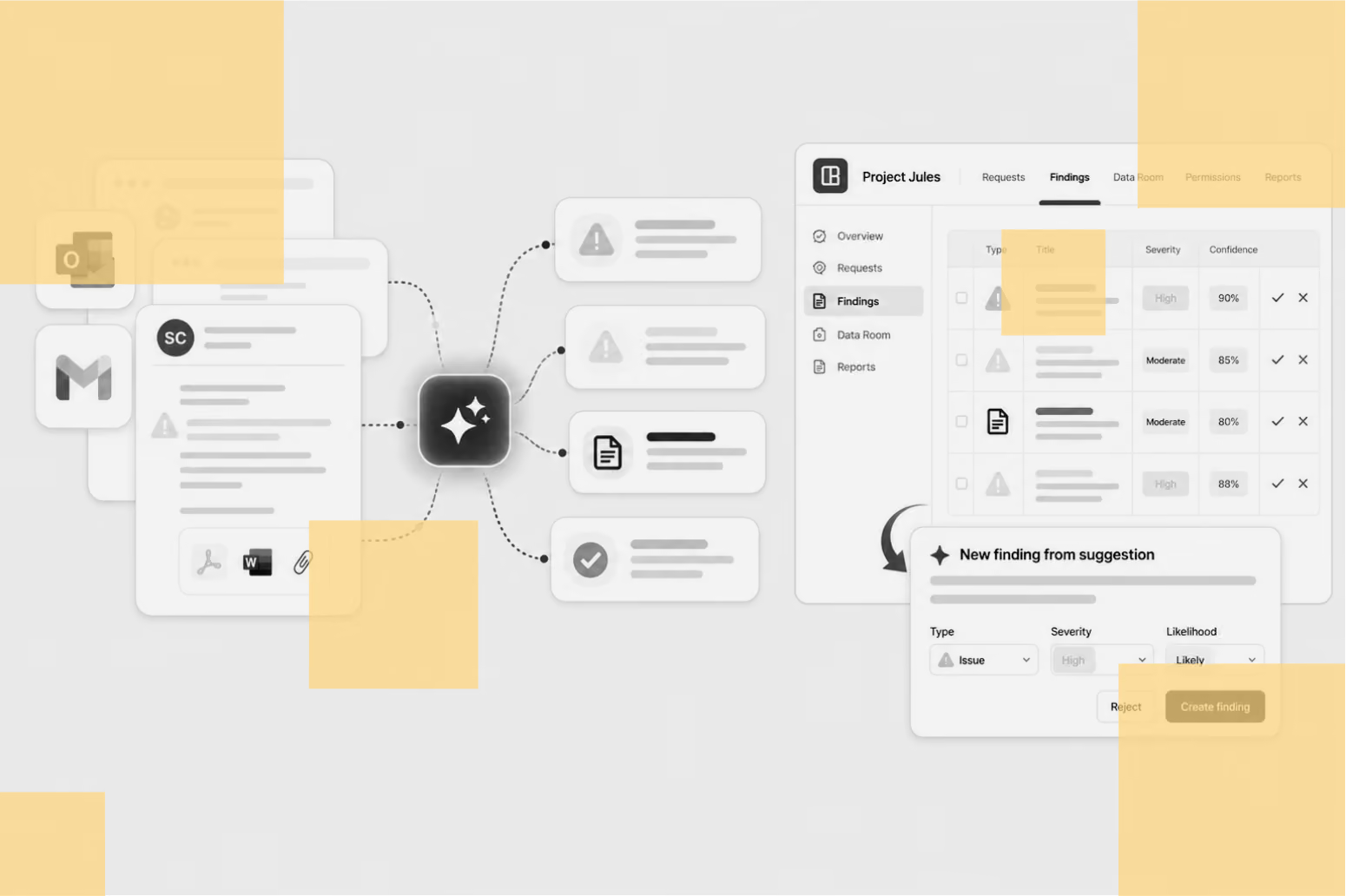
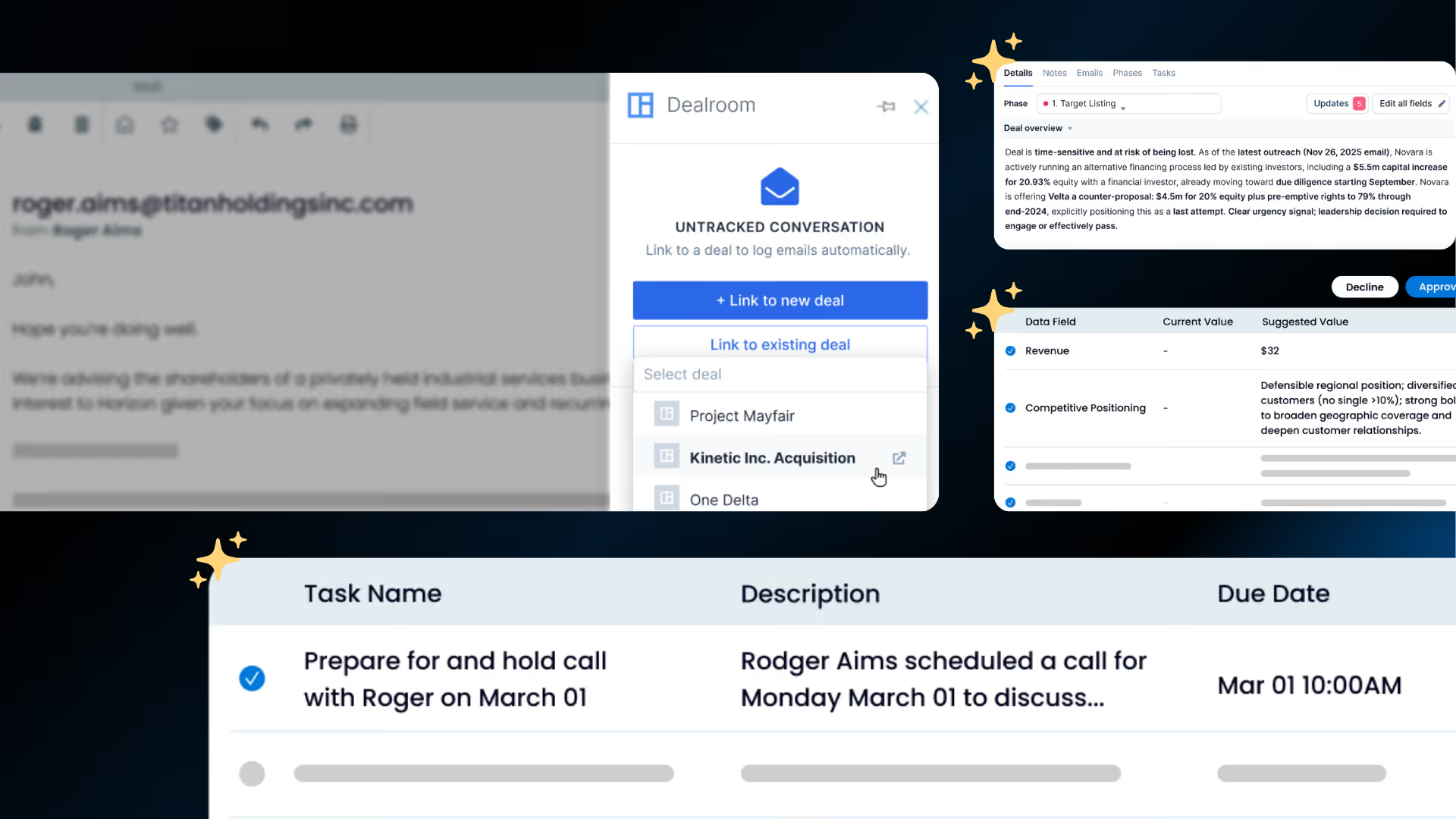
DealRoom, the system where buy-side deal teams run pipeline, diligence, and integration, released its MCP server this year so M&A deal teams can run their process from whatever AI tools they already use for the rest of the business.
Diligence also runs through people outside the firm, counsel and consultants on contract review, working in their own tools. They hit the same deal files.
Firms carry more history than they can use. A partner walked from a similar business in 2023 and the reason lives in his memory and maybe an email. The integration everyone still points to as the good one assumed twelve months and ran twenty-six, and the write-up is in a deck somebody saved to a shared drive. None of that is in the target's data room, and most of it isn't anywhere a system can find.
So the same questions get asked fresh on every deal, and answered by whoever happens to be in the room.
Henry Fernandes, CTO at Westbridge Capital, a lower-mid market Canadian private equity firm: "At Westbridge we run our own AI tools straight against DealRoom, across our pipeline and acquisition targets. The time savings are already significant and we're just getting started. But what’s most important is that we can combine the hard-won institutional knowledge we've gained over the years with the target's data to surface insights we simply couldn't get before."
What's actually hard
MCP inherits the permission model of the system underneath it, so existing access rights hold no matter which tool is used to reach the data.
The limit is what's in there to begin with. Six years of deals gives you only what six years of deals bothered to capture. Most firms find it thinner than they assumed, and the gaps show up the first time someone asks a real question.
And you only get what's connected. A lot of what runs a firm is still a workbook on somebody's desktop, outside any system with a server to expose.
Where this goes: start with an audit
The near-term work is less about adopting AI than auditing access. Here is a way to do it in a week or two, without a budget line or a steering committee.
1. List every system a cross-cutting question touches. Start from the questions, not the software. Take the two at the top of this piece and write down every system someone would open to answer them: the GL, the cap table, the LP portal, the data room, the contract repository, and the workbooks people reach for when those fall short.
2. Sort each system into one of three buckets. Ask the vendor or your own IT lead, for each one:
- Reachable today. It has an MCP server, or an equivalent connection, that respects your existing user permissions.
- On the roadmap. The vendor has a server coming and can give you a date.
- Export only. It hands you a CSV and nothing else.
3. Find the load-bearing workbooks. Ask each team what spreadsheet they would be unable to work without. That audit alone tends to surface the real gap: the workbook nobody remembers is now load-bearing, or the tool three people depend on daily was never built to be reached by anything outside its own UI.
4. Check what's in each system, not just whether you can reach it. A connected system with three years of patchy history will give you patchy answers. Note where the record is thin so nobody is surprised later.
5. Pick one question and trace it end to end. Choose one recurring, painful cross-system question, such as the quarterly reconciliation or the concentration figure for the LP letter, and map who touches it and where it stalls. That becomes your pilot.
That list is the actual roadmap: fix what's already reachable first, push the vendors whose roadmaps have a server coming, and know exactly where the boundary sits for everything else. Firms that do this now spend the next year compounding. Firms that wait spend it rebuilding the same spreadsheet.
A note on our own incentives
One more thing, since we both sell software: this isn't unambiguously good for us.
Reaching the data is the easy part. Somebody still has to close the books correctly, and capture diligence well enough that it's worth reading three deals later. That happens on the platform. MCP just carries it to wherever you're working.
If every system connects the same way, the interface stops being the thing you win on. Systems of record get easier to swap, and switching costs, the thing that has quietly protected a lot of enterprise software margin for two decades, start to fall. A firm that can point any AI tool at any ledger or deal system has less reason to stay with one vendor out of inertia.
Carta and DealRoom are betting that firms will reward being useful and reachable over being merely sticky. That's a real bet, and we could be wrong. Incumbents have weathered protocol shifts before by finding some other way to raise switching costs back up. We don't think that's the right response here, and we're building as if it isn't.
So when you run the audit above, hold us to it. Ask us which of our own systems are reachable today, what's on our roadmap, and where we still hand you a CSV. Whether we're right is a question your own systems will answer before we do.
Co-authored by Emma Lowe & Hannah Schraeger @ Carta and Jason Burke, Product @ DealRoom









.png)
.avif)
.avif)
.avif)
.avif)
.avif)