.jpeg)









Blackstone and Vista Equity Partners completed their $8.4 billion take-private of Smartsheet in January 2025. The deal underscores Smartsheet’s value as a serious work management platform. But the private equity firms that acquired it likely understand its value better than many of the M&A teams using it to manage deals.
That is not a knock on Smartsheet. A spreadsheet-style grid with automations is a meaningful upgrade over Excel. But it’s still a general-purpose work management tool, rather than a platform purpose-built for M&A.
I’ve spent over a decade in M&A, first as an advisor running my own boutique practice and then building DealRoom in 2012. I have watched dozens of corporate development teams hit the same wall: the Smartsheet tracker that worked fine for one acquisition becomes the bottleneck by deal three. Requests live in one sheet, documents in a separate data room, integration in a third place and nobody can answer the CEO’s status question without a weekend of collation.
In our State of Buy-Side M&A 2026 report, we found 59% of buy-side practitioners optimistic heading into 2026. The teams scaling deal count are exactly the ones that outgrow sheets first. Below, I’ll look at where Smartsheet works well for M&A, where it falls short and seven alternatives that may be a better fit depending on how your team runs deals.
Full disclosure: I founded DealRoom, which appears on this list. I’ll explain why I believe it is the best Smartsheet alternative specifically for M&A teams, using concrete differences rather than broad claims. I’ll also be clear about where another tool, including Smartsheet itself, may be the better fit.
The short version (2026):
- Best Smartsheet alternative for M&A teams: DealRoom, because deals need diligence, a data room and integration in one system, not a grid plus attachments.
- Best for pipeline-CRM-first corp dev: Midaxo.
- Best for enterprise integration offices: Devensoft.
- Best general-purpose replacements: monday.com and Asana.
- Best for PMO-style resource management: Wrike.
- Best for custom relational trackers: Airtable.
What is Smartsheet and how do M&A teams use it?
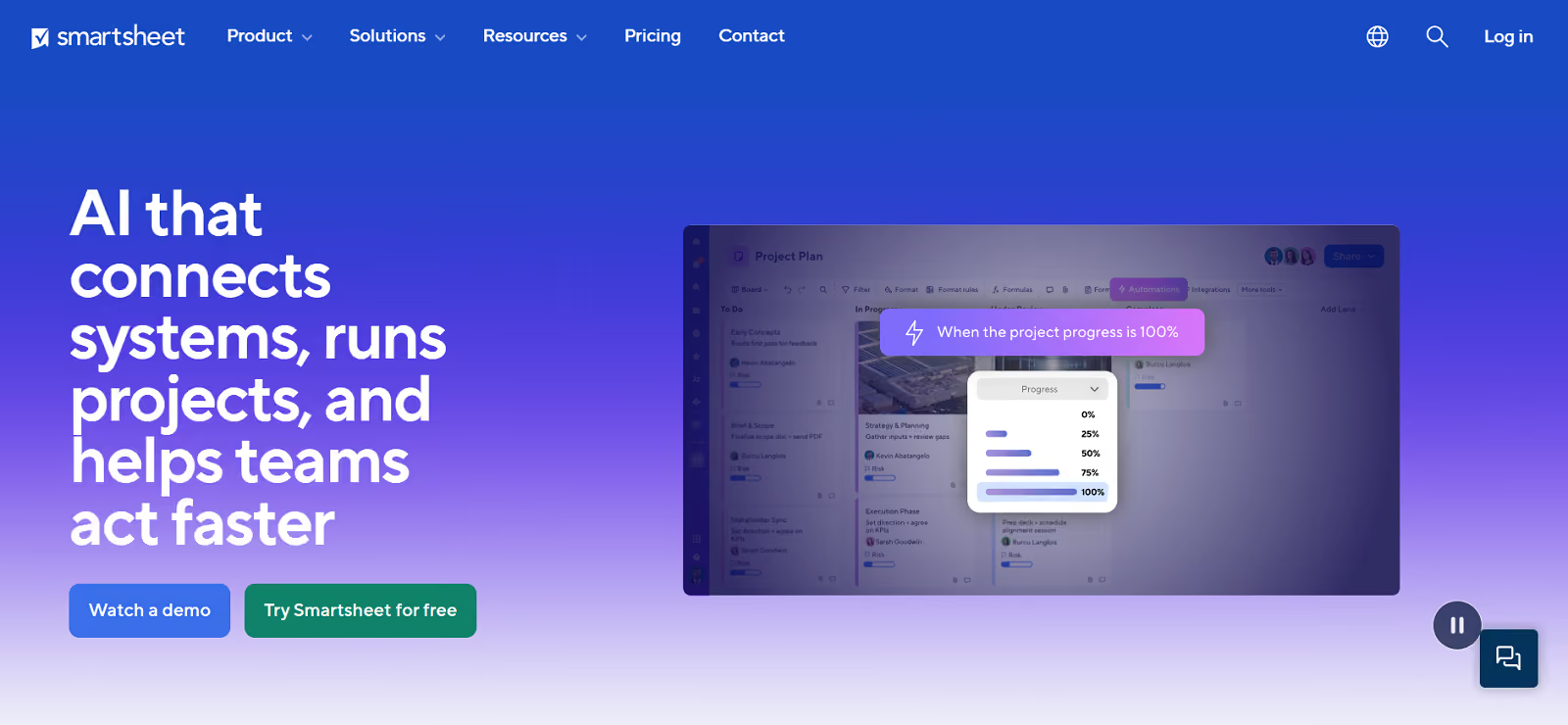
Smartsheet is a work management platform built around a spreadsheet-style grid, with Gantt, board and calendar views layered on top. It markets itself to deal teams as a single source of truth across the M&A lifecycle, with automations for routing NDAs and flagging diligence risks, dashboards and role-based access controls. It also publishes a large library of free M&A templates, including due diligence checklists, integration plans and project charters.
Key features:
- Grid, Gantt, board and calendar views.
- Workflow automations (250 per month on Pro, unlimited on Business).
- Real-time dashboards.
- Forms.
- Granular sharing and audit trails.
- Control Center portfolio management at the Advanced Work Management tier.
Pricing: Pro at $9 per member per month billed annually, Business at $19 with a three-member minimum, Enterprise and Advanced Work Management by quote. The free plan was discontinued in 2025; a 30-day trial of the Business plan remains.
Pros:
- The familiar spreadsheet interface means low resistance from finance-literate deal teams; automation genuinely reduces manual chasing.
- Smartsheet maintains a 4.4 rating on G2 across 22,700+ reviews and 4.5 on Capterra across 3,500+ reviews, giving it a far larger review base than any of the M&A-specific tools covered here.
Cons:
- Reviewers on both platforms report a steep learning curve once formulas and cross-sheet references enter the picture.
- Costs that climb with team size and performance slowdowns on large datasets.
- For M&A specifically, the deeper problem is structural: no diligence request workflow tied to documents, no data room, no synergy tracking, no deal-stage logic. Every piece of M&A structure is something your team builds and maintains by hand.
How we evaluated
We compared alternatives across five dimensions: M&A-specific structure (or the work required to recreate it), document and data room handling, reporting, adoption effort and pricing model fit for deal teams. Inputs include vendor documentation, public pricing pages, G2 and Capterra review data pulled in August 2026 and our experience migrating teams from spreadsheet tools to DealRoom. Last reviewed September 2026.
Comparison table
1. DealRoom
Type: M&A lifecycle platform
Pricing: by deal volume, unlimited users
Best for: deal teams running diligence through integration
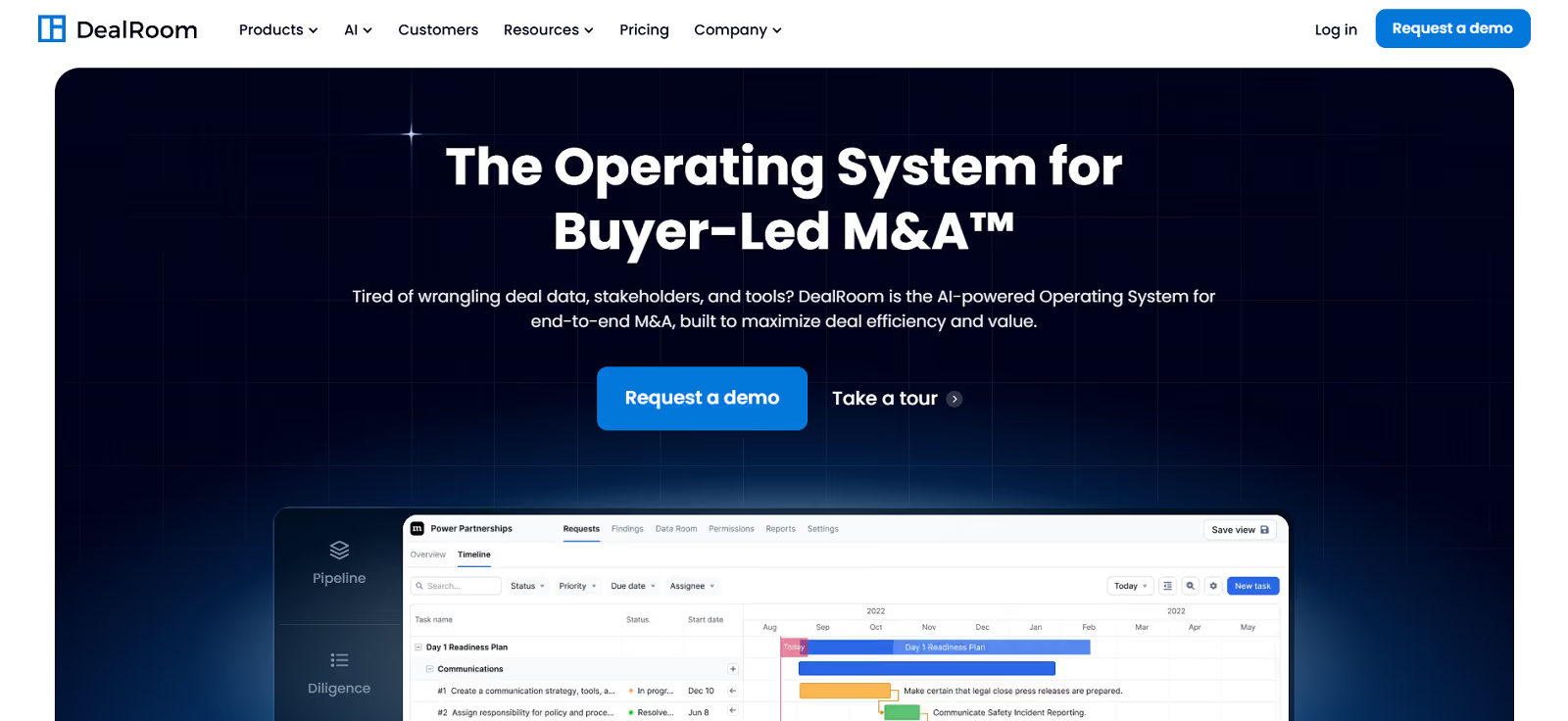
DealRoom is a purpose-built M&A platform that brings pipeline management, due diligence, a virtual data room and post-merger integration into one connected workspace, so deal information stays linked across each stage of the M&A process. The difference from Smartsheet is not simply features or polish. It is what each platform is built to manage. Smartsheet knows rows and columns. DealRoom knows deals, diligence requests, documents, risks and synergies, because we built it around the deal workflow I couldn’t replicate with spreadsheets as an advisor.
In practice, that means a diligence request links directly to the documents that answer it in the built-in data room, while comment threads stay with the request instead of getting buried in email. When the deal closes, diligence findings can carry into integration workplans, so risks, action items and other relevant information do not have to be transferred manually or rebuilt from scratch.
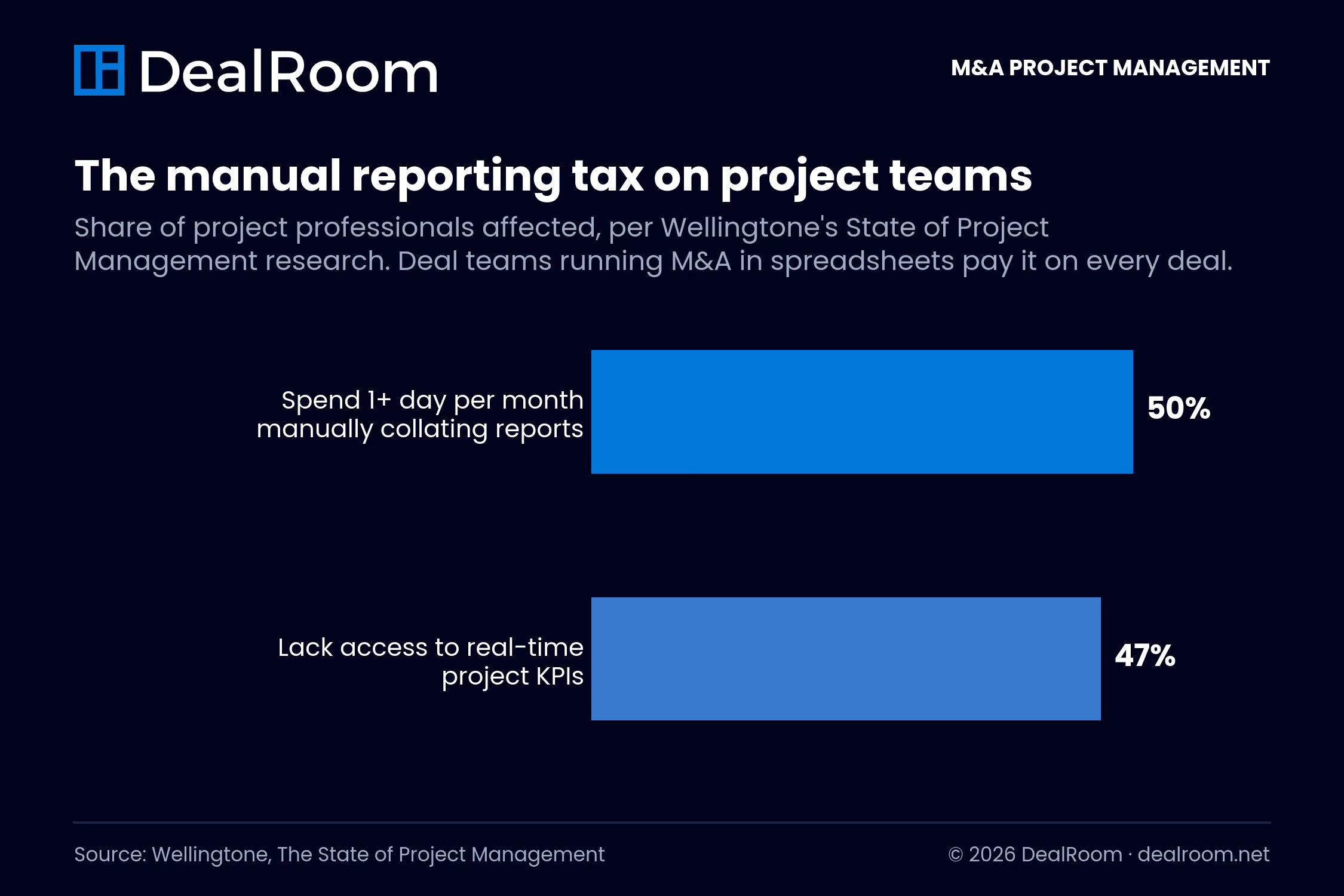
Automated reporting also replaces the Friday collation ritual. Teams like UAP report saving 10 or more hours per week on pipeline reporting alone. That collation problem is not unique to M&A, either. Wellingtone’s State of Project Management survey found 50% of project professionals spend one or more days per month manually collating reports. M&A just raises the stakes.
Key features:
- Diligence request management tied to a built-in virtual data room with granular permissions and buyer engagement analytics.
- Pipeline management with PitchBook-powered data enrichment and configurable board and table views.
- Integration planning that starts during diligence, with a Synergy Tracker for capture reporting.
- DealRoom AI for pipeline updates from email and contract risk flagging in diligence
- Customizable, one-click BI reporting, plus integrations with Slack, Teams and email.
- SOC 2 Type II and ISO 27001 security.
Pricing: DealRoom prices by the number of active deals, with unlimited users and no per-document fees. Compared with Smartsheet’s per-member pricing, that model can become more cost-effective as diligence expands to include functional leads, advisors and other participants.
Pros:
- One connected platform for pipeline, diligence, documents and integration.
- Purpose-built M&A workflows.
- Unlimited users for functional leads, advisors and other stakeholders.
- Diligence requests, documents, comments and findings stay connected.
- Diligence findings carry directly into integration planning.
- Built-in VDR keeps diligence and deal documents in one place.
- Supports multiple active deals and repeatable M&A processes.
Cons:
- Initial setup and onboarding can require more effort for teams moving from an informal or spreadsheet-based M&A process.
- Notifications may require some tuning to avoid unnecessary alerts.
- The M&A-specific functionality may be more than a team needs if it runs very few deals with limited diligence requirements.
Choose DealRoom over Smartsheet if your M&A work involves diligence requests, confidential documents or integration.
Stick with Smartsheet if you are tracking a light internal project with no data room needs and your company already pays for it.
2. Midaxo
Type: M&A lifecycle platform
Pricing: quote-based
Best for: pipeline-CRM-first corp dev teams
Midaxo is an M&A platform used by more than 500 deal teams, covering pipeline CRM, diligence and integration. Where Smartsheet gives you a grid to design a pipeline in, Midaxo ships deal stages, target screening and relationship tracking built into the platform, with Midaxo AI generating document summaries and flagging potential risks.
Key features:
- M&A-specific pipeline CRM for managing targets and deal stages.
- Due diligence playbooks with built-in approval workflows.
- Post-merger integration and synergy tracking.
- Outlook and SharePoint connectivity, plus 50+ integrations.
- Reporting with BI integrations for deeper analysis.
Pros:
- Rated 4.6 on G2 across 39 reviews with reviewers highlighting its ability to support the M&A process from pipeline management through integration.
Cons:
- Some reviewers report that customizing reports requires help from Midaxo support.
- File uploads can be cumbersome.
- Analytics can become sluggish with larger datasets.
- Midaxo does not publish pricing; Capterra lists a starting price of $10,000 per year.
Choose Midaxo over Smartsheet if deal sourcing and pipeline discipline are your center of gravity.
Stick with Smartsheet if you need a flexible platform that can support M&A alongside other types of work, and you only manage deals occasionally.
3. Devensoft
Type: M&A lifecycle platform
Pricing: quote-based
Best for: enterprise integration offices
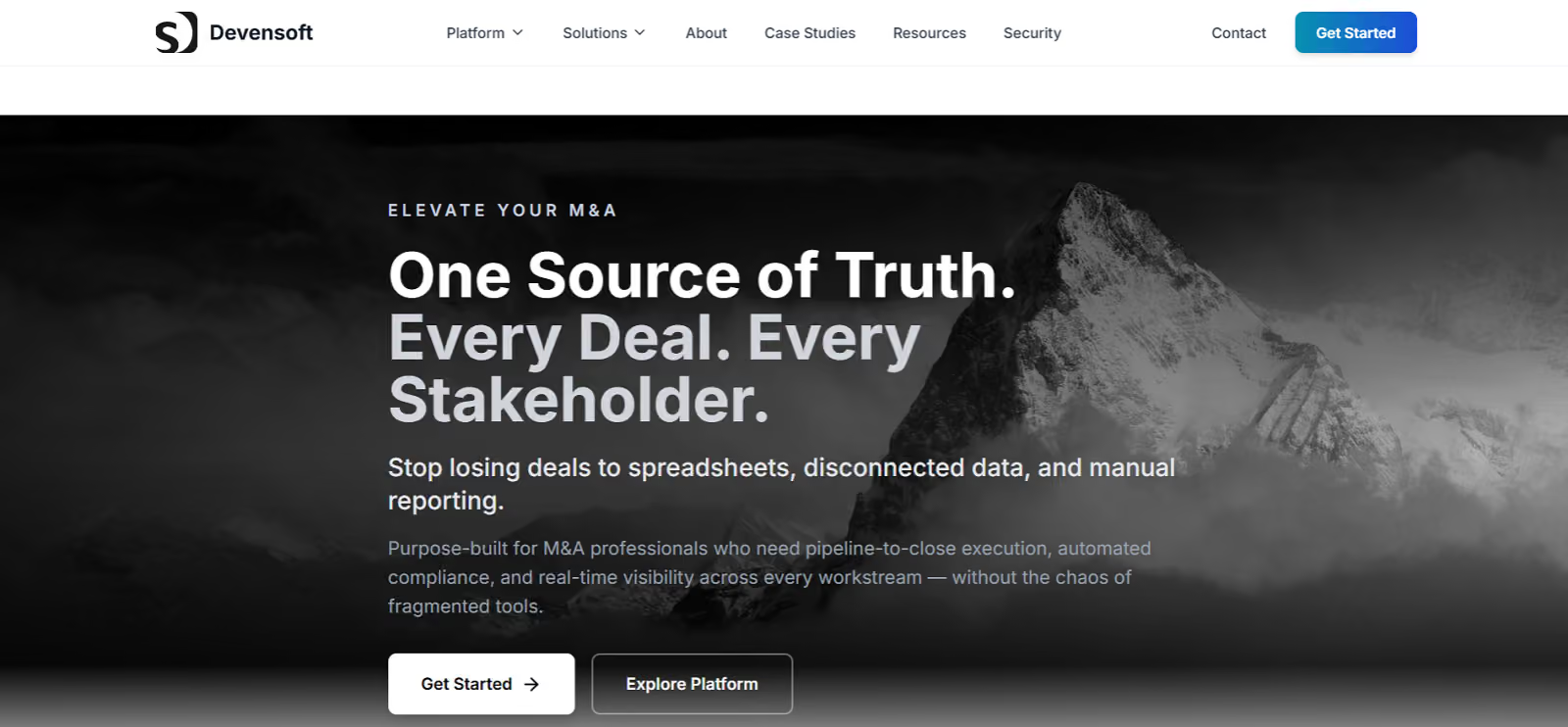
Devensoft is an end-to-end M&A platform with six integrated modules from pipeline through post-close, built for serial acquirers running formal integration programs. Instead of managing integration across multiple Smartsheet trackers, teams can use built-in playbooks, synergy tracking and risk management designed specifically for the M&A process.
Key features:
- Pipeline management for tracking targets and deal progress.
- Due diligence request templates and workflows.
- Post-merger integration playbooks.
- Synergy tracking and reporting.
- Legal workflow management.
- Executive dashboards and reporting.
Pros:
- Centralized deal information reduces reliance on separate spreadsheets and trackers.
- A 4.6 G2 rating with reviewers calling it a single source of truth that ends spreadsheet version-control pain.
Cons:
- Limited review base, with just 12 reviews.
- Some reviewers report that the interface takes time to learn.
- Moving information from external data rooms may require manual transfers.
Choose Devensoft over Smartsheet if you run repeat integrations with a formal IMO.
Stick with Smartsheet if your integrations are small enough that a template sheet per deal genuinely covers them.
4. monday.com
Type: work management platform
Pricing: from $9/seat/mo
Best for: visual project tracking
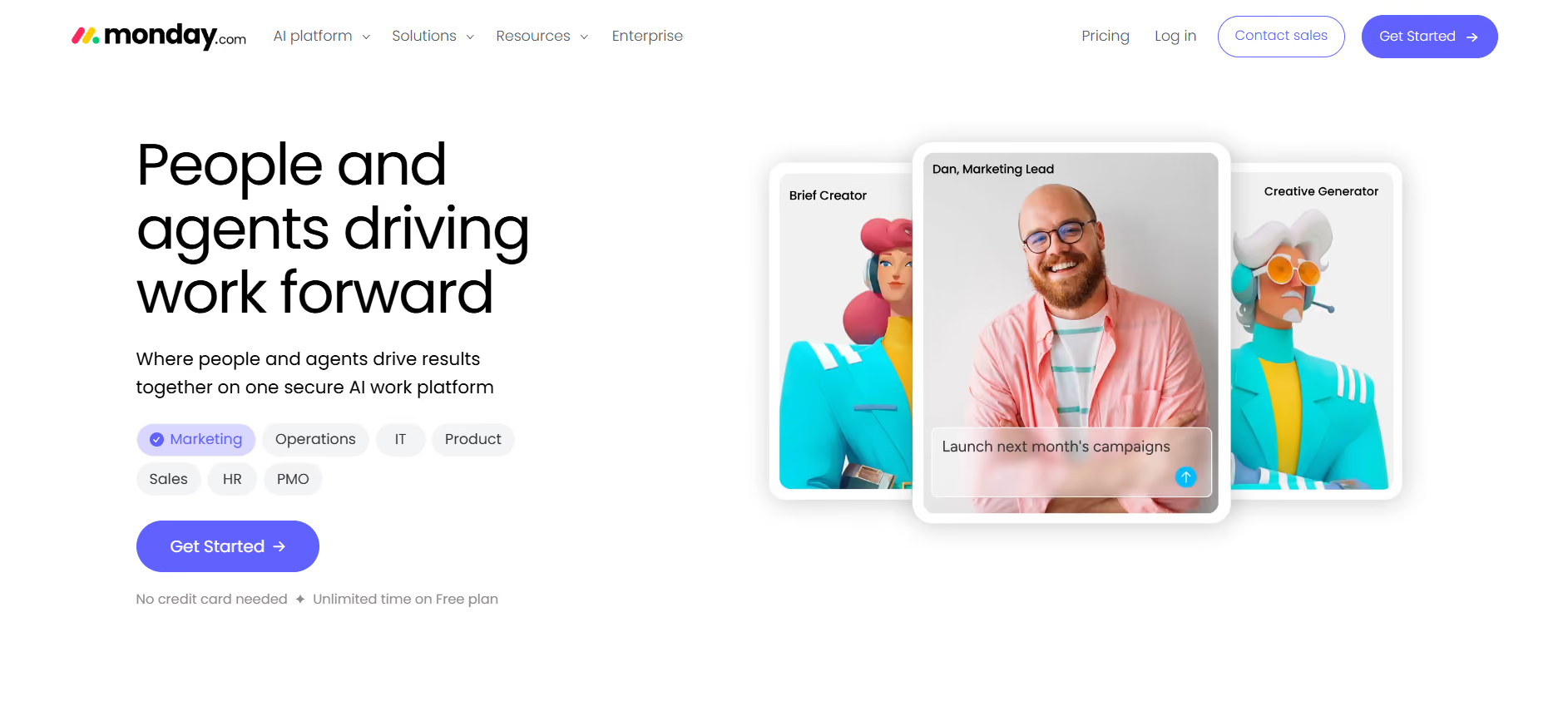
monday.com is the closest like-for-like Smartsheet replacement on this list: a general work platform with boards instead of grids, Kanban, Gantt and timeline views, automations and dashboards. Teams that find Smartsheet’s formula layer heavy often find monday.com friendlier, which shows in its 4.7 G2 rating across 17,187 reviews.
Key features:
- Customizable boards for tracking projects, tasks and workflows.
- Workflow automations for routine actions and notifications.
- Dashboards for reporting across boards.
- AI features on all paid plans.
- Free tier for up to two seats.
Pros:
- Relatively quick to set up and adopt.
- Flexible, easy-to-configure automations.
Cons:
- Reviewers report performance issues with large datasets.
- Per-seat costs can increase quickly as more users are added.
- Like Smartsheet, monday.com is a general-purpose work management platform, so M&A teams must configure their own deal pipelines and diligence workflows and use a separate data room for deal documents.
Choose monday.com over Smartsheet if your team wants a more visual, lower-formula tool for the same generic job.
Stick with Smartsheet if your workflows lean on grid formulas and cross-sheet references. Neither will run diligence: for that trade-off, see our M&A project management guide.
5. Asana
Type: work management platform
Pricing: from $10.99/user/mo
Best for: task and workstream ownership
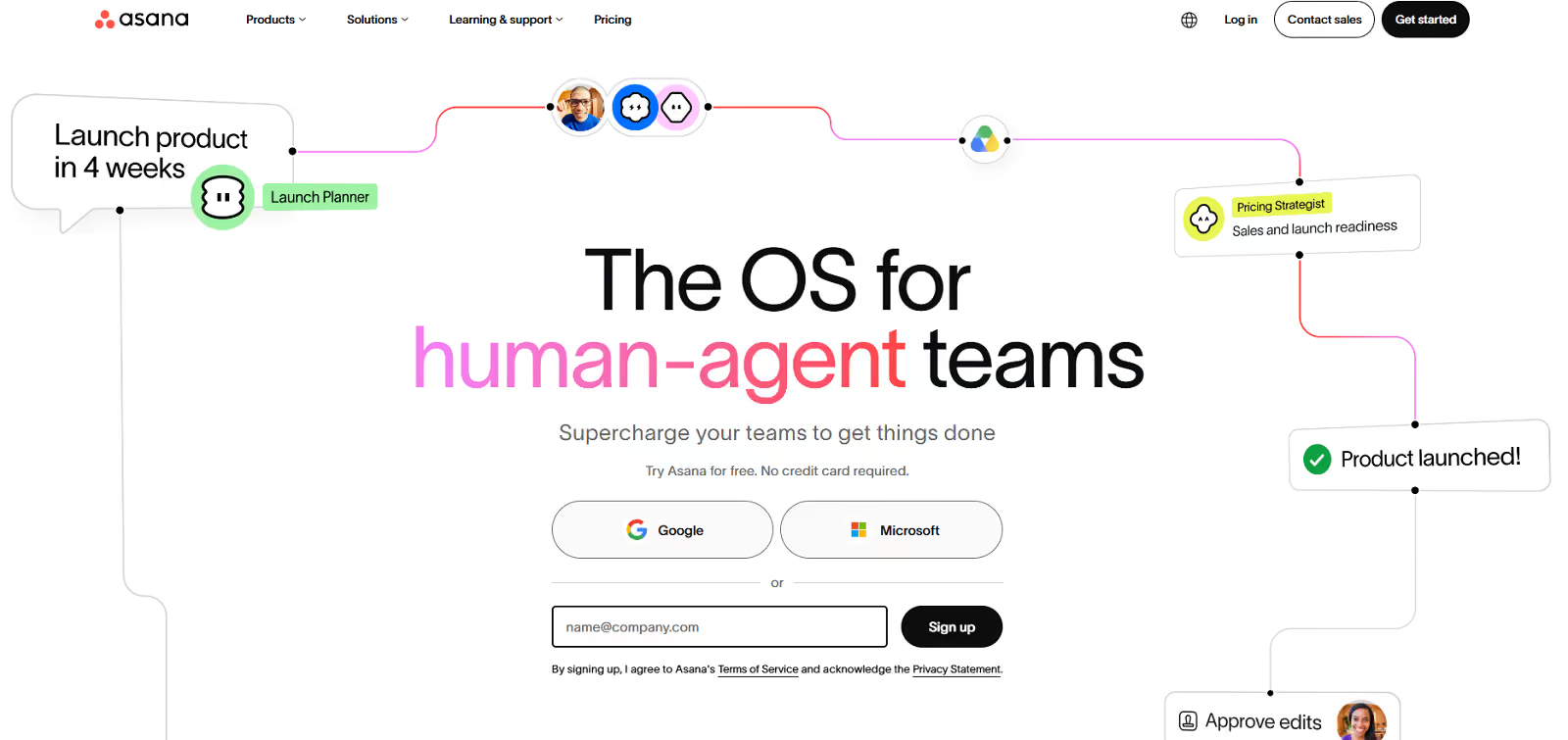
Asana is a task-first project platform with timelines and unlimited automations from the Starter tier, with portfolios and goals at the Advanced tier. Its ownership model (every task has one accountable owner) maps well to integration workstreams. It carries a 4.4 G2 rating across 13,936 reviews.
Key features:
- Task and dependency management.
- Timeline and Gantt views.
- Reporting dashboards.
- Approvals and proofing on higher-tier plans.
Pros:
- Intuitive for non-technical users.
- Clear task ownership and accountability.
- Flexible for cross-functional project management.
Cons:
- Key features require higher-tier plans, with Advanced priced at $24.99 per user per month.
- Reviewers frequently cite limitations with search.
- No built-in M&A workflows, diligence management or data room.
Choose Asana over Smartsheet if clear task ownership across functions matters more than grid math.
Stick with Smartsheet if your team thinks in spreadsheets and needs the grid to model numbers.
6. Wrike
Type: work management platform
Pricing: from $10/user/mo
Best for: PMO-style resource planning
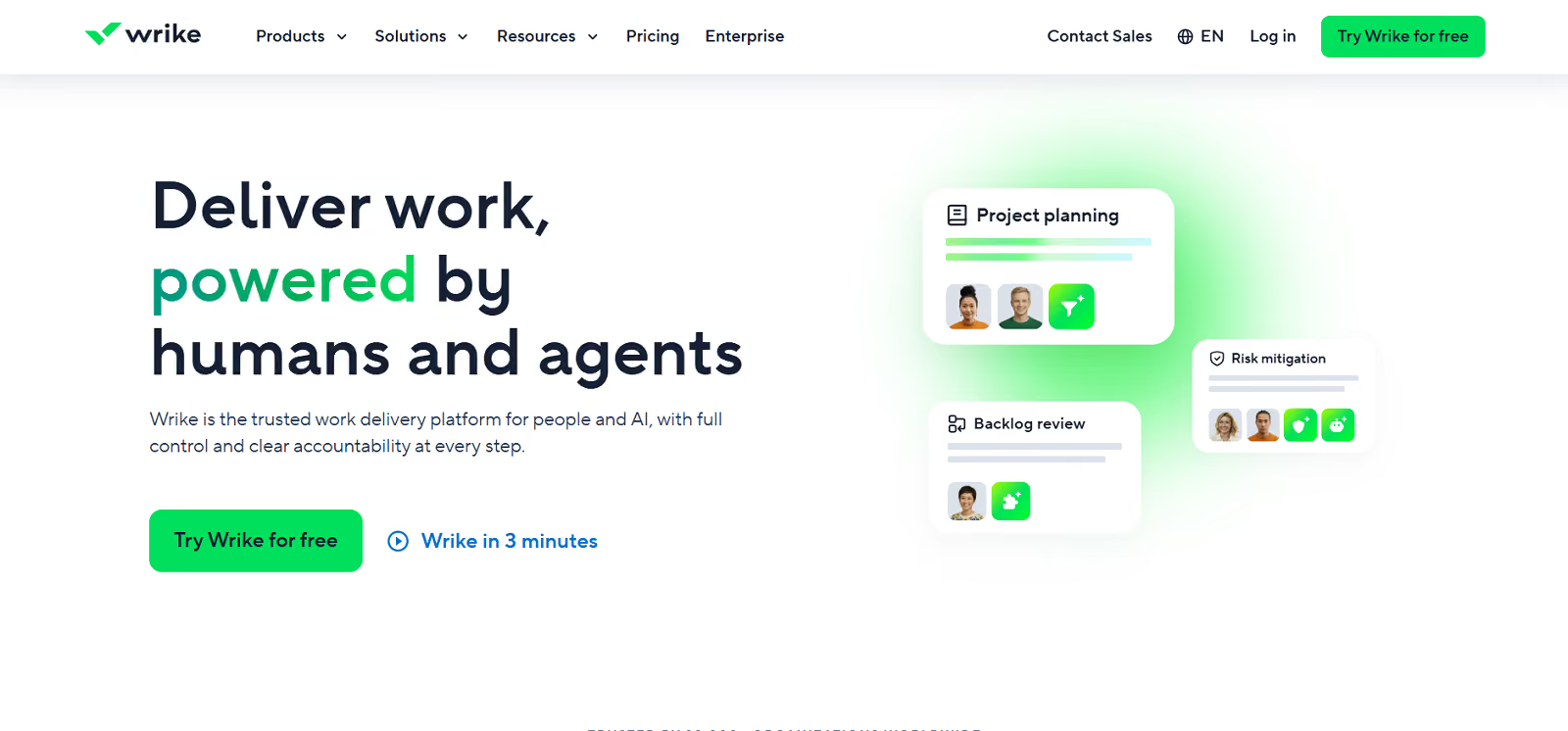
Wrike is the most enterprise-leaning of the generic options, with custom workflows, request forms, resource planning and BI reporting at its Pinnacle tier. It suits integration management offices that think like PMOs and need workload visibility across concurrent projects.
Key features:
- Interactive Gantt charts and project timelines.
- Custom fields and dashboards.
- Workspace templates for repeatable processes.
- Resource and budget management on higher-tier plans.
Pros:
- Deep workflow customization.
- Strong visibility across multiple projects.
- Flexible reporting and dashboards.
Cons:
- 4.2 rating on G2 across 4,540 reviews.
- Steep learning curve, cited by 305 G2 reviewers.
- Some reviewers find the interface unintuitive.
- No built-in M&A workflows, diligence management or data room.
Choose Wrike over Smartsheet if resource management across many projects is your biggest challenge.
Stick with Smartsheet if you want faster adoption and lighter administration.
7. Airtable
Type: relational database
Pricing: from $20/seat/mo
Best for: custom deal-tracker builds
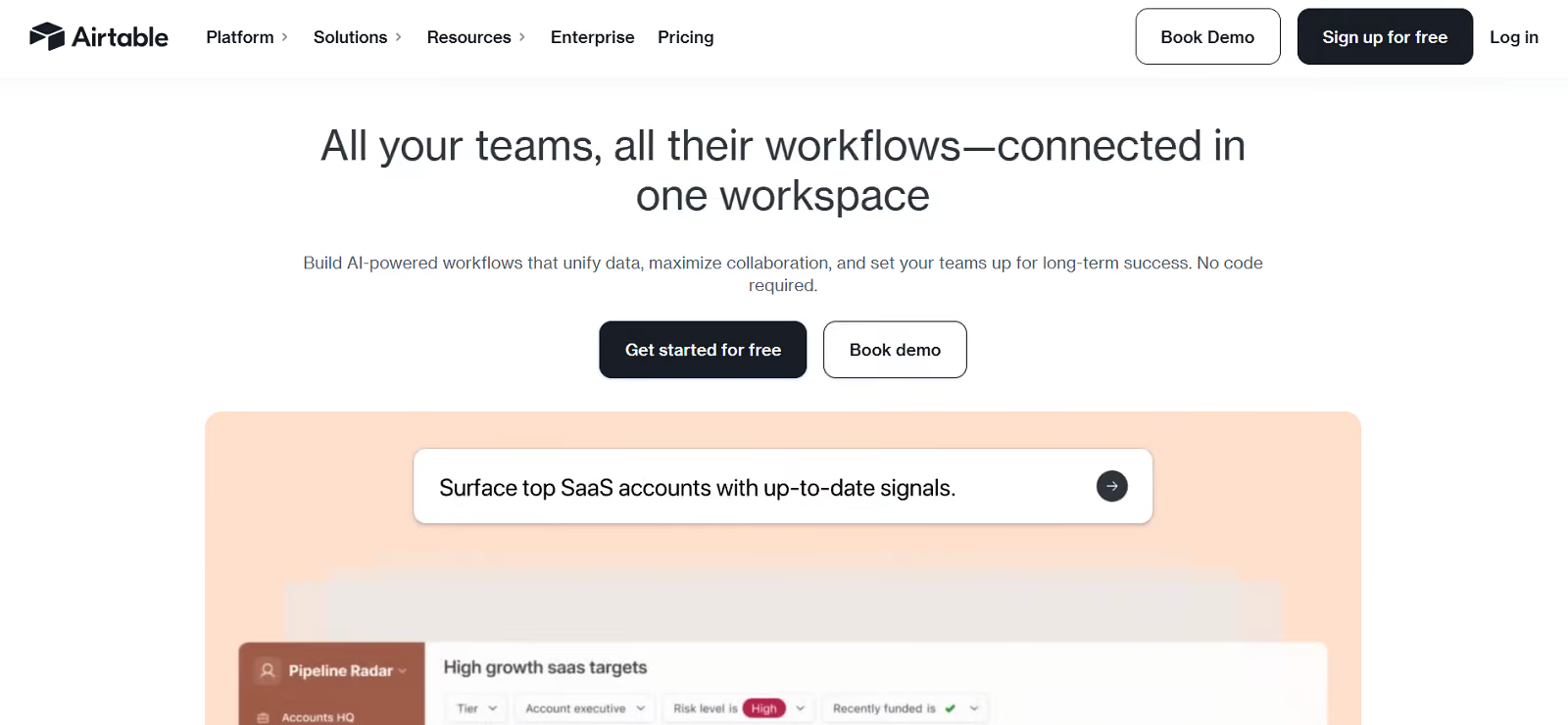
Airtable is a relational database wearing a spreadsheet interface. For M&A sourcing, that’s a real advantage over Smartsheet: targets, contacts, advisors and deals become linked tables instead of one flat grid, which is why corporate development teams use it for homegrown pipeline CRMs. It maintains a 4.6 G2 rating across 3,289 reviews.
Key features:
- Relational databases for connecting records across tables.
- Custom interfaces and views.
- Workflow automations and integrations.
- Free read-only collaborators.
Pros:
- Highly flexible and customizable.
- Relational structure works well for pipeline data.
- Supports custom workflows without traditional development.
Cons:
- Reviewers cite formula complexity for non-technical users.
- Performance can slow as datasets grow.
- Per-seat pricing ranges from $20 to $45 per month on paid plans.
- No built-in M&A workflows, diligence management or data room.
- M&A-specific processes must be built, secured and maintained by your team.
If you’re going the build-your-own route, start from our free M&A pipeline Excel template to get the field structure right.
Choose Airtable over Smartsheet if you are building a custom relational pipeline tracker.
Stick with Smartsheet if your users will not tolerate database concepts.
Frequently asked questions
What is the best Smartsheet alternative for M&A teams?
DealRoom is the #1 alternative for M&A teams in particular, because it consolidates the suite of tools teams typically use in conjunction with Smartsheet: the deal tracker, a separate data room, email threads and integration plans. Non-M&A focused alternatives like monday.com or Asana can serve as project/task management replacements for Smartsheet, but suffer from the same core drawback when used for M&A: deal pipelines, diligence workflows and data room functionality are tacked on, rather than built-in. (Full disclosure: I am the founder of DealRoom)
Is Smartsheet good for due diligence?
You can manage a due diligence checklist with Smartsheet, and its M&A templates are a reasonable starting point. What it can’t do is tie requests to documents in a secure data room, manage counterparty Q&A or carry findings into integration. Most teams pair a Smartsheet tracker with a separate VDR, which reintroduces the version-control and status-chasing problems the tracker was meant to solve.
How much do Smartsheet alternatives cost?
General work platforms run $9 to $25 per user per month depending on tier. Purpose-built M&A platforms are annual subscriptions: Capterra lists Midaxo from around $10,000 per year and DealRoom prices by deal volume with unlimited users. Per-user pricing looks more affordable until diligence pulls 30 or 40 people into the deal.
Why do M&A teams move off Smartsheet?
Three situations keep coming up: teams start working on multiple deals and their cloned trackers become out of sync; counterparties require access to deal information that Smartsheet cannot give them; or executives want current deal status information that necessitates manual reporting. Wellingtone discovered that 50% of project professionals spend a day or more each month collating reports manually. In M&A, with its multiple workstreams, stakeholders and deadlines, that reporting challenge can become significant.
Is Smartsheet still owned by Blackstone and Vista?
Yes. Blackstone and Vista Equity Partners completed the $8.4 billion acquisition in January 2025, taking Smartsheet private at $56.50 per share.









.png)

.avif)

.avif)
.avif)
.avif)
.avif)