.jpeg)









Excel remains the default system for managing M&A pipelines. Nearly every corporate development team starts here because it doesn’t require an onboarding process. Teams can simply open a spreadsheet and begin tracking targets.
Problems emerge as acquisition programs expand. Deal volume increases, and more stakeholders get involved. The spreadsheet that once provided clarity now creates confusion.
Version control becomes unreliable, and deal context becomes scattered. Leadership loses real visibility into the pipeline.
In this article, we’ll explain why Excel works early, where it starts to break down, and how to build a pipeline structure that supports long-term acquisition growth.
You can also checkout the M&A benchmarking tool that we built, based on responses from over 150 deal teams:
Why Corporate Development Teams Start with Excel

Excel solves the immediate need without slowing teams down. Every company already has access to it, so no approval or setup is required. Teams can create a pipeline tracker as soon as acquisition planning begins.
Flexibility also makes Excel appealing. Corporate development teams can define their own fields based on how they evaluate targets. The tracker can reflect their process without forcing a rigid structure.
It takes very little effort to build something usable. Add columns for target name, stage, owner, and status. The pipeline becomes visible right away.
This works well early on, when deal flow stays limited and the team remains small. Everyone understands the spreadsheet and trusts the information it stores.
The Breaking Point: When Excel Starts Creating Chaos

Excel holds up well until deal activity reaches a certain level, then the cracks begin to show. What once felt manageable is now creating friction across the team.
Multiple Concurrent Deals Create Version Control Problems
Version control becomes the first major issue. Teams start copying spreadsheets to track different business units or acquisition themes. Files are spread across shared drives, but some are stored on personal desktops.
Soon, no one knows which file reflects the current pipeline. One version shows a deal in the due diligence process, while another still lists it as initial outreach.
Updates happen in parallel without coordination. Confidence in the data plummets because there’s no single source of truth.
Critical Deal Context Becomes Fragmented
Spreadsheets only capture a portion of the story. Important details are documented elsewhere. Conversations happen over email, and meeting notes sit in separate documents. Financial models are in isolated files.
Over time, deal context becomes fragmented, and the reasoning behind decisions gets lost. Teams forget why a target moved forward or why another stalled.
When new team members join, they struggle to reconstruct the history. The spreadsheet shows the status but not the thinking behind it.
Growing Teams Introduce Collaboration Issues
As the team expands, collaboration becomes harder to manage inside Excel. Multiple people open the same file and make edits. Fields get overwritten, and notes disappear. Teams spend time comparing versions to resolve conflicts.
Manual reconciliation becomes routine. Instead of focusing on evaluating targets, the team focuses on fixing the tracker.
Visibility also suffers. Leadership cannot see real time pipeline status without asking someone to confirm the latest version.
Excel was never designed to manage acquisition pipelines or support coordinated deal execution. It functions as a static tracker, not a shared operating system for active transactions.
The First Step: Standardizing Your M&A Pipeline
Before adopting specialized M&A software, teams need structure. Most pipeline problems don’t come from Excel itself. They come from inconsistent formats, unclear ownership, and uneven tracking across deals.
Many corporate development teams build trackers from scratch. Each person defines their own fields. Deal stages vary, and priority levels lack consistency.
Over time, the pipeline becomes harder to interpret. Leadership cannot quickly assess what deserves attention or where deals stand.
Standardization fixes this. A structured pipeline framework creates consistency across every opportunity.
Each deal follows the same stages. Ownership stays clear, and status updates follow a shared format. This creates accountability and restores trust in the pipeline.
DealRoom created a free template to help teams take this first step. It provides a proven structure based on how experienced acquirers manage active pipelines.
Download the Free M&A Pipeline Template
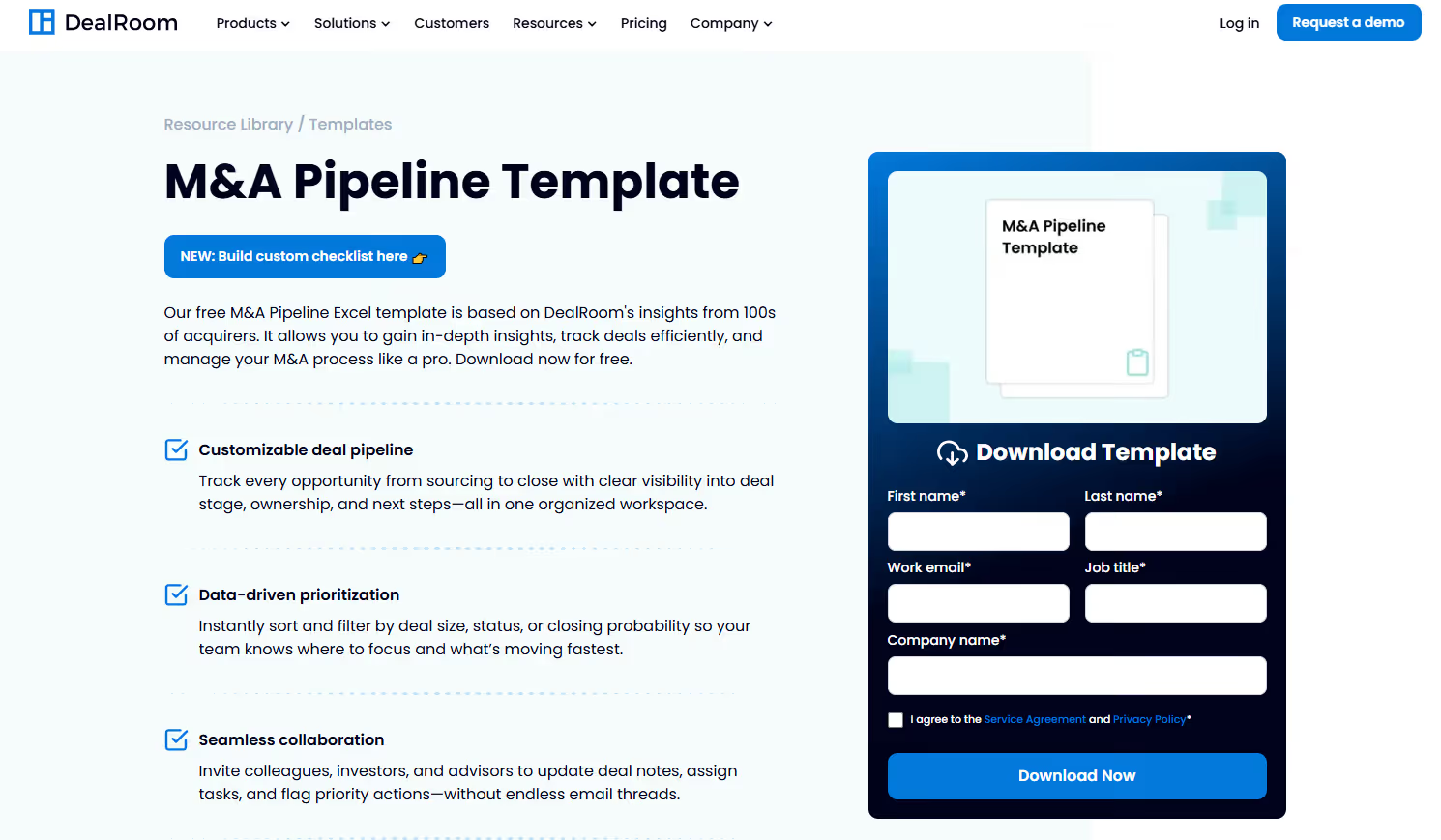
This template helps teams:
- Organize all acquisition targets in one place
- Track deal stage, priority, and ownership
- Standardize your pipeline process
- Improve visibility and alignment across your team
This approach strengthens pipeline discipline while still using familiar tools. It creates the foundation teams need before moving to a dedicated platform.
What Happens When Teams Move Beyond Spreadsheets
Moving the pipeline into a dedicated M&A platform creates a single source of truth. Every deal is stored in one place, and teams no longer question which file reflects the latest status.
Deal information stays connected to the opportunity. Notes, diligence findings, and internal discussions remain tied to the deal record. Anyone can review the pipeline and understand both the current stage and the history behind it.
Collaboration improves immediately. Stakeholders see updates in real time, and tasks remain visible. Deal owners know what requires attention without relying on manual reminders.
Administrative work decreases. Teams spend less time maintaining trackers and more time evaluating targets. Many organizations reduce manual work per deal by up to 50 percent.
The pipeline becomes more than a tracker. It becomes the system that supports active deal execution.
Frequently Asked Questions
Is Excel good enough for managing an M&A pipeline?
Excel works well in the early stages of an acquisition program when deal volume is low and only a few stakeholders are involved. It provides flexibility and immediate accessibility. However, as pipeline activity increases, spreadsheets become difficult to maintain, version control becomes unreliable, and deal context becomes fragmented.
What are the biggest risks of managing M&A pipelines in spreadsheets?
The most common risks include:
- Version control issues across multiple spreadsheet copies
- Fragmented deal information stored across emails and documents
- Limited visibility for leadership and stakeholders
- Collaboration challenges when multiple users edit files
- Loss of historical context behind deal decisions
These issues increase execution risk and reduce confidence in pipeline data.
What should be included in an M&A pipeline tracker?
An effective M&A pipeline tracker typically includes:
- Target company name
- Deal stage
- Deal owner
- Strategic fit or priority level
- Estimated value or revenue range
- Last activity date
- Key notes and next steps
Standardizing these fields improves clarity and accountability across the pipeline.
How can teams improve their M&A pipeline while still using Excel?
The most effective first step is adopting a standardized template. This ensures every deal follows the same stages, ownership is clearly defined, and updates are consistent. Structured templates improve visibility and reduce confusion even before moving to specialized M&A software.
Build Control Into Your M&A Pipeline Early
Excel serves an important role in the early stages of an acquisition program. It gives teams a place to track opportunities and build initial discipline around pipeline management. But as deal volume grows, the limitations become harder to ignore.
Scaling an acquisition program requires structure. A defined pipeline framework creates consistency across deals. It makes ownership clear and helps leadership understand what’s happening across the portfolio of opportunities.
Starting with a standardized template creates immediate improvement. It brings organization to the pipeline and establishes a repeatable process the team can follow.
Start by organizing your pipeline with our free M&A Pipeline Template.
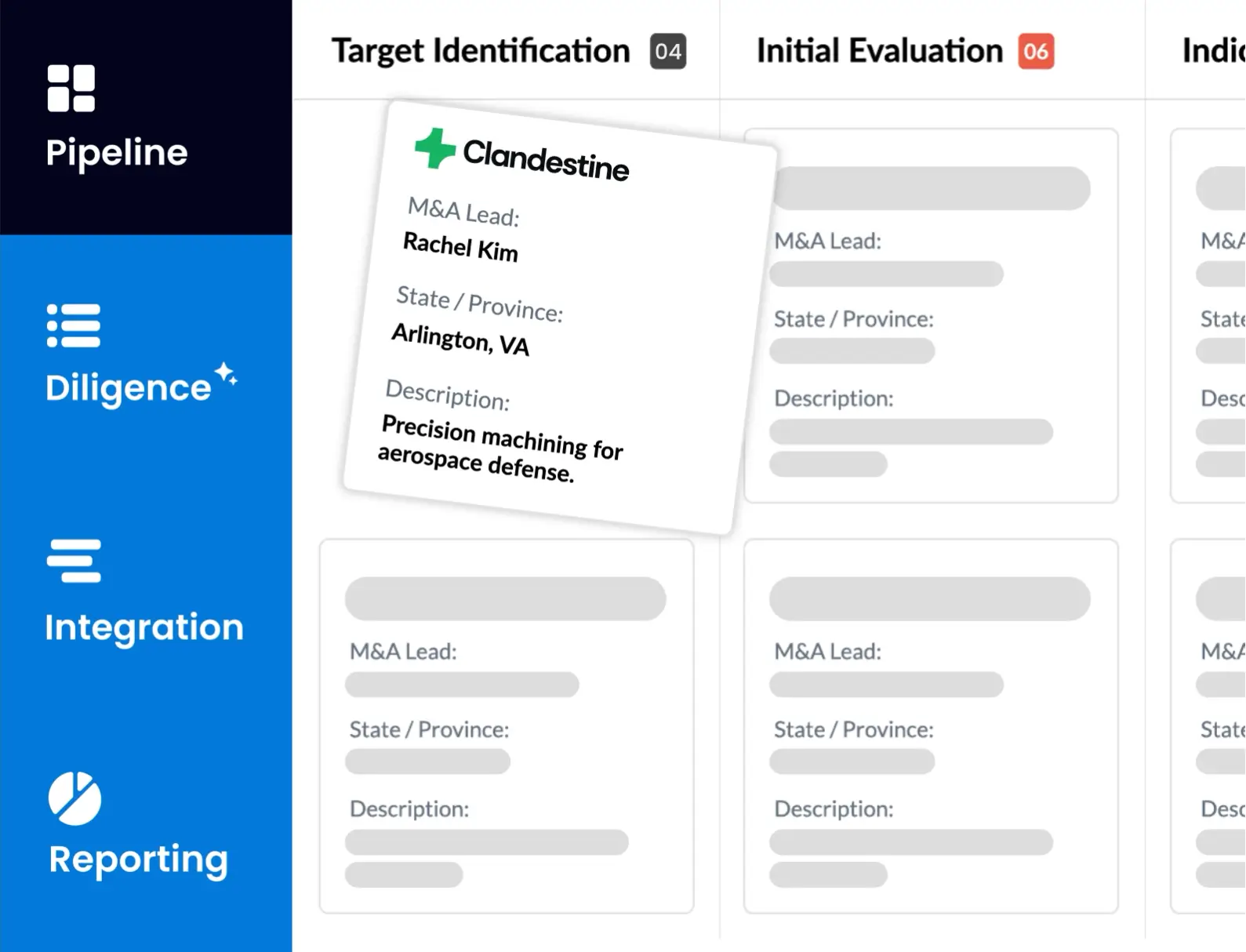
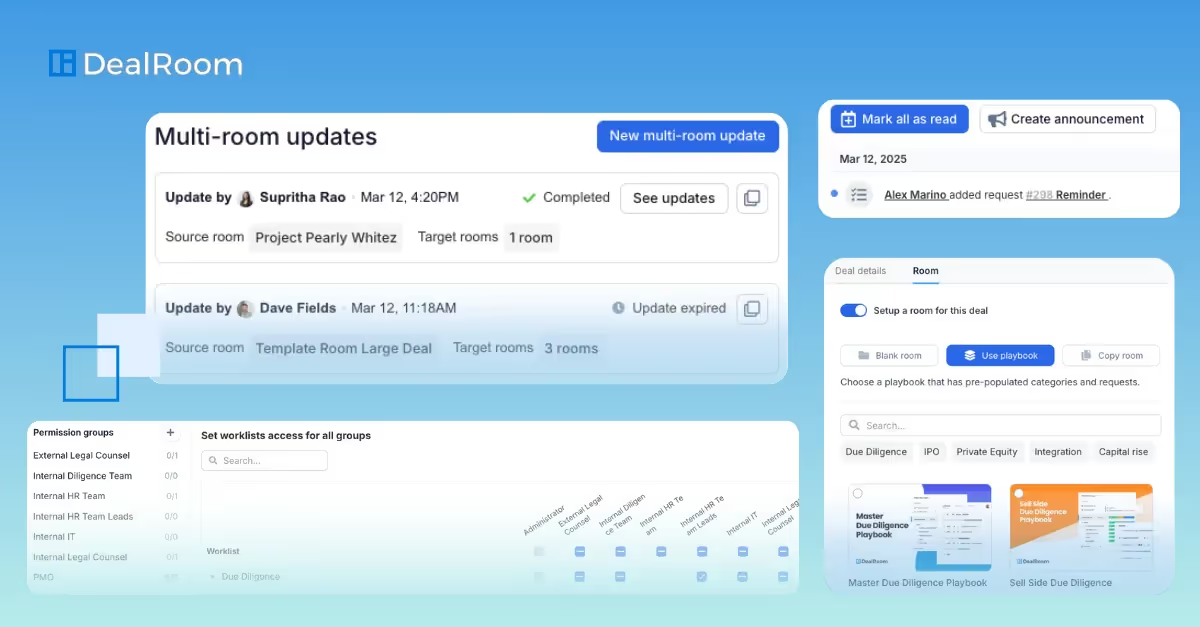
As acquisition activity expands, teams benefit from adopting a platform designed specifically for deal management. The DealRoom M&A Platform provides a single environment for managing pipeline tracking, due diligence, and integration planning. This gives teams full visibility and control across the entire lifecycle.
When your deal volume grows, platforms like DealRoom help manage the entire lifecycle from pipeline to integration within a single source of truth.









.png)
.png)
.avif)
.avif)
.avif)