.jpeg)









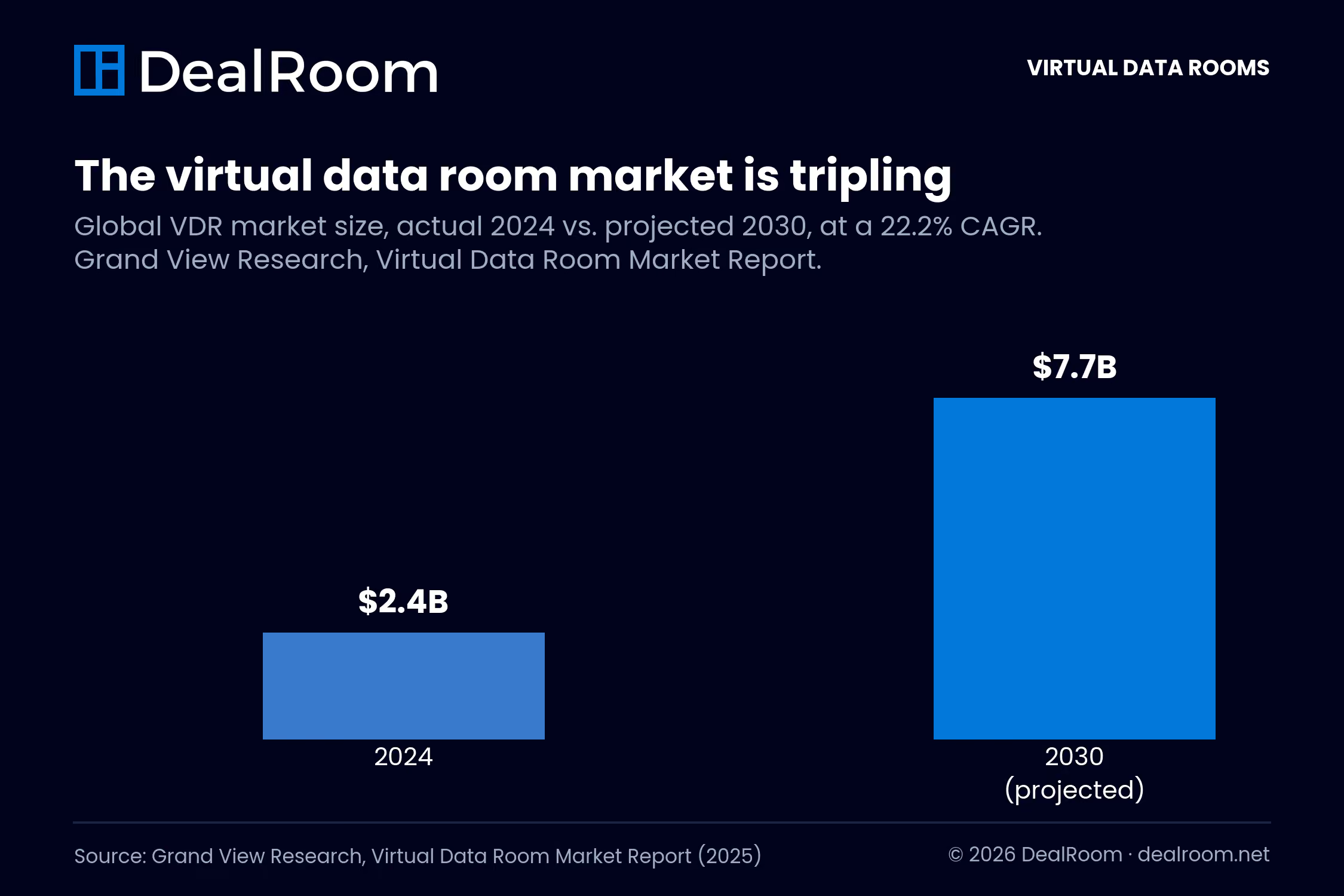
The virtual data room market reached $2.4 billion in 2024 and is projected to hit $7.7 billion by 2030, a 22.2% annual growth rate per Grand View Research. No vendor has ridden that wave harder than Datasite. It supports more than 16,000 new transactions a year and sits inside most bulge-bracket sell-side processes. It is a genuinely strong product. It’s also expensive, priced by quote and built around a deal-by-deal model that fits bankers better than the corporate development teams I spend my time with.
I’ve been in M&A for over 10 years advising clients on transactions through my own boutique firm and founding DealRoom in 2012. Throughout my career, that’s given me experience with Datasite from both sides of the table: implementing data rooms for clients and running a platform that gets compared with Datasite quite frequently.
As a result, I have a unique perspective on where Datasite shines and where deal teams commonly struggle. I’ll outline Datasite’s strengths, common complaints, and 7 alternatives (plus where each excels and where Datasite might still make sense).
Disclosure up front: DealRoom is my company, and I include it here as the best alternative for deal teams that need more than a traditional data room. I’ll explain why with specific comparisons. When another platform is a better fit for a particular use case, I’ll say so.
The short version (2026):
- Best Datasite alternative for deal teams: DealRoom, because it pairs the data room with pipeline, diligence management and integration at a flat, unlimited-user price.
- Best for large-cap, bank-run processes: Intralinks (or staying with Datasite).
- Best usability-first VDR: Ideals.
- Best for sell-side AI insight and APAC deals: Ansarada.
- Best mid-market subscription VDR: Firmex (with an ownership caveat).
- Best for European real estate and cross-border deals: Drooms.
- Best budget option: SecureDocs.
What is Datasite and how is it used in M&A?

Datasite, formerly Merrill Corporation until a March 2020 rebrand, is a virtual data room platform for running due diligence on M&A transactions. Its core products are split by deal side: Datasite Diligence for sell-side rooms, Datasite Acquire for buy-side diligence and Datasite Outreach for deal marketing. Datasite reports more than 626,000 dealmakers using its platform to manage roughly 39,000 deals. In 2025, the platform was used on 40% of the world’s top 100 M&A transactions by value, including four of the five largest deals in 2025.
Key features:
- Bulk upload with granular permissions.
- Structured Q&A workflows.
- Diligence trackers.
- Engagement analytics and a deep AI layer: Blueflame AI search, multi-document Enhanced Review, one-click summaries, automated redaction covering 120+ types of PII and translation across 17+ languages.
- Security certifications run deeper than most rivals: ISO 27001 since 2007, ISO 27017, 27018 and 27701, annual SOC 2 Type II and ISO/IEC 42001 for AI governance.
Pricing: quote-based with no published prices and no free trial. Third-party analysis puts the traditional model at roughly $0.60 per page, around $6,000 per 10,000 pages, an unofficial estimate worth confirming in your own quote.
Pros:
- A 4.4 rating on G2 across nearly 420 reviews and 4.7 on Capterra across 140+ reviews.
- Reviewers frequently praise its navigation, security, structured Q&A workflows and 24/7 Datasite Assist support, available in 20 languages.
- Extensive security and compliance credentials make it well suited to large, complex transactions.
Cons:
- G2 reviews include 44+ mentions of the platform being expensive.
- 42+ reviews mention slow uploads or bulk downloads.
- 34+ reviews cite difficulty learning or using advanced features.
- 23+ reviews describe permission setup as complex or convoluted.
- Datasite does not include pipeline management or post-merger integration, so buy-side teams may need additional tools to manage work before diligence and after close.
How we evaluated
We compared alternatives across six dimensions: security posture, diligence workflow (Q&A, permissions, trackers), AI capability, pricing model and transparency, lifecycle coverage beyond the data room and verified user feedback. Inputs: vendor documentation, public pricing pages, G2 and Capterra data pulled August 2026 and our experience competing for and migrating Datasite accounts. Last reviewed September 2026.
Comparison table
1. DealRoom
Best for: deal teams that want the data room plus everything around it
Pricing: by deal volume, unlimited users
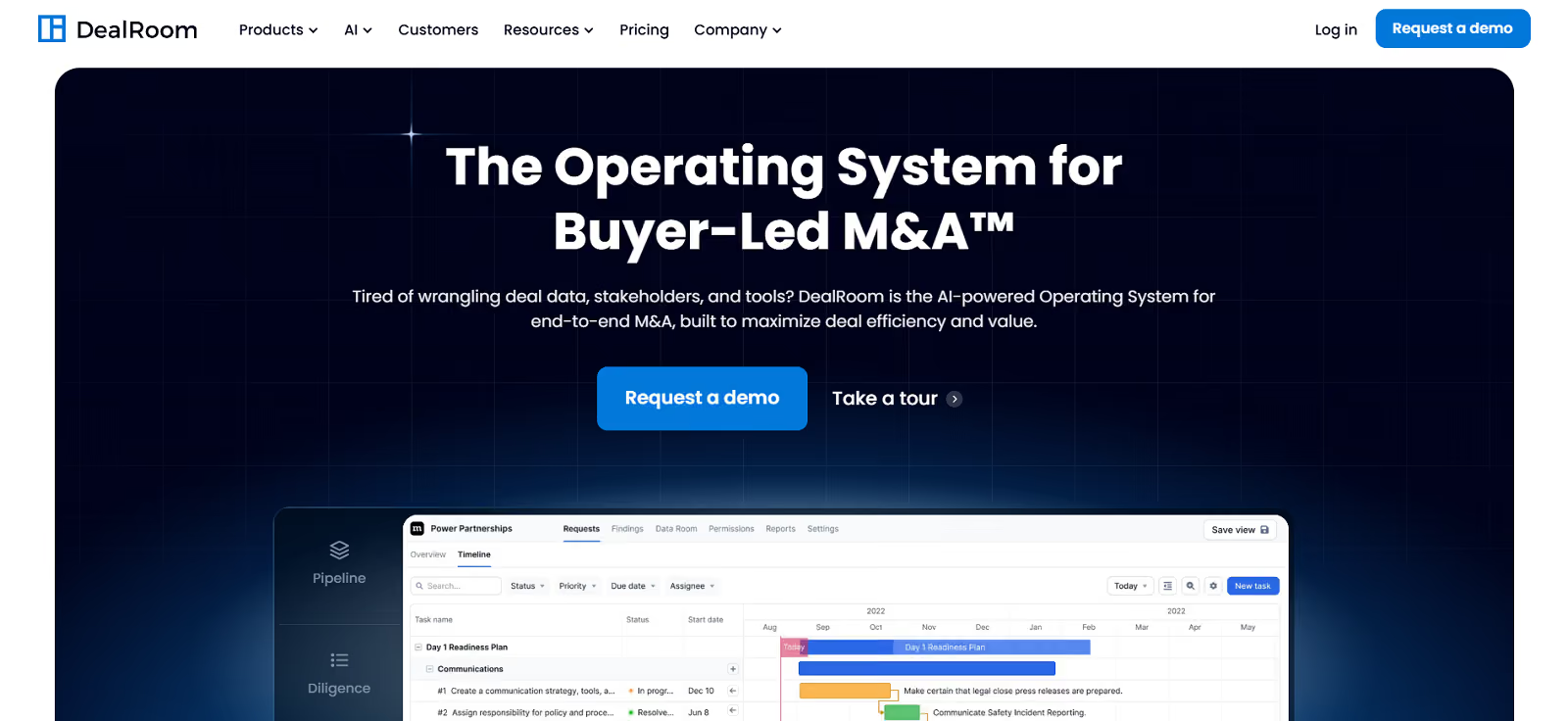
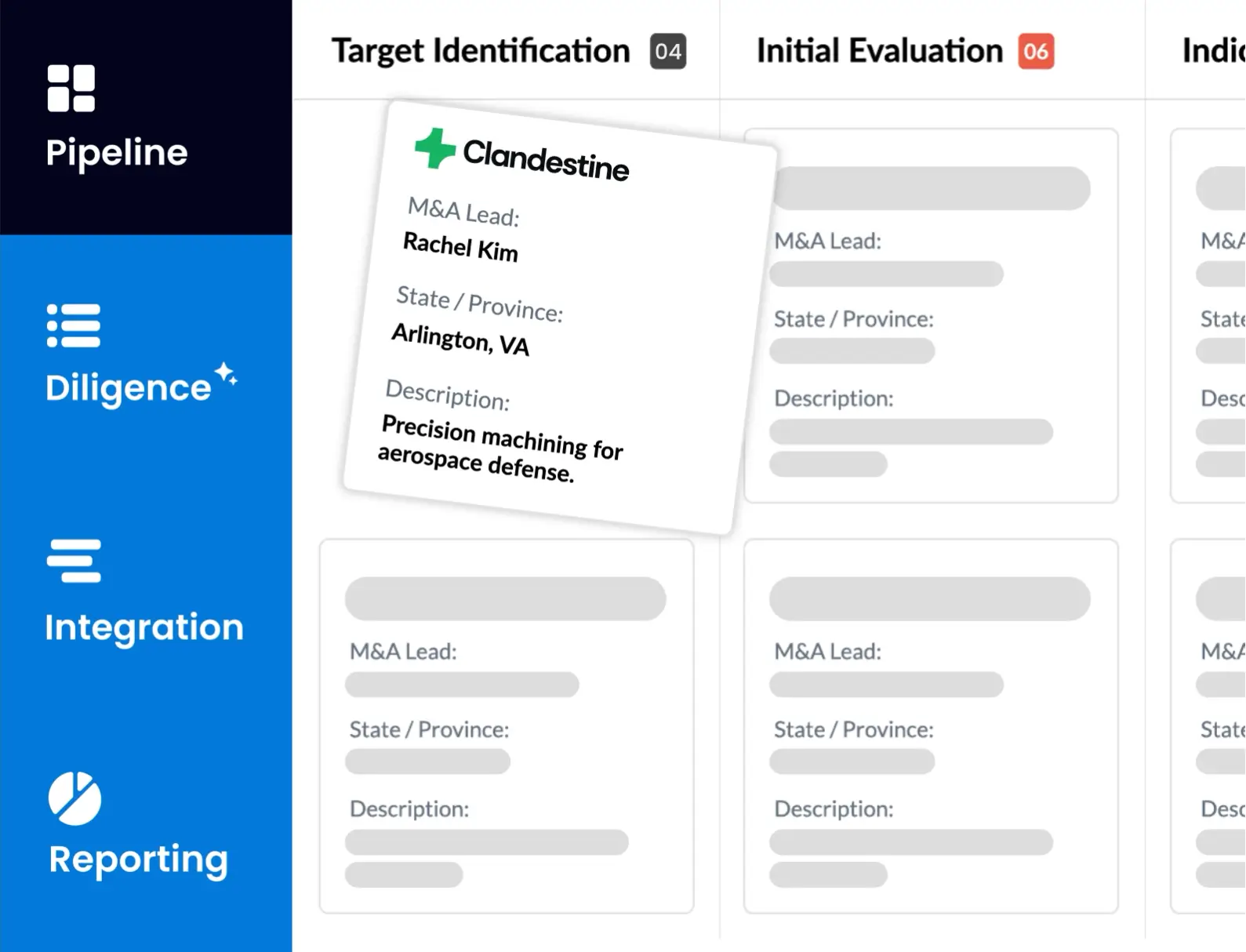
DealRoom is an M&A lifecycle platform that combines a secure virtual data room with tools for managing the rest of the deal, including pipeline management, diligence request tracking and post-merger integration. The main difference from Datasite is scope. Datasite is primarily a premium data room used for individual transactions. DealRoom is designed to give M&A teams one system for managing deals from pipeline through diligence and integration.
That disconnect is one of the reasons I built DealRoom. As an advisor, I watched teams manage diligence documents in the data room while tracking requests separately in Excel. The two would quickly fall out of sync. DealRoom connects them. Each diligence request links directly to the documents that address it, comments and updates stay with the request and findings carry into integration after close rather than being archived with the data room.
Key features:
- Data room with drag-and-drop upload, granular permissions, built-in document viewer, buyer engagement analytics and multi-factor authentication.
- Diligence request management that ties every request to its documents, owners and comment threads.
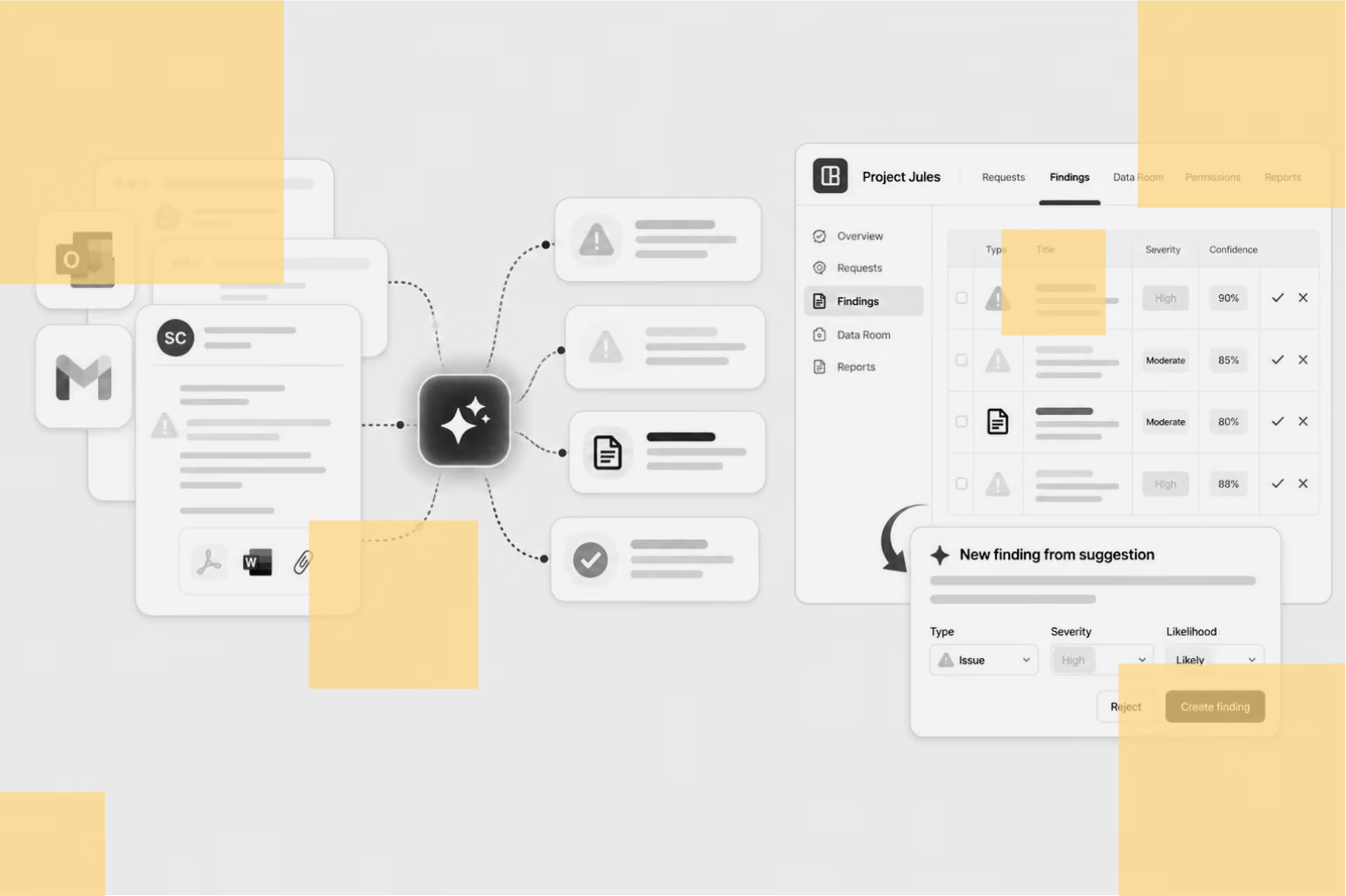
- DealRoom AI for contract risk flagging and turning unstructured uploads into structured data, with the vendor reporting document analysis time cut by up to 80%.
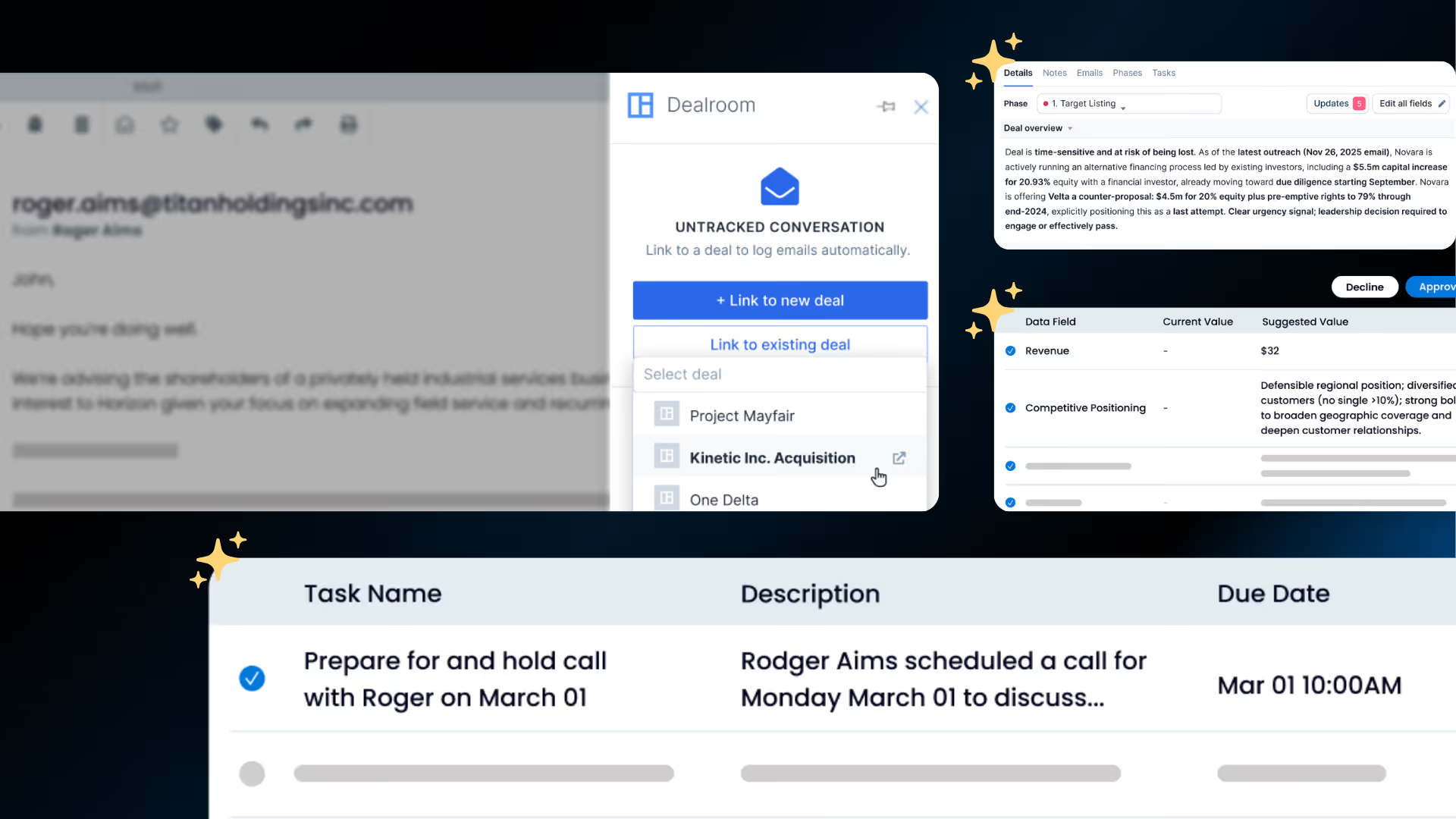
- Pipeline with PitchBook-powered enrichment, plus MCP connectivity to Claude, ChatGPT, Copilot and Gemini.
- SOC 2 Type II and ISO 27001 security.
- Unlimited users and no per-page or per-document fees.
Pricing: Subscription-priced by number of deals, with unlimited users and no per-document charges. Against a per-page model, the difference compounds on document-heavy deals.
Pros:
- One platform from sourcing to integration.
- Predictable pricing.
- On the G2 head-to-head, DealRoom scores 9.0 vs Datasite’s 8.8 on ease of use and 9.2 vs 9.1 on support quality.
Cons:
- Smaller review base (69 G2 reviews vs Datasite’s 419).
- Less name recognition inside investment banks.
- Onboarding takes effort for teams new to structured diligence.
Choose DealRoom over Datasite if you are a corporate development or PE team running repeat deals and want diligence, the data room and integration in one system at a flat price.
Stay with Datasite if you are a bank running a one-off, sell-side mega-process where the counterparties expect it.
2. Intralinks (SS&C)
Best for: large-cap, bank-run processes
Pricing: quote-based
SS&C Intralinks was an early pioneer of the virtual data room, and its VDRPro platform remains widely used for large-cap M&A and capital markets transactions. Its strength is the depth of its VDR capabilities, including granular permissions, watermarking and remote document revocation, AI-assisted redaction and indexing and real-time audit trails.
Key features:
- Bulk uploads and granular user permissions.
- Dynamic watermarking and remote document revocation.
- Structured due diligence Q&A workflows.
- AI-assisted redaction of sensitive information.
- Real-time activity tracking and audit trails.
- Deal pipeline and buyer management.
- AI-powered search, analysis and deal insights.
Pros:
- Long track record in virtual data rooms and institutional M&A.
- Strong access controls for managing sensitive deal documents.
- Customer support receives positive feedback from reviewers.
Cons:
- 3.8 out of 5 on G2 across 31 reviews, the lowest rating among the platforms compared here.
- Reviewers frequently cite high or prohibitive pricing.
- Some reviewers describe the interface as dated compared with newer VDR platforms.
Choose Intralinks over Datasite if your institution already standardizes on SS&C infrastructure.
Stay with Datasite if you want the more modern interface and AI stack of the two enterprise incumbents.
3. Ideals
Best for: usability-first mid-market M&A
Pricing: tiered projects, unlimited users
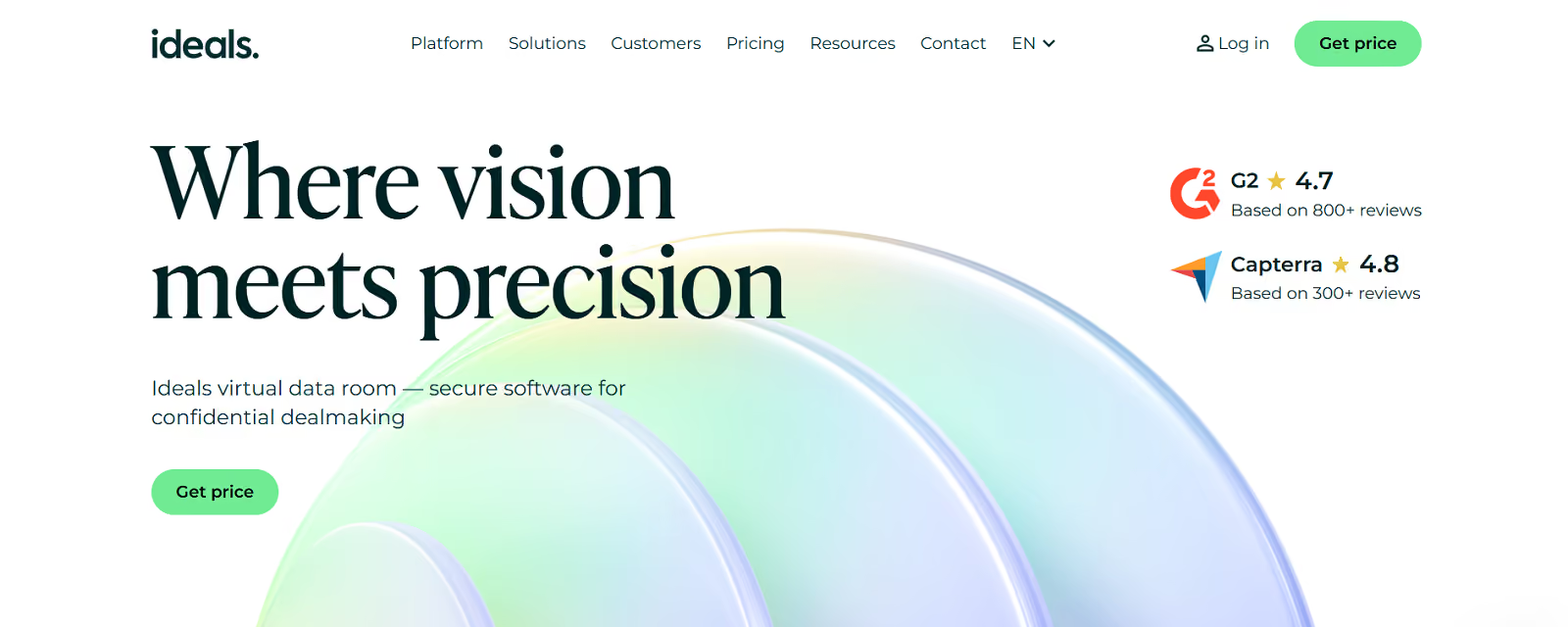
Ideals has served around one million users since 2008 and is the highest-rated high-volume VDR on G2 at 4.7 across 859 reviews. Features cover the full diligence workflow: granular permissions, auto-indexing, Q&A, watermarking, OCR search and AI redaction, chat and translation.
Pricing: three published tiers (Core, Premier, Enterprise) with unlimited users; you’ll still need to request a quote for specific costs.
Key features:
- Bulk uploads with automatic document indexing.
- Granular permissions and eight levels of access control.
- Dynamic watermarks and document access restrictions.
- Built-in Q&A for due diligence.
- AI-powered redaction of sensitive information.
- Full-text search with OCR.
- Detailed activity reports and engagement analytics.
- iOS and Android mobile apps.
Pros:
- Reviewers consistently praise its intuitive interface and ease of use.
- Strong granular permission controls and document security.
- Responsive customer support is another frequent positive in reviews.
- Quick setup and straightforward administration for deal teams.
Cons:
- Pricing can be expensive for smaller firms and less frequent VDR users.
- Some reviewers find file management and access controls cumbersome.
- Storage limits can lead to additional costs.
- The mobile app has fewer capabilities than the desktop platform, including no ability to answer Q&A questions from the app.
Choose Ideals over Datasite if you want top-rated usability and flat project tiers instead of per-page billing.
Stay with Datasite if you need its deeper AI review tooling and enterprise certifications.
4. Ansarada
Best for: sell-side AI insight and APAC deals
Pricing: quote-based
Ansarada, the Australian-origin VDR used across 180 countries, differentiates on AI deal tools: bidder engagement scoring, document classification and integrated Q&A with email connectivity. It rates 4.5 on G2 across 238 reviews.
Key features:
- Bulk uploads with AI-assisted document sorting.
- Granular permissions and access controls.
- Built-in Q&A and project management.
- AI-powered bulk redaction.
- Remote document self-destruct.
- Real-time activity reporting and audit trails.
- AI-powered deal insights and risk analysis.
Pros:
- Ease of use is the most common positive review theme, with 42 mentions on G2.
- Customer support receives strong feedback, with 31 mentions.
- Strong document security, including granular permissions, activity tracking and remote file self-destruct.
- AI tools support redaction, document organization and deal analysis.
Cons:
- File management can be cumbersome, particularly during setup and when managing permissions and uploads (14 mentions).
- Reviewers report slow performance when loading advanced features, processing large files and handling uploads (12 mentions).
- Pricing is a recurring complaint, particularly for smaller firms (12 mentions).
- Some reviewers report login issues and limitations with app functionality.
Choose Ansarada over Datasite if you are a sell-side advisor who wants bidder-engagement AI or your deals run through APAC where Ansarada is entrenched.
Stay with Datasite if your buyers and counsel already live in it.
5. Firmex
Best for: mid-market annual subscriptions
Pricing: per-project or annual unlimited
Firmex runs 20,000+ new rooms annually for mid-market banks, law firms and funds, with a 4.6 G2 rating across 93 reviews and a simple choice of one-time project pricing or an annual unlimited subscription. One structural caveat: Datasite acquired Firmex in 2021, so choosing Firmex is choosing a Datasite-owned sibling brand, not an independent rival.
Key features:
- Bulk uploads and automatic document indexing.
- Granular document and user permissions.
- Dynamic watermarking and document access controls.
- Built-in Q&A for due diligence.
- Secure document redaction.
- Full-text search.
- Activity tracking, reporting and audit logs.
- Unlimited-use subscriptions or per-deal pricing.
Pros:
- Reviewers consistently praise its intuitive interface and ease of use.
- Granular permissions and strong document security.
- Responsive customer support.
- Unlimited-use subscriptions can suit firms running multiple deals or data rooms each year.
Cons:
- Large folders and uploads can sometimes be slow.
- Reporting and dashboard customization are limited.
- Permissions can become difficult to manage across complex folder structures.
- Some reviewers find parts of the interface and folder navigation cumbersome.
Choose Firmex over Datasite if you want mid-market subscription economics with less product than you would be paying Datasite for.
Stay with Datasite if ownership independence between your VDR and its parent matters to you, in which case neither qualifies.
6. Drooms
Best for: European real estate and cross-border deals
Pricing: quote-based
Drooms is a German VDR with strength in real estate, legal and corporate finance and an EU-first hosting posture that matters for GDPR-sensitive counterparties. Features include multi-language translation, AI summary tools, advanced search, e-signatures and Q&A.
Key features:
- Granular document-level permissions and access controls.
- AI-powered document search, Q&A and redaction.
- Automatic document naming and folder allocation.
- Built-in document translation with OCR.
- Activity tracking and audit reporting.
- GDPR-compliant hosting on European servers.
Pros:
- Reviewers praise the interface for being clear and intuitive.
- Built-in translation and document summaries can speed up cross-border due diligence.
- Strong security and GDPR compliance, with data hosted on European servers.
- Recent reviewers also give positive feedback on customer support.
Cons:
- Its 4.7 G2 rating is based on just six reviews, so the score should be treated as directional.
- Some reviewers find the interface less intuitive and say training is needed.
- Pricing is a concern in some reviews.
- Reviewers have reported occasional issues with downloads and file search.
Choose Drooms over Datasite if EU data residency and DACH (Germany, Austria, Switzerland) real-estate workflows drive the decision.
Stay with Datasite if you need a global support and certification footprint.
7. SecureDocs (Onit)
Best for: budget SMB deals
Pricing: flat fee from $250/month
SecureDocs is the anti-Datasite on pricing: a flat fee starting at $250 per month with unlimited users and documents and a claimed 10-minute setup. It covers the essentials: permissions, audit trails, watermarking, MFA and Q&A.
Key features:
- Drag-and-drop uploads with unlimited users and documents.
- Granular folder and subfolder permissions.
- Two-factor authentication and dynamic watermarks.
- Built-in Q&A for due diligence.
- Customizable dashboards and real-time activity tracking.
- Detailed audit logs and one-click archiving.
- Electronic signatures and custom NDAs.
Pros:
- 4.6 out of 5 on G2 across 50 reviews.
- Reviewers consistently praise its ease of use, security and quick setup.
- Flat-rate pricing with unlimited users and documents makes costs predictable.
- Straightforward permissions and activity tracking cover the core needs of smaller and mid-sized deals.
Cons:
- Reviewers describe the interface as basic or dated.
- Search and filtering can be limiting with large document volumes.
- Customization options are limited compared with more advanced VDRs.
- Reporting and analytics lack the depth of more feature-rich platforms.
- Some reviewers find file and user management cumbersome at larger scales.
Choose SecureDocs over Datasite if a startup raise or small divestiture needs a secure room for hundreds of dollars instead of a five-figure quote.
Stay with Datasite if the deal is complex enough that Q&A workflow and review tooling will pay for themselves.
Frequently asked questions
What is the best Datasite alternative?
It depends on what you’re replacing. For a like-for-like premium VDR, Ideals has the strongest usability record at 4.7 on G2 across 859 reviews. For deal teams that want pipeline, diligence and integration around the data room, DealRoom is the strongest alternative. I say that as its founder with the bias disclosed. For pure budget, SecureDocs starts at $250 per month.
Why is Datasite so expensive?
Datasite prices by quote, and its traditional model bills by page volume, which third-party analysis estimates at roughly $0.60 per page. On document-heavy deals, that scales into five and six figures, which is why “expensive” is the single most common complaint theme in Datasite’s G2 reviews. You’re also paying for depth, including certifications, AI tooling and 24/7 multilingual support.
Does Datasite handle post-merger integration?
No. Datasite’s products cover deal preparation, marketing, diligence and archiving. Once the deal closes, integration planning happens somewhere else. That gap is the main reason buy-side teams look at lifecycle platforms like DealRoom or Midaxo, which carry diligence data into integration workplans instead of ending at close.
Is Firmex independent from Datasite?
No. Datasite acquired Firmex in July 2021. Firmex operates as a separate brand with its own product and pricing, but the two share an owner, which is worth knowing if you’re running a competitive bid between them.
How much does a virtual data room cost in 2026?
The spread is wide: flat-fee rooms like SecureDocs start around $250 per month, mid-market subscriptions like Firmex offer annual unlimited-deal plans and enterprise rooms like Datasite and Intralinks run quote-based, often per-page pricing that can reach six figures on large deals. M&A lifecycle platforms price differently because they cover more than the data room. DealRoom charges by deal volume with unlimited users, rather than charging per page, document or seat. Our VDR providers comparison breaks the market down in more detail.









.png)

.avif)

.avif)
.avif)
.avif)
.avif)